
Cloves - Herbal Monograph Series
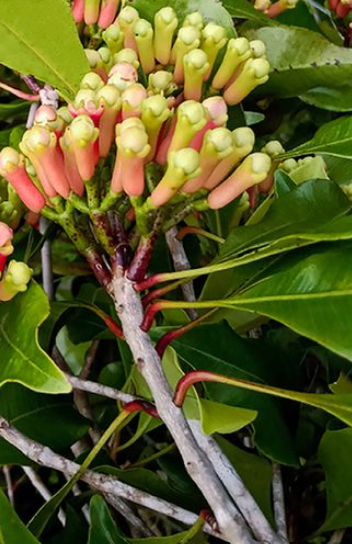
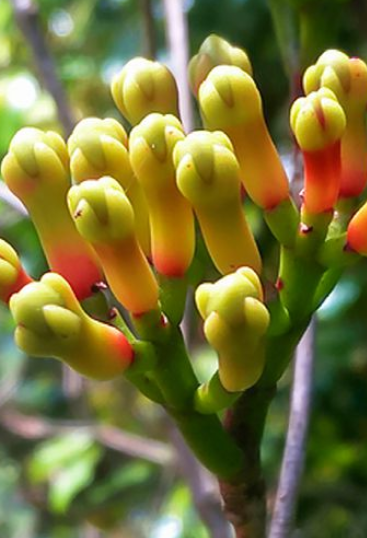
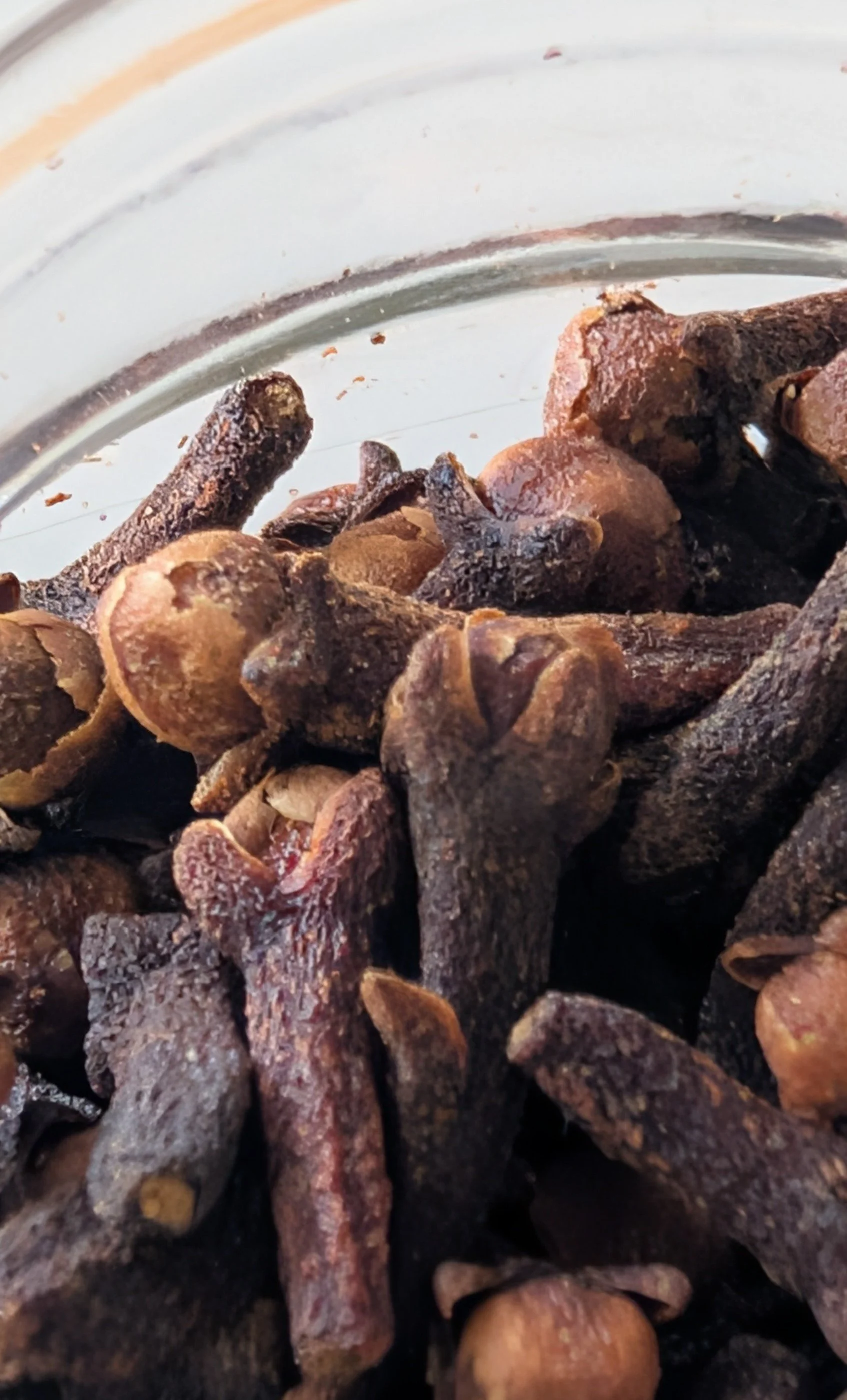
Photos from https://www.thespruce.com/growing-clove-trees-5089231
Syzygium aromaticum, aka Caryophyllus aromaticus aka Eugenia caryophyllata, dried buds, oil and water extracts
Uses
One of the top three plants against H. pylori infection, ulcers
Pneumonia prevention
Multiple effects against various cancers
Top herb for toothache, dental anesthetic
Carminative, anti-emetic
Blood sugar regulation
For ulcers
Clove is one of the top herbs to use against H. pylori, which is the causative microbe behind ulcers of the stomach and of the duodenum. H. pylori is so widespread, it is estimated that half of the world’s population is infected with it. H. pylori has been shown to have a causative role in gastritis, peptic ulcers and gastric cancers. In a lab study, thirty strains of H. pylori were isolated from gastric biopsy specimens from peptic ulcer patients. An extract of clove, eugenol, was found to be effective against all 30 strains. Then five of those strains were cultured through ten successive generations. It was found that even by the 10 th generation, there was none of the microbial resistance to eugenol that has been observed with use of antibiotics. This formidable anti-microbial capacity is discussed below in the Pharmacology section of this paper. The concentration of 4 micrograms per ml of eugenol completely inhibited H. pylori growth within only 6 hours.¹
For pneumonia prevention
Hospitalized patients on ventilators are vulnerable to nosocomial (hospital-acquired) infections. 25% of those are pneumonia cases, which has a mortality rate of 25% to 30%. The problem is that bacteria quickly populate the artificial airway, while secretions accumulate along the surface, allowing growth and persistence of both fungal and bacterial infections and biofilms. Staphylococcus aureus, Pseudomonas and E. coli are common bacteria that populate the airways in such patients. Eucalyptus is an outstanding herb against those bacteria and many more, and clove has also been found to prevent this particular pneumonia, while having a more pleasant taste. The standard hospital mouthwash that is considered the gold standard for bactericidal and fungicidal effect is chlorhexidine, which carries many side effects. In a triple-blind study of 168 ventilated patients, half got cloves treatment and half got chlorhexidine treatment, which is the typical hospital antiseptic. The clove group got ventilator-acquired pneumonia at only half the rate of the chlorhexidine group.²
History of oral and dental use
Cloves have a long history of use as a dental anesthetic. The 1926 U.S. Dispensatory discusses clove as a remedy for toothache: “For this purpose a small pledget of cotton is saturated with [clove] oil and inserted into the carious cavity. It is a powerful germicide . . . “³
In 1653, Nicholas Culpeper MD of London wrote: “For a scurvy in the gums, take Cloves and boil them in Rose-water, then dry them, and beat them to powder, and rub the gums with the powder, and drink the decoction in the morning fasting an hour after it. Use red Rose-water, for that is the best.⁴
As a carminative and anti-emetic
Charles Phillips MD wrote in 1879 of infusion (tea) of cloves “to relieve the sense of coldness in the stomach which attends certain forms of dyspepsia, especially such as arise from the abuse of ardent spirits, from chronic gout, or from flatulent colic.”⁵
For blood sugar regulation
Pre-diabetic patients were dosed concentrated eugenol daily for 30 days. At Day 30, their blood sugar was substantially reduced.⁶
For anti-cancer effect
Even low doses of eugenol, which is the main active clove constituent, 7 showed specific toxicity against various types of breast cancer cells.⁸ A simple ethanol extract of clove showed a 10-fold enhancement in inhibition of cell growth in human cancer cell lines, including breast, ovarian, cervical, liver, pancreatic and colon. Effective concentrations were as small as 108 through 455 micrograms per ml.⁹
Pharmacology and Mechanisms of Action
The mechanism of clove against pneumonia is due to its powerful bactericidal activity against the leading pathogenic bacterial causes of pneumonia, including Streptococcus pneumoniae as well as multi-drug-resistant gram-negative pathogens such as Klebsiella pneumoniae and Pseudomonas aeruginosa. Eugenol, the main component of clove essential oil, is lipophilic, so it inserts itself into the phospholipid bilayer of the bacterial cell membrane, which makes the membrane permeable, causing swelling and leakage of the bacterial cell, as well as destroying the membrane electrical potential, which stops bacteria from generating energy.¹⁰ Once inside the bacterial cell, clove components lower the cell cytoplasm pH and denature proteins,¹¹ and disrupt the citric acid / Krebs cycle, which stops production of DNA and proteins. Further damage that results is that the cell signaling that bacteria use to build biofilm sanctuaries for themselves is halted, which prevents bacterial resistance. Biofilms proliferate from single cells that adhere to a surface tissue, before others join in. Biofilms inhibit antibiotic penetration and action, rendering antibiotics useless at that frontier.¹² However, phytochemicals from clove inhibited biofilm formation by multidrug resistant bacteria up to 90%. Clove worked alone as well as synergistically in combination with antibiotics to break down biofilms.¹³
Antibiotics have nowhere near this level of efficacy and sophisticated multi-front attacks against bacteria.
Viral pneumonia is also inhibited, because clove also contains monoterpenes, which are virucidal. Clove also has expectorant function, which loosens and thins mucus, to help expel it from the airways. This also removes another sanctuary that opportunistic bacteria thrive on. The above functions are also key to clove’s effects against H. pylori, which causes gastritis as well as gastric and duodenal peptic ulcers.
Human and mammalian cells are blessed with a high level of cholesterol in our cell membranes, which protects us against the devastating effects against bacterial cell membranes. We discussed this in our herbal monograph on Eucalyptus.¹⁴
Anti-cancer effects
The way that clove functions against cancer is by multiple mechanisms, including a pro-oxidant effect against cancer.¹⁵ Whereas antioxidants have a free-radical scavenging activity and thus prevent new cancer, the pro-oxidant effect of eugenol consists of free radical damage to cancer cells, which are much more vulnerable to that effect than are normal cells. This is the function of vitamin C against cancer: low-dose as preventive antioxidant and high-dose as pro-oxidant that kills cancer cells.¹⁶ ¹⁷
Eugenol was found to be a potent inhibitor of cell proliferation and colony formation, which is mostly due to its modification of a transcription factor that regulates genes involved in cell reproduction.¹⁸ This caused apoptosis, delayed tumor growth, decreased tumor size and prevented metastasis in melanoma.¹⁹ Benign papillomas of the skin were also suppressed by topical application of clove tea infusion.²⁰ When additional genes and proteins were modulated by eugenol, other cancers were inhibited, including gastric cancer.²¹
Chemotherapy has not functioned well against triple-negative breast cancer. But that cancer has been seen as successful in lasting remission as other breast cancers, given a metabolic treatment protocol. Clove-derived eugenol has also shown anti-proliferative effect against triple-negative breast cancer.²² Both growth and metastasis were reduced by eugenol binding to the inflammatory protein NF-κB on those cancer cells, which suppressed NF-κB expression. This was also determined to be the mechanism of action of eugenol against non-small cell lung cancer.²³ Wnt / β-catenin is a signaling pathway involved in triple-negative breast cancer, in that it upregulates oncogene Cyclin D1. Eugenol’s effect against NF-κB and β-catenin results in down-regulating Cyclin D1, which then suppresses triple negative breast cancer.²⁴
Antidote to seed oils?
Seed oils, primarily canola and cottonseed oils, are ubiquitous in processed foods and restaurant foods in the United States due to their low cost. However, when these fats undergo lipid peroxidation, they break down into toxic secondary byproducts, such as malondialdehyde (MDA) and 4-hydroxynonenal. Those byproducts can be stored long-term, months or even years in the liver, and they have the effect of damaging cell membranes, disrupting mitochondrial energy production, depleting natural glutathione reserves, promoting inflammation and accumulating fat in the liver, called steatosis.
Spanish researchers found that cloves had such high antioxidant properties that they were able to give off hydrogen and to reduce lipid peroxidation.²⁵ This is because eugenol contains abundant phenolic compounds, which are antioxidants that neutralize reactive oxygen species (ROS) and break free radical chain reactions.
A study involving ethanol-dosed rats for 30 days showed increased inflammatory markers of C-reactive protein, COX-2, IL-6 and TNF-α, as well as lipid peroxidation, while reducing glutathione. The alcohol-treated rats also showed sign of hepatocellular damage indicated by higher ALT, AST and ALP labs. All of these biochemical indicators of inflammation, cellular damage and lipid peroxidation - without exception - were reduced in the cohort that also received clove extract at 100 mg per kg of body weight. TNF-α is a pro-inflammatory cytokine that indicates liver cell destruction and initiates fibrogenesis, which is useless tissue that replaces dead liver cells. Clove was so strongly antioxidant that it reversed even IL-6 and TNF-α. The mechanism was that alcohol metabolism generated free radicals, which in turn increased oxidative stress, which damaged cells. As a result, lipid peroxidation increased and glutathione was depleted. Clove extract reduced each of the steps in that progression.²⁶
Cloves have a massive capacity to give off hydrogen atoms. This stabilizes free radicals, intercepting them before they can attack polyunsaturated fatty acids (PUFAs) in a lipid peroxidation reaction.²⁷
Travelers and others finding themselves at the mercy of seed oil fried foods may find they are well-served by packing whole cloves on their journeys.
Dental anesthetic
The mechanism of clove as a dental anesthetic is that Eugenol numbs local nerve endings by inhibiting voltage-gated sodium channels in nerve cell membranes.²⁸ This has the effect of non-delivery of the message of pain awareness along sensory pathways.
Blood sugar lowering effects
Ingestion of clove resulted in inhibition of α-glucosidase and α-amylase enzymes. This caused less glucose to be absorbed from the small intestine into the blood. This improved insulin sensitivity and also resulted in a decrease in glucose production in the liver. This process was similar to that of metformin, but clove works much faster, already improving blood glucose by Day 12 of the study, whereas metformin takes 4 to 6 weeks to work.²⁹
Side Effects and Contraindications
Cloves and their main active constituent, eugenol, which is 70% to 96% of clove oil,³⁰ are “Generally Recognized as Safe” by the U.S. Food and Drug Administration (FDA) for oral consumption.
Native Origin and Range
Clove trees are in the Myrtaceae family. They are native to the Maluko Islands of
eastern Indonesia, and they are well-established in tropical regions.³¹
-
S Ali, A Khan, et al. Antimicrobial activities of eugenol and cinnamaldehyde against the human gastric pathogen Helicobacter pylori. Dec 21 2005. Ann Clin Microbiol Antimicrob. 4. 20. https://pmc.ncbi.nlm.nih.gov/articles/PMC1373661/
M Jahanshir, M Nobahar, et al. Effect of clove mouthwash on the incidence of ventilator-associated pneumonia in intensive care unit patients: a comparative randomized triple-blind clinical trial. Mar 24 2023. 1-12. https://pmc.ncbi.nlm.nih.gov/articles/PMC10036978/
H Wood, C LaWall, et al. The Dispensatory of the United States of America, 21 st ed. [book]. 1926. J.B. Lippincott, Philadelphia. p. 751.
N Culpeper. The Complete Herbal [book]. 1653. London.
C Phillips. Materia Medica and Therapeutics: Vegetable Kingdom [book]. 1879. New York: William Wood and Company. p. 181.
R Mohan, S Jose, et al. Water-soluble polyphenol-rich clove extract lowers pre- and post-prandial blood glucose levels in healthy and prediabetic volunteers: an open label pilot study. May 7 2019. BMC Complement Altern Med. May 7 2019. 19 (99). https://pmc.ncbi.nlm.nih.gov/articles/PMC6503551/
S Banerjee, S Das. Anticarcinogenic effects of an aqueous infusion of cloves on skin carcinogenesis. Mar 2005. Asian Pac J Can Prev. 6 (3). 304-308. https://journal.waocp.org/article_24363_e77181b1cdab6ecd700b90a487805397.pdf
I al-Sharif, A Remmal, et al. Eugenol triggers apoptosis in breast cancer cells through E2F1/surviving down-regulation. Dec 13 2013. BMC Cancer. 13 (600). https://pmc.ncbi.nlm.nih.gov/articles/PMC3931838/
H Liu, J Schmitz, et al. Clove extract inhibits tumor growth and promotes cell cycle arrest and apoptosis. Aug 14 2014. Oncol Res. 21 (5). 247-259. https://pmc.ncbi.nlm.nih.gov/articles/PMC4132639/
M Olszewska, A Gedas, et al. The effects of eugenol, trans-cinnamaldehyde, citronellol, and terpineol on E. coli biofilm control as assessed by culture-dependent and -independent methods. Jun 6 2020. Molecules. 25 (11). 2641. https://pmc.ncbi.nlm.nih.gov/articles/PMC7321256/
M Ngome, J Alves, et al. Linalool, citral, eugenol and thymol: control of planktonic and sessile cells of Shigella flexneri. Jun 25 2018. AMB Express. 8 (105). https://pmc.ncbi.nlm.nih.gov/articles/PMC6020087/
K Muhammad, M Shoge. Applications of antimicrobial stewardship and natural product chemistry in tackling antimicrobial resistance. [chapter in online book: Antimicrobial Stewardship]. Aug 26 2023. Intech Open. https://www.intechopen.com/chapters/88352
H Tariq, A Alhudhaibi, et al. Syzygium aromaticum (clove buds) as a natural antibacterial agent: a promising alternative to combat multidrug-resistant bacteria. Oct 13 2025. Front Microbiol. 16. https://www.frontiersin.org/journals/microbiology/articles/10.3389/fmicb.2025.1674590/full
C Huber. Eucalyptus. Aug 29 2026. Herbal Monograph Series. Nature Works Best Cancer Clinic. https://natureworksbest.com/articles/eucalyptus-herbal-monograph
D Bezerra, G Gadelha, et al. The dual antioxidant prooxidant effect of eugenol and its action in cancer development and treatment. Dec 17 2017. 9 (12). 1367. https://pmc.ncbi.nlm.nih.gov/articles/PMC5748817/
Q Chen, M Espey, et al. Pharmacologic ascorbic acid concentrations selectively kill cancer cells: Action as a pro-drug to deliver hydrogen peroxide to tissues. Sep 12 2005. Proc Natl Acad Sci. 102 (38). 13604-13609. https://pmc.ncbi.nlm.nih.gov/articles/PMC1224653/
Q Chen, M Espey, et al. Pharmacologic doses of ascorbate act as a prooxidant and decrease growth of aggressive tumor xenografts in mice. Aug 12 2008. PNAS 105 (32). 11105-11109. https://www.pnas.org/doi/10.1073/pnas.0804226105
I al-Sharif, A Remmal, et al. Eugenol triggers apoptosis in breast cancer cells through E2F1/surviving down-regulation. Dec 13 2013. BMC Cancer. 13 (600). https://pmc.ncbi.nlm.nih.gov/articles/PMC3931838/
R Ghosh, N Nadiminty, et al. Eugenol causes melanoma growth suppression through inhibition of E231 transcriptional activity. Feb 2005. Mech of Signal Transduction, J Biol Chem. 280 (7). 5812-5819. https://www.jbc.org/article/S0021-9258(19)63086-3/fulltext
S Banerjee, S Das. Anticarcinogenic effects of an aqueous infusion of cloves on skin carcinogenesis. Mar 2005. Asian Pac J Can Prev. 6 (3). 304-308. https://journal.waocp.org/article_24363_e77181b1cdab6ecd700b90a487805397.pdf
P Manikandan, R Murugan, et al. Eugenol induces apoptosis and inhibits invasion and angiogenesis in a rat model of gastric carcinogenesis induced by MNNG. Jun 19 2010. Life Sci. 86 (256-26). 936-941. https://pubmed.ncbi.nlm.nih.gov/20434464/
C Huber. Defeating cancer requires more than one treatment method. Dec 30 2017. Nature Works Best Cancer Clinic. https://natureworksbest.com/s/Cancer-Treatment-Paper-2017.pdf
Z Cui, Z Liu, et al. Eugenol inhibits non-small cell lung cancer by repressing expression of NF-κB-regulated TRIM59. Apr 1 2019. Phytother Res. https://onlinelibrary.wiley.com/doi/10.1002/ptr.6352
T King, M Suto, et al. The Wnt / β-catenin signaling pathway: A potential therapeutic target in the treatment of triple negative breast cancer. Jan 2012. J Cell Biochem. 113 (1). 13-18. https://pmc.ncbi.nlm.nih.gov/articles/PMC10924801/
FECYT - Spanish Foundation for Science and Technology. Cloves are 'best' natural antioxidant, Spanish study finds. Mar 19 2010. ScienceDaily. www.sciencedaily.com/releases/2010/03/100316124231.htm
S Jose, M Ratheesh, et al. Hepato-protective effect of clove bud polyphenols (Syzygium aromaticum L.) (Clovinol) by modulating alcohol induced oxidative stress and inflammation. Aug 30 2017. https://www.researchgate.net/publication/351024149
M Viuda-Martos, Y Ruiz-Navajas, et al. Antioxidant activity of essential oils of five spice plants widely used in a Mediterranean diet. Oct 2009. Flavor and Fragrance J. 25 (1). 13-19. https://www.researchgate.net/publication/229983398_Antioxidant_activity_of_essential_oils_of_five_spice_plants_widely_used_in_a_Mediterranean_diet
C Park, K Kim, et al. Molecular mechanism for local anesthetic action of eugenol in the rat trigeminal system. Jul 2009. 144 (1-2). 84-94. https://pubmed.ncbi.nlm.nih.gov/19376653/
R Mohan, S Jose, et al. Water-soluble polyphenol-rich clove extract lowers pre- and post-prandial blood glucose levels in healthy and prediabetic volunteers: an open label pilot study. May 7 2019. BMC Complement Altern Med. May 7 2019. 19 (99). https://pmc.ncbi.nlm.nih.gov/articles/PMC6503551/
D Bezerra, G Gadelha, et al. The dual antioxidant prooxidant effect of eugenol and its action in cancer development and treatment. Dec 17 2017. 9 (12). 1367. https://pmc.ncbi.nlm.nih.gov/articles/PMC5748817/
J Lesser. How to grow and care for clove trees. Aug 22 2026. The Spruce. https://www.thespruce.com/growing-clove-trees-508923
