
Eucalyptus - Herbal Monograph Series
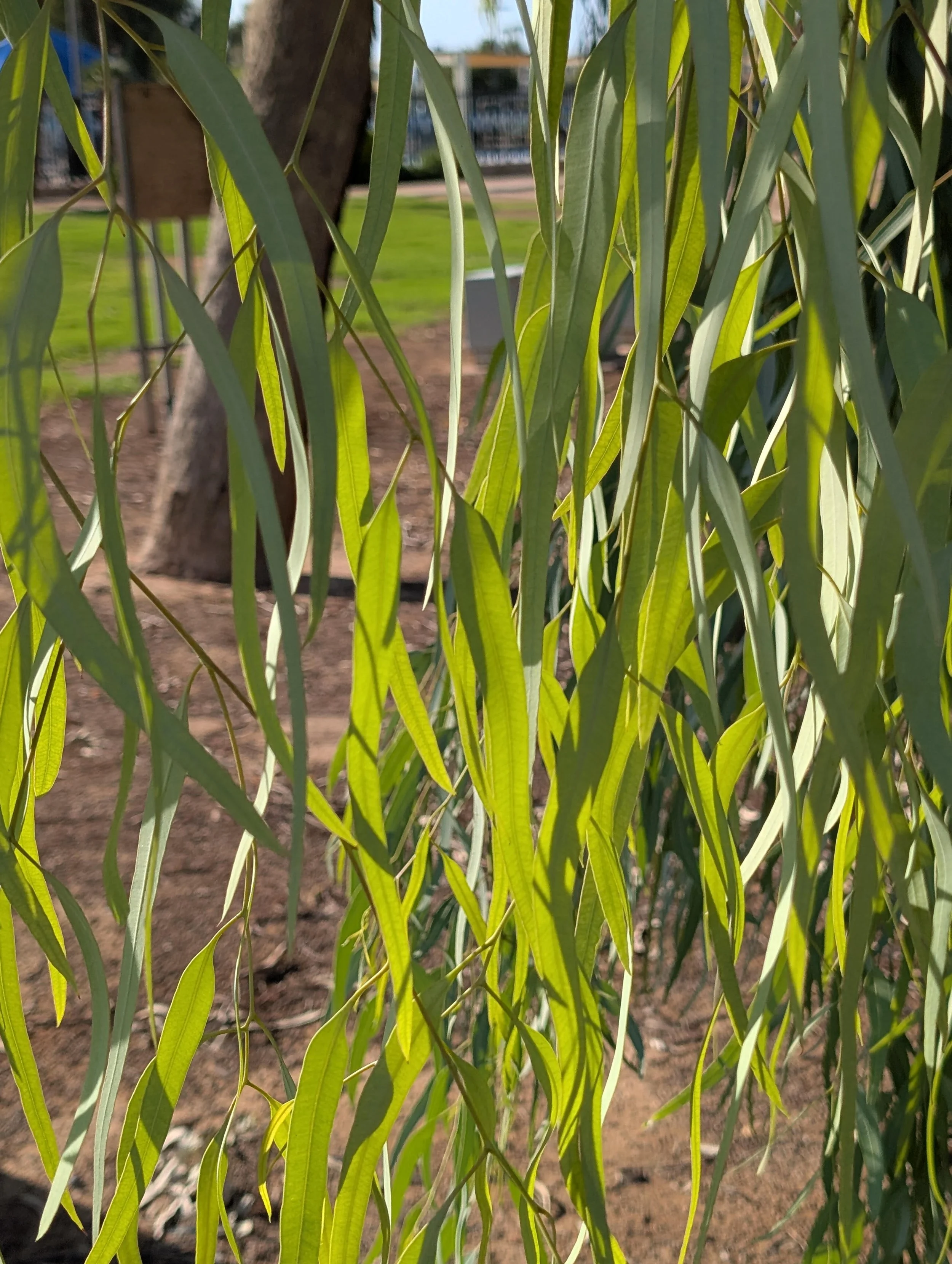
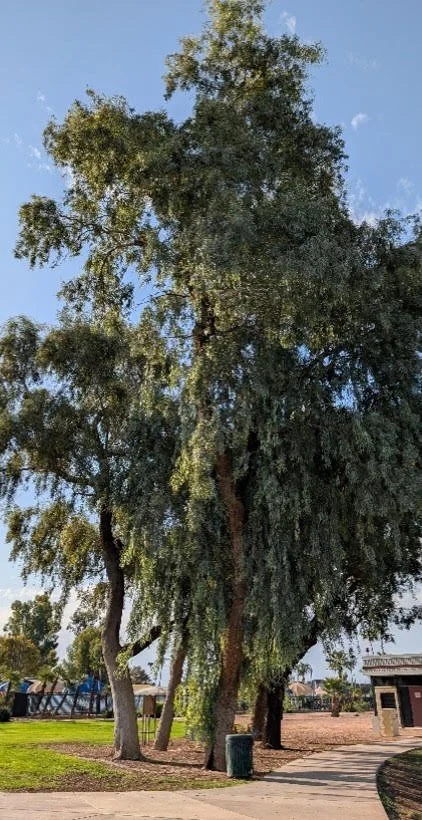
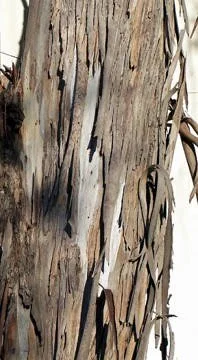
Bark photo from https://www.cirrusimage.com/tree_eucalyptus/. There is wide variety of bark and leaves in the Eucalyptus genus, both corrugated and flaky bark, both oval and long pointy leaves.
Eucalyptus – Eucalyptus globulus, leaves
Uses
Top mucolytic, expectorant and decongestant of catarrhs and mucus of the respiratory tract: sinuses, nose, mouth, throat and lungs
Top treatment of acute and chronic brochitis
Top treatment for Strep throat and pertussis / whooping cough, as well as other Strep and Staph infections, including MRSA and some Gram negative bacteria, as well as H. pylori.
Antiviral
For breaking up mucus and congestion
Eucalyptus is unequaled for its mucolytic and decongestant effect on all upper respiratory airways when used in the following way that naturopathic physicians and herbalists have used for well over a century.
Heat a pot of water to boiling, and then put it in front of the congested patient on a hot plate on the table. Place a few drops of Eucalyptus essential oil on the water. This can be bought at a health food store. Cover the head and pot with a towel, as a makeshift tent. The patient should breathe in the Eucalyptus-infused steam from the pot of water – not so closely as to burn the skin of the face, but not so far away as to lose the benefits of the steam. Waiting a few minutes after boiling will make a more tolerable temperature.
If the patient wants frequent benefit from a steaming pot of Eucalyptus infused water, but to avoid the trouble of repeating the above procedure frequently, a next-best remedy is this: A small glass bottle may be stuffed with a cottonball, plus enough Eucalyptus essential oil to soak the cotton. Uncap and sniff from the bottle as needed.
Herbalist Michael Moore wrote that one may simply make a tea infusion of several of the younger leaves, to sip as often as desired.¹
Antimicrobial activity
Eucalyptus inhibits microorganisms in the bronchial and sinus mucosa. Both Staphylococcus aureus and Streptococcus pyogenes bacteria are inhibited by even dilute concentrations of various Eucalyptus species.²
Eucalyptus globulus even eliminated the dreaded MRSA (methicillin-resistant Staph aureus), and at similarly tiny concentrations and total doses.³
It was not only the Gram-positive species Staphylococcus aureus and Streptococcus pyogenes bacteria that were eliminated by Eucalyptus globulus. Also, Gram-negative species Klebsiella pneumoniae, Yersinia enterocolitica, Salmonella typhi, Shigella dysentieriae, Listeria ivanovii and Bacillus cereus were also eliminated by Eucalyptus globulus.⁴ ⁵ One of the strongest effects was against E. coli.⁶ Even the yeast Candida albicans was eliminated by Eucalyptus globulus at small concentration.⁷
The bacteria H. pylori causes stomach ulcers, 75% of gastric ulcers and 95% of duodenal ulcers.⁸ At very small concentrations, 400 mcg / ml and lower, Eucalyptus eliminated H. pylori.⁹
Pharmacology and Mechanisms of Action
The plant compounds found in the Eucalyptus species in the above study were 1,8-cineole, also known as eucalyptol, as well as pinenes and pinocarveol, with eucalyptol being by far the largest concentration, 83% in Eucalyptus globulus. Phytochemical concentration however has differed around the world, from one Eucalyptus species to another. In this meta-analysis from India also, 1,8-cineole appeared as the main medicinal compound in Eucalyptus species.¹⁰
Antioxidants are devastating to bacterial cell membranes because those membranes lack cholesterol, and are therefore vulnerable to damage from antioxidants. Mammals’ cell membranes, however, are blessed with a high amount of cholesterol, and we therefore thrive on antioxidants, without injury. In fact, the primary defense of a mammalian cell is its high cholesterol content, which is completely absent in nearly all bacterial cell membranes.¹¹ This anti-bacterial effect of antioxidants and the protective effect of cholesterol in our human cell membranes is the case for both Gram-positive and Gram-negative bacteria.¹²
Eucalyptus globulus showed the strongest effect against Staphylococcus aureus and Streptococcus pyogenes bacteria, and was achieved with 2000 mcg / ml = 2 mg / ml.¹³ This was an extraordinarily small concentration. The concentration of essential oil of Eucalyptus globulus is at least 45 mg per drop. Therefore, three drops of essential oil of Eucalyptus on a pot of boiling water releases steam from 135 mg of Eucalyptus oil. So if 2 mg in a 2 ml dose was enough to compete with penicillin-type antibiotics in bactericidal effect, the typical inhaled steam dose would be expected to offer – if it could be completely captured and not lost to evaporation - roughly 67.5 times the amount used in the above-cited study, without known side effects.
The virulence of Staphylococcus aureus and Pseudomonas aeruginosa is partly attributed to biofilms, which are an organic polymer matrix adhering to a surface within which bacteria form colonies.¹⁴ Biofilms shield bacteria from antibiotics, and are a major factor in antibiotic resistance. Eucalyptus essential oil showed significant inhibition of the formation of new bacterial biofilm as well as activity against already formed biofilm. This was the case again biofilms of Gram-positive as well as Gram-negative bacteria. Marked results were seen after 24 hours of growth.¹⁵
Essential oil of Eucalyptus showed high antioxidant capacity, although less than vitamin C. Even with similarly small concentrations of Eucalyptus species essential oils to the previously cited study of Eucalyptus essential oils, the antibacterial effects were considered to be “excellent.” ¹⁶
The antiviral effect of Eucalyptus globulus is attributed to its monoterpene content, including 1,8-cineole mentioned above. Monoterpenes bind with viruses, specifically the viral proteins that bore into host cells.¹⁷ Therefore, in this way, monoterpenes act as an obstacle to infection by viruses. Compounds in eleven different species of Eucalyptus were also found to bond to the protease enzyme Mpro of SARS-CoV-2, which could have been very useful and helpful knowledge in the COVID years.¹⁸
Mucus production is the body’s reaction to an already fulminant infection, whether viral, bacterial or fungal. It is composed of slain white blood cells that fought against the pathogenic microbe that is abundant in the ill person’s airways. Those cells are not the majority of the volume of mucus, even for a sick person, and those dead white blood cells are suspended in a solution of water, proteins and salts.¹⁹ Mucus is often a double-edged sword, washing away the dead white blood cells and microbes that have fought their battles, on the one hand. But on the other hand, mucus can make a comfortable home for further proliferation of opportunistic bacteria.
When mucus is sticky and thick, it engulfs cilia, which prevents normal movement of mucus up the respiratory tract. This is a vicious cycle of mucus build up creating an obstacle to the mechanism that would clear it, namely the cilia. When it is thin and flowing, mucus serves to wash the above debris away rather than when it is thick and sticky. For that purpose, Eucalyptus serves as an expectorant. The mechanism is that 1,8-cineole reduces the number of mucus-generating goblet cells and lowers mucin genes MUC2 and MUC19, as well as being anti-inflammatory for the airways and inhibitory of cytokines.²⁰
Therefore, the word “mucolytic” for the major phytochemical of Eucalyptus is likely inaccurate; that is, it seems that 1,8-cineole prevents mucus formation in the first place, more than actually dissolving or degrading it. For true mucolytic effect, we especially like the oral supplement N Acetyl Cysteine, 600 mg once or twice per day, to help keep mucus thin and flowing, due to its sulfur-side chain creating more easily separable molecules, which enable thinning and rinsing away of viscous mucus.
Side Effects and Contraindications
None known, when used as directed herein.
Eucalyptus stimulates enzymatic reactions in the cytochrome P 450 system of the liver. This may or may not reduce or shorten the effects of drugs taken simultaneously.²¹ Consultation with a naturopathic physician would be needed to assess mutual effects and contraindications if any of pharmaceuticals with herbs.
Native Origin and Range
Eucalyptus is in the Myrtaceae family and contains more than 700 species. It is native to Australia and Tasmania. It is well-established throughout the temperate and tropical regions of the Americas, Asia and Europe, and has now become one of the most widely cultivated trees in the world.²²
The medicinal benefits of Eucalyptus species are recognized so widely throughout the world that the pharmacopoeias of the United States, Spain, the United Kingdom, Germany, France, other European countries, China, Japan and Australia as well as many other countries have discussed the therapeutic effects of tea infusions, steam inhalation and topical application of Eucalyptus oils and extracts.²³
-
M. Moore. Medicinal Plants of the Desert and Canyon West. [book]. 1989. Museum of New Mexico Press.
T Sataie-Mokhtari, S Sltani-Nezhad, et al. GC-MS based chemical composition and in vitro antibacterial activity of the essential oils of Eucalyptus cultivars. Oct 18 2025. Nature. https://www.nature.com/articles/s41598-026-54827-z.epdf
H Mohammed, A Aspatwar, et al. Comparative study of volatile oil constituents, anti-microbial properties, and antibiofilm activities in Eucalyptus camaldulensis and Eucalyptus globulus: insigths from central Saudi Arabil. Mar 2024. J Essential Oil Bearing Plants. 27 (2). 341-355. https://www.researchgate.net/publication/378876061_Comparative_study_of_volatile_oil_constituents_anti-microbial_properties_and_antibiofilm_activities_in_Eucalyptus_camaldulensis_and_Eucalyptus_globulus_insights_from_central_Saudi_Arabia
K Sebei, F Sakouhi, et al. Chemical composition and antibacterial activities of seven Eucalyptus species essential oils leaves. Jan 19 2015. Biol Res. 48 (1). 7. https://pmc.ncbi.nlm.nih.gov/articles/PMC4417289/
L Zhou, J Li, et al. Chemical composition, antioxidant, antimicrobial and phytotoxic potential of Eucalyptis grandis and E. urophylla leaves essential oils. Mar 7 2021. Molecules. 26 (5). 1450. https://pmc.ncbi.nlm.nih.gov/articles/PMC7962113/
B Damjanovic-Vratnica, T Dakov, et al. Antimicrobial effect of essential oil isolated from Eucalyptus globulus Labill from Montenegro. 2011. Czech J. Food Sci. 29 (3). 277-284. https://cjfs.agriculturejournals.cz/artkey/cjf-201103-0010_antimicrobial-effect-of-essential-oil-isolated-from-eucalyptus-globulus-labill-from-montenegro.php
E Cho, K Acosta, et al. Synergistic antifungal effects of botanical extracts against Candida albicans. Jan 12 2026. PLoS One. 21 (1). https://pmc.ncbi.nlm.nih.gov/articles/PMC12795357/
T Alarcón, D Domingo, et al. Antibiotic resistance problems with Helicobacter pylori. Jun 1999. Int J Antimicrob Agents. 12 (1). 19-26. https://www.sciencedirect.com/science/article/abs/pii/S0924857999000515
C Adeniyi, T Lawal, et al. In vitro susceptibility of Helicobacter pylori to extracts of Eucalyptus camaldulensis and Eucalyptus torelliana. 2009. Pharm. Biology. 47 (1). 99-102. https://www.tandfonline.com/doi/epdf/10.1080/13880200802448708
N Chandorkar, S Tambe, et al. A systematic and comprehensive review on current understanding of the pharmacological actions, molecular mechanisms, and clinical implications of the genus Eucalyptus. Nov 2021. Phytomedicine Plus. 1 (4). https://www.sciencedirect.com/science/article/pii/S2667031321000713
J Dombach, J Quintana, et al. A small molecule that mitigates bacterial infection disrupts Gram-negative cell membranes and is inhibited by cholesterol and neutral lipids. Dec 8 2020. PLoS Pathog 16 (12). https://journals.plos.org/plospathogens/article
L DeRossi, G Rocchetti, et al. Antimicrobial potential of polyphenols : Mechanisms of action and microbial responses – A narrative review. Feb 10 2025. Antioxidants (Basel). 14 (2). 200. https://pmc.ncbi.nlm.nih.gov/articles/PMC11851925/
T Sataie-Mokhtari, S Sltani-Nezhad, et al. GC-MS based chemical composition and in vitro antibacterial activity of the essential oils of Eucalyptus cultivars. Oct 18 2025. Nature. https://www.nature.com/articles/s41598-026-54827-z.epdf
D Davies. Understanding biofilm resistance to antibacterial agents, Feb 1 2003. Nature 114-122. https://www.nature.com/articles/nrd1008
M Khammassi, F Polito, et al. Chemical composition and phytotoxic, antibacterial and antibiofilm activity of the essential oils of Eucalyptus occidentalis, E straticalyx and E. stricklandii. Sep 8 2022. Molecules. 27 (18). 5820. https://pmc.ncbi.nlm.nih.gov/articles/PMC9502252/
L Zhou, J Li, et al. Chemical composition, antioxidant, antimicrobial and phytotoxic potential of Eucalyptis grandis and E. urophylla leaves essential oils. Mar 7 2021. Molecules. 26 (5). 1450. https://pmc.ncbi.nlm.nih.gov/articles/PMC7962113/
D Castro, S Ahmar, et al. Antiviral acitivities of Eucalyptus essential oils: Their effetiveness as therapeutic targets against human viruses. Nov 23 2021. Pharmaceuticals (Basel). 14 (12). https://pmc.ncbi.nlm.nih.gov/articles/PMC8706319/
J da Silva, P Figueiredo, et al. Essential oils as antiviral agents, potential of essential oils to treat SARS-CoV-2 infection: An in-silico investigation. May 12 2020. Int J Mol Sci. 21 (10). 3426. https://pmc.ncbi.nlm.nih.gov/articles/PMC7279430/
T Roe, T Talbot, et al. Physiology and pathophysiology of mucus and mucolytic use in critically ill patients. Feb 7 2025. Crit Care. 29 (68). https://pmc.ncbi.nlm.nih.gov/articles/PMC11806889/
L Juergens, H Worth, et al. New perspectives for mucolytic, anti-inflammatory and adjunctive therapy with 1,8-cineole in COPD and asthma: Review on the new therapeutic approach. Mar 21 2020. Adv Ther. 37 (5). 1737-1753. https://pmc.ncbi.nlm.nih.gov/articles/PMC7467491/
M Blumenthal, Ed. Expanded Commission E Monographs. [book]. Reprinted 2000. Amerian Botanical Council.
J Goldbeck, J Edmilson do Nascimento, et al. Bioactivity of essential oils from Eucalyptus globulus and Eucalyptus urograndis against planktonic cells and biofilms of Streptococcus mutans. Feb 3014. Ind Crops and Products. 60. 304-309. https://www.sciencedirect.com/science/article/abs/pii/S0926669014003094
N Chandorkar, S Tambe, et al. A systematic and comprehensive review on current understanding of the pharmacological actions, molecular mechanisms, and clinical implications of the genus Eucalyptus. Nov 2021. Phytomedicine Plus. 1 (4). https://www.sciencedirect.com/science/article/pii/S2667031321000713
