
Why you should NOT take fenbendazole or mebendazole
These drugs damage microtubules, and that is a huge problem for both healthy and sick people. Our clinic has consistently warned against this fad.
Mebendazole and fenbendazole are formally known as benzimidazole antihelminthics. These -azole drugs are, unfortunately and unnecessarily, often lumped in with the very different drug ivermectin. That is a huge mistake, because ivermectin is helpful for cancer patients and COVID patients. But the -azole drugs are hurting some and killing others. We do NOT recommend the latter drugs.
Topics covered in this article
Why we need our microtubules
The brain requires microtubules to function
Microtubules are needed to remove debris from the body.
Why you do not need fenbendazole or mebendazole
It has been known for years at our clinic that fenbendazole does not help cancer patients.
Why did anybody ever think the -azole drugs were a good idea against cancer?
There is no credible evidence of the -azole drugs working to rid any individuals of cancer
Chemotherapy resistance is even more dangerous than antibiotic resistance
How chemotherapy promotes eventual resistance to chemotherapy
Our clinic’s recommendation
Why we need our microtubules
A proteome is the entire set of proteins in the body. 85% of the human proteome is still considered to be undruggable. This is because the field of pharmacology has not yet worked out how to impact 85% of the proteins in the body.
Proteins are the workers at the molecular level in the body; they act, interact and perform identifiable roles that make the body function. They build, maintain and repair the tissues of the body. The function of genes is to make proteins, and the function of proteins is to act on cells and on other molecules in our bodies, in order for them to carry out their specific functions that are necessary for life.
Microtubules are made of the protein tubulin, and they are essential to good health and quality of life. Please keep this statement in mind as we examine the critical role of microtubules in cellular functions, and as we then look at the damage done to microtubules generally, and tubulin specifically, by fenbendazole and mebendazole. [1][2]
Microtubules are the scaffolding of our cells; they maintain the shape and polarity of cells. And they enable intracellular transport of organelles and chromosomes.[3] They also are essential for moving cilia and flagella and are therefore essential for life. Cilia are abundant on the surfaces of our epithelial cells. They are the interface between airflow and cells in the respiratory tract, and they are needed to keep the air passages clean, as well as to move food in the gastrointestinal tract. They are rich with receptors that process motion and flow of liquid and suspended substances past the cells.
Here are transmission electron microscopy (TEM) images of microtubules supporting cilia in cross-section and lengthwise.
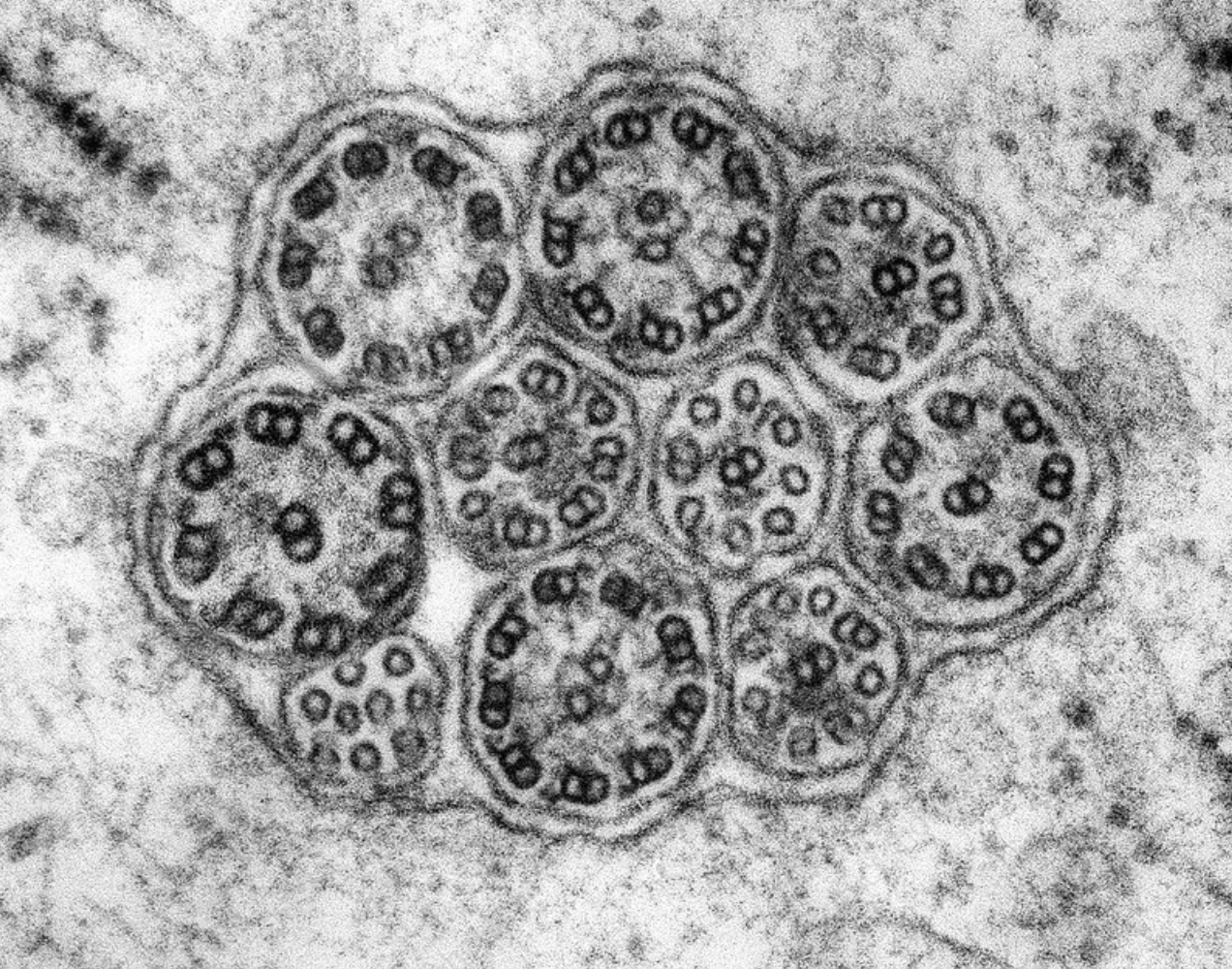
Nine arrays of microtubule doublets support the stalk of a single cilium in the brain’s hippocampus, allowing both suppleness and linear structure. [4]
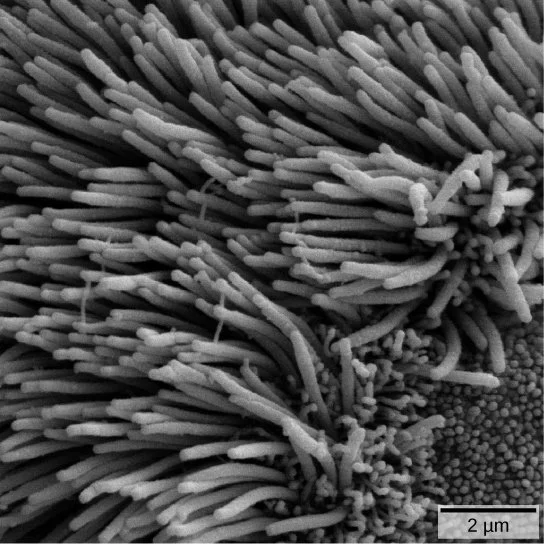
Cilia in parallel formation contribute to waves of motion of fluid and dissolved or suspended substances, directing those where needed. [5]
The brain requires microtubules to function
Microtubules give structural support to axons, maintain the structure and function of synapses, [6] and transport neurotransmitters. While microtubules give structural support, they are also supple, rapidly growing and shrinking as the brain’s needs demand. Microtubules are required for cognitive and memory functions. [7]
All this function is impaired by the -azole drugs, because microtubules are thwarted by the -azole drugs, as in the following mechanism.
Chemo brain is a notorious condition of neurotoxicity caused by chemotherapy drugs, including those that damage or disrupt microtubules. Chemo brain victims commonly suffer from impaired memory, impaired cognition and encephalopathy.
Taxanes are a class of chemotherapy that disrupt and thwart construction of microtubules in part by binding to mitochondrial β-tubulin. These drugs, including Taxol, paclitaxel, docetaxel, etc. specifically bind to the colchicine receptor, and prevent the protein tubulin from forming microtubules. [8]
Like the taxanes, mebendazole crosses the blood brain barrier [9] and has this exact same mechanism of action of damaging the brain - binding to mitochondrial β-tubulin - that causes “chemo brain” in cancer patients who have had taxane drugs. [10][11]
The other major class of chemotherapy drugs that cause brain damage by binding to tubulin, and preventing the construction of microtubules, consists of the vinca alkaloids. These drugs include vincristine and vinblastine. The motive for using these in cancer is, like the taxanes, to prevent cancer cells from reproducing. However, the damage that the vinca alkaloid drugs inflict on the brain, “chemo brain” is by the same mechanism that mebendazole attacks the brain. That is, binding β-tubulin as an obstacle to microtubule formation.
Mebendazole and fenbendazole both bind β-tubulin. Both cross the blood-brain barrier, particularly in nanoparticle size. [12] Both should be assumed to be hazardous to the brain, and hazardous to microtubule formation in human normal cells.
“If you want a functional respiratory tract or a functional GI tract or a functional brain, then you do not want to play a game of seeing how much you can poison the microtubules in your cilia or in your mitochondria before you start getting sick.”
Microtubules are needed to remove debris from the body.
Microtubules are “tiny spider web-like threads that fill every corner of every cell. They form and dissolve instantaneously. They pull autophagosomes to lysosomes, to make autolysosomes. This cannot happen without microtubules.” [13]
Autophagosomes are mobilized and pulled to the nuclear region of the cell by microtubules. Autophagosomes are the central actor in autophagy. This is what is achieved in a fasting state or in saunas, where the degraded proteins of senescent and damaged and dead cells and other debris are cleared and consumed by autophagosomes pulling toward lysosomes, which digest the debris.
Without microtubules carrying out that transport, the autophagy process of waste removal cannot happen.
Autophagy is not a luxury. Its search and destroy mission against what does not function cooperatively in the body is an essential component of the immune system’s surveillance and activities against cancer. [14][15] Autophagy is already attacked by the cancerous process, because cancer cells develop self-protective anti-autophagy mechanisms.
Because cancer cells can protect themselves by having ways to escape autophagy, it is helpful to use therapeutic agents that induce autophagy specifically in cancer cells. There are drugs, rapalogs, such as rapamycin (sirolimus) and temsirolimus, everolimus, etc. that specifically induce autophagy of cancer cells. This happens through the mTOR pathway. mTOR is an essential signaling pathway for autophagy. But that category of drugs has intolerable side effects.
There are natural substances that induce autophagy in cancer cells more directly, such as botanical medicines that contain genistein, such as Astragalus and Comfrey. Also, Quercetin, Green tea, Ashwagandha and Licorice root have rapamycin-like function but are far more tolerable than the above drugs. These herbs all support autophagy. Salvia miltiorrhiza is another herb that promotes autophagy in cancer cells. Apigenin is a flavonoid in Chamomile and in some vegetables that is pro-autophagy in cancer cells.
Berberine has been shown to induce autophagy and autophagic cell death in gastric cancer, breast cancer, and one of the hardest cancers to treat, namely glioblastoma. Turmeric is known to induce autophagy in colon cancer, leukemia, ovarian cancer, lung cancer, and another very hard to treat cancer, namely esophageal cancer. [16] Resveratrol also inhibits breast cancer and other cancers by inducing autophagy via multiple mechanisms.
So to summarize, microtubules are needed to carry out autophagy-type debris removal, and that natural process of surveillance and waste removal is part of the immune system’s function against cancer. Cancer, on the other hand, survives by avoiding autophagy.
“It is not helpful, when trying to avoid cancer, or to eliminate cancer, to take a drug such as mebendazole and fenbendazole that thwarts autophagy by destroying microtubules.”
Why you do not need fenbendazole or mebendazole
So when you add fenbendazole or mebendazole, which have the specific chemotherapy function of selectively disrupting microtubules, [17] you interfere with this essential waste removal function against cancer.
Like the expensive chemotherapy in hospitals, certainly the -azole drugs to some extent kill cancer, and they even kill parasites. The problem is that they also damage normal cells throughout the body.
The expensive hospital chemotherapy that disrupts microtubules include the taxanes, such as paclitaxel and docetaxel, as well as the vinca alkaloids, such as vincristine and vinblastine, discussed above regarding the damage that they do to the brain. Besides that enormous cost, these toxic substances also lead to cancer recurrence within about 15 months. [18] With fenbendazole or mebendazole, you could sicken yourself much more cheaply, if that were your goal. In fact, because fenbendazole’s main use is as a dog de-wormer, you can buy it over the counter from any number of fly-by-night anonymous vendors on the internet, and for a much lower price than conventional chemotherapy.
It has been known for years that fenbendazole does not help cancer patients.
I had hoped that my 2023 article on the damage done by fenbendazole to the liver would be persuasive enough to deter its use by people wanting to fight cancer. [19]
I had also hoped that my article of early 2026 on parasites and cancer would let people know that cancer has a completely different geographic distribution around the world than parasites. Cancer is generally endemic far from the equator, and parasites are generally endemic near the equator. Also, parasites have different ways of arriving to and attacking the body and reproducing than cancer has. And therefore the anti-parasitic drugs are not a cancer panacea as advertised by online vendors. [20]
However, fenbendazole and even the human anti-parasite drug mebendazole are still being sold by anonymous vendors online for allegedly anti-cancer effect.
Why did anybody ever think the -azole drugs were a good idea against cancer?
The microtubule disruptors, such as the taxanes and the vinca alkaloids described above, have a mechanism against cell reproduction. Cells cannot divide and reproduce without microtubules, which align chromosomes and enable them to be pulled apart toward different daughter cells. The thinking went like this: Cancer cells divide faster than normal cells. So if you stop cell division, you’ll injure cancer cells more than injuring normal cells. Hence, the taxanes and vinca alkaloid chemo drugs arose. But then, so did use of the cheap knockoffs, fenbendazole and mebendazole, for the same hopeful objective.
Unfortunately, there were people so taken in by that promise or sales pitch, that even on arriving to the clinic with the best documented results against cancer, some of our new patients could hardly be persuaded to stop the -azole drugs. Unfortunately, resilient cancers and even deaths occurred in those whom we could not persuade to stop injuring themselves with these drugs.
There is no credible evidence of the -azole drugs working to rid any individuals of cancer
As of this writing, no celebrity, no specific named individual has come forward and publicly claimed that he or she has been healed from cancer with only fenbendazole. If there are individuals lucky enough to have escaped the pro-cancerous effects of fenbendazole, it is likely that they were also taking other substances that were far more helpful. A case series, now retracted, of three cancer patients showed improvement on protocols that included fenbendazole. [21] A later summary attributed all of the patients’ improvement to fenbendazole, but also revealed in the finer print that all three of the patients in that case series had also been taking vitamin D. [22] Vitamin D3 has decades of known anti-cancer effects and reduction of cancer mortality, as shown in this meta-analysis, [23] and in this meta-analysis in which “Vitamin D3 seemed to significantly decrease mortality.” [24]
Chemotherapy resistance is even more dangerous than antibiotic resistance
It has long been known that too little dosing of an antibiotic has the undesired effect of causing stronger, resistant bacteria that are now harder to treat, harder to eliminate. This leads to intractable bacterial infections such as MRSA (methicillin-resistant Staphylococcus aureus) and C diff (Clostridioides difficile).
Similarly, the use of fenbendazole is especially unwise, because cancer is heterogenous and quickly mutating. Therefore, it is capable of inactivating single purpose molecules such as chemotherapy and the -azole drugs. This is because cancer mutates past the effects of those drugs fairly easily, in an average of 15 months as shown above. [25]
How chemotherapy promotes eventual resistance to chemotherapy
I discussed above how the taxanes, the vinca alkaloids and mebendazole all bind to the β-tubulin protein, which has the result of thwarting the formation of microtubules, in both cancer cells and normal cells. I showed how this process creates pathological conditions in the lungs, the GI tract and the brain.
An even bigger problem than the ones discussed above is that cancer cells – not normal cells – mutate beyond the particular obstacle of β-tubulin protein binding. [26] Cancer cells – among other actions – mutate to alter the drug-binding site, in order to get around this problem, which has the result of cancer cells surviving the chemotherapy tool that previously worked against the parent cancer cells.
So in essence, while normal cells are weakened by these drugs’ β-tubulin protein binding mechanism, cancer cells mutate in such a way as to make themselves resistant to the drugs’ effects. This process has the result of leaving normal cells weaker and leaving cancer cells stronger.
Our clinic’s recommendation
In the experience of our clinic, for a cancer patient to take a mild chemotherapy such as fenbendazole or mebendazole, begins a process of tolerance and then mutation and adaptation, which allows the tumor to become resilient to this gentle nudge. The net result ends with strengthening the existing cancer.
Having a little bit of a mild chemotherapy is one of the worst strategies against cancer, from what we have seen over the years. We continue to recommend avoidance of the benzimidazole drugs.
-
1 J Laclette, G Guerra, et al. Inhibition of tubulin polymerization by mebendazole. Jan 29 1980, Biochem and Biophys Res Comm. pp. 417.423. https://www.sciencedirect.com/science/article/abs/pii/0006291X80903496?via%3Dihub
2 N Dogra, A Kumar, et al. Fenbendazole acts as a moderate microtubules destabilizing agent and causes cancer cell death by modulating multiple cellular pathways. Aug 9 2018. Nature. 8. 11926. https://www.nature.com/articles/s41598-018-30158-6
3 A Mescher. Junqueira’s Basic Histology [Textbook]. 15 th ed.. 2018. Lange, McGraw Hill Education. p. 42.
4 [Photo:] D Kunkel. Photo of epithelial cell cilia in the hippocampus. Microscopy / Science Cell Library. https://www.sciencephoto.com/media/864717/view/epithelial-cilia-microtubules-cross-section-tem
5 [Photo:] J Comunale. Cilia in the respiratory system: Overview, structure and function. Study.com. https://study.com/academy/lesson/respiratory-cilia-definition-function.html
6 K McLinden, S Trunova, et al. At the fulcrum in health and disease: Cdk5 and the balancing acts of neuronal structure and physiology. Jul 2012. Brain Disord Ther. https://pmc.ncbi.nlm.nih.gov/articles/PMC4212508/
7 X Chen, G Sun, et al. Modeling sporadic Alzheimer’s Disease in human brain organoids under serum exposure. Aug 2 2021. 8 (18). Adv Sci (Weinh) https://pmc.ncbi.nlm.nih.gov/articles/PMC8456220/
8 R da Costa, G Passos, et al. Taxane-induced neurotoxicity: Pathophysiology and therapeutic perspectives. Jun 3 2020. Br J Pharmacol. https://pmc.ncbi.nlm.nih.gov/articles/PMC7312267/
9 D Meco, G Attinà, et al. Emerging perspectives on the antiparasitic mebendazole as a repurposed drug for the treatment of brain cancers. Jan 10 2023. Int J Mol Sci. 24 (2). 1334. https://pmc.ncbi.nlm.nih.gov/articles/PMC9862092/
10 E Lacey. Mode of action of benzimidazoles. Apr 1990. Parasitol Today. 6 (4). 112-115. https://pubmed.ncbi.nlm.nih.gov/15463312/
11 R Thakur, S Patel. Mebendazole. Jan 2026. StatPearls. https://www.ncbi.nlm.nih.gov/books/NBK557705/
12 P Yarzon, W Nunes, et al. Nanosuspensions of fenbendazole and ivermectin induce parasite death and low inflammatory response in experimental neurocysticercosis. Oct 2025. Acta Tropica. 270 107776. https://www.sciencedirect.com/science/article/abs/pii/S0001706X25002475
13 J Stansbury. Botanical influences on autophagy [lecture]. Feb 2026. Southwest Conference on Botanical Medicine
14 B Kardideh, Z Samimi, et al. Autophagy, cancer and angiogenesis : where is the link? Aug 13 2019. Cell Biosci. 9 (65). https://pmc.ncbi.nlm.nih.gov/articles/PMC6693242/
15 G Kisen, L Tessitore, et al. Reduced autophagic activity in primary rat hepatocellular carcinoma and ascites hepatoma cells. Dec 1993. Carcinogenesis. 14 (12). https://pubmed.ncbi.nlm.nih.gov/8269618/
16 B Liang, F Shi. Curcumin nanoparticle induces apoptosis in colon cancer cells via ROS-mediated AMPK/mTOR/ULK1 autophagy pathway. Jan 2026. Phytother Res. 40 (1) 176.193. https://pubmed.ncbi.nlm.nih.gov/41252742/