
Cancer has vastly different geography and history in human populations than parasites. Whereas parasitic disease incidence is generally higher near the equator, cancer incidence is generally higher away from the equator. The assumption that cancer arises from parasitic infection is based on lack of familiarity with geography, history, and biochemistry.
Two subdivisions of parasites are generally considered: Worms (formally helminths) and protozoa.
Helminths include unrelated subdivisions or phyla, most commonly nematodes (roundworms), Platyhelminthes (tapeworms, flatworms and flukes), among other helminthic phyla.
As for protozoa, the most common to infect humans are Giardia, Cryptosporidium and Entamoeba histolytica. Previously, the scourge of malaria, spread by Plasmodium protozoa was the most threatening to humans of protozoan infections.
In this paper, I will show that these most common human parasitic infections cannot be the cause of cancer, and I base this argument on history and geography. In general, parasites occur much more commonly in tropical regions, affecting more than one billion people. But cancer has a generally lower incidence in tropical regions.
Helminths
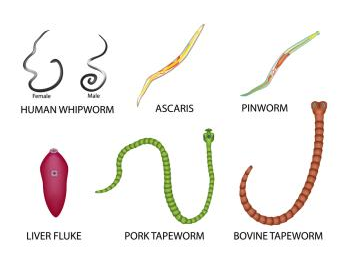
Dr. Susan Jamieson
Giardia Protozoa
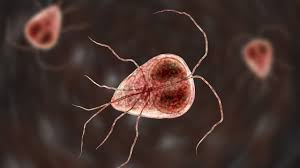
CDC
Cancer Cells
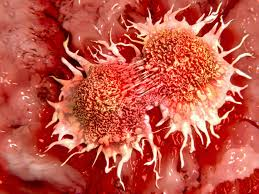
SciTech Daily
Helminthic parasites
Here is the distribution of helminthiases, meaning generally worm parasite diseases. [1]
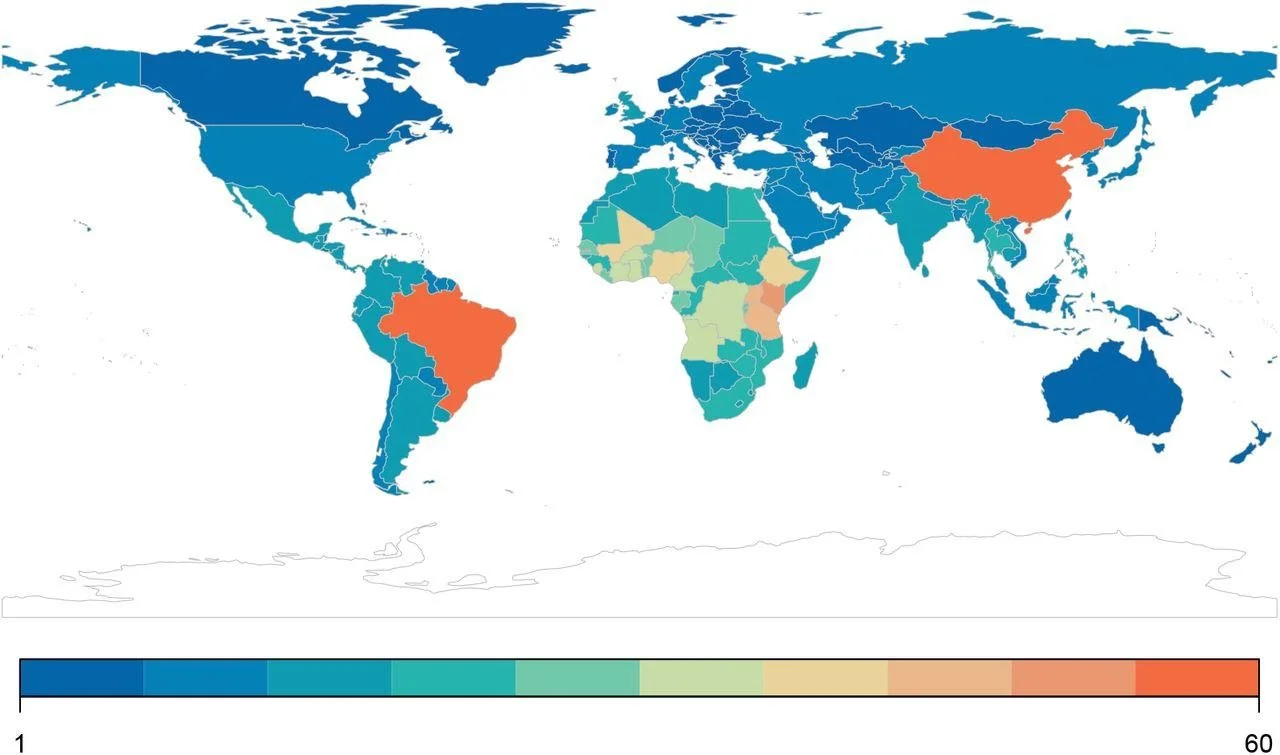
The authors found “Most published spatial research on human helminthiases describes incidence and burden in Sub-Saharan Africa, China and Brazil.” These countries are closer to the equator than the temperate and subarctic countries.
Protozoan parasites
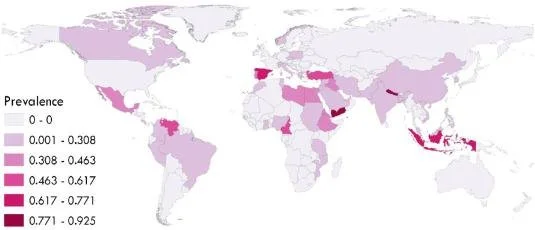
Here is a map of the distribution of protozoa contamination found around the world in fruits and vegetables. [2] We see higher distribution of that contamination mostly near the equator.
Giardia lamblia
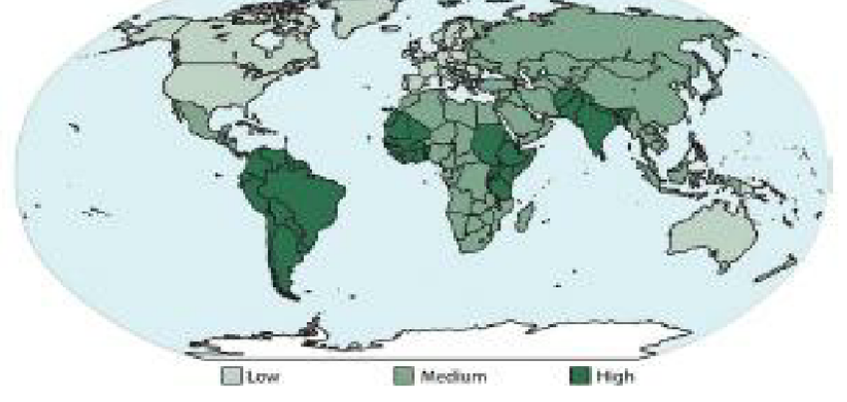
Food and water are a common source of Giardia lamblia infection. The worldwide distribution of Giardia species infections in humans is mapped below. [3] Again, countries close to the equator are generally more heavily involved than temperate or subarctic countries.
Plasmodium species
The map below shows the distribution of the Plasmodium protozoa, which causes malaria infections in humans. [4] Here again we see the distribution of malaria cases is close to the equator:
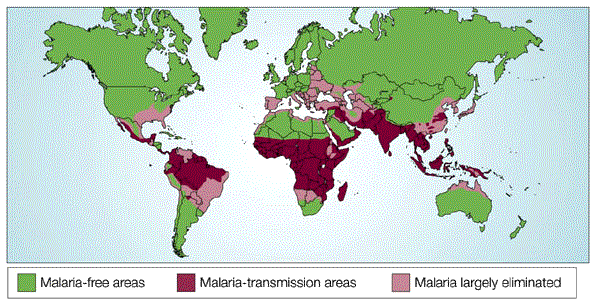
We see in the above maps a general preponderance of parasitic infection closer to the equator rather than away from the equator.
Cancer’s geographic distribution
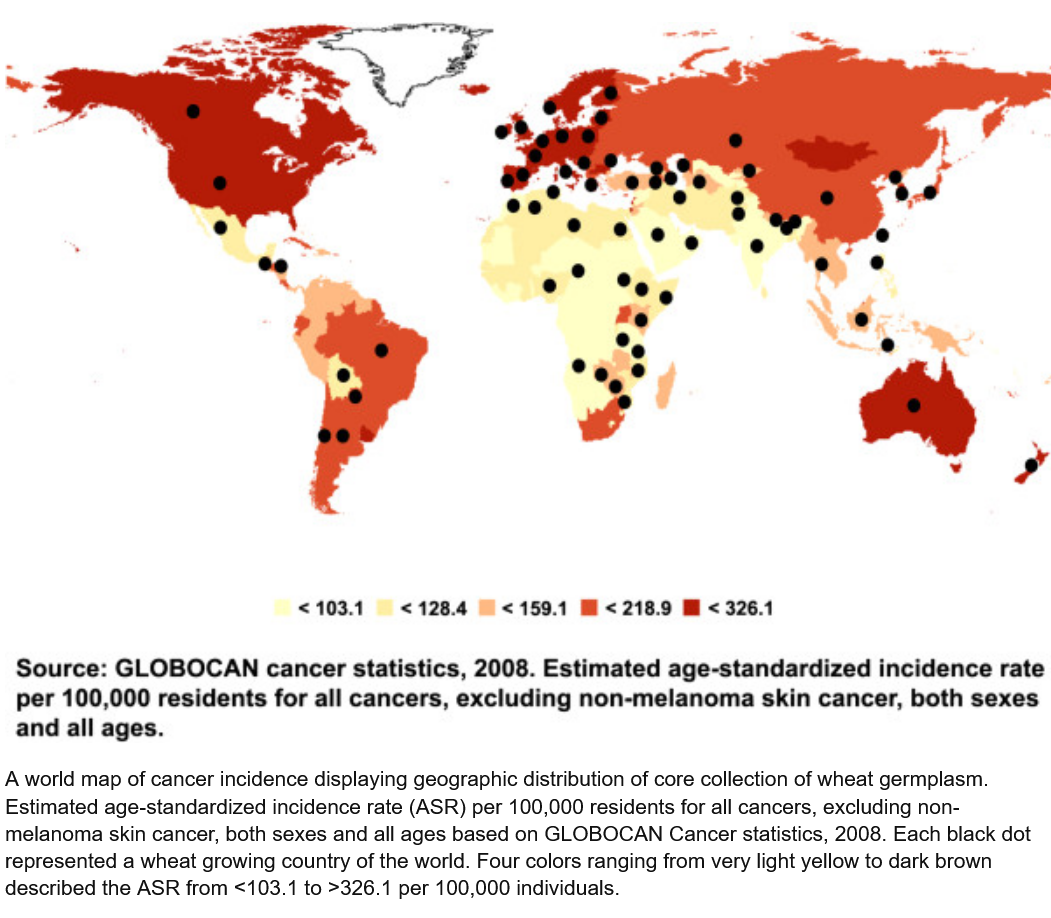
On the other hand, cancer has a very different distribution from helminthic parasites. From the International Agency for Research on Cancer. [5] [6]
Parasitic diseases suffered by humans often affect the GI tract, particularly the intestines. Therefore, we should also look at worldwide incidence of colorectal cancer.
Here is the distribution of colorectal cancer. [7]
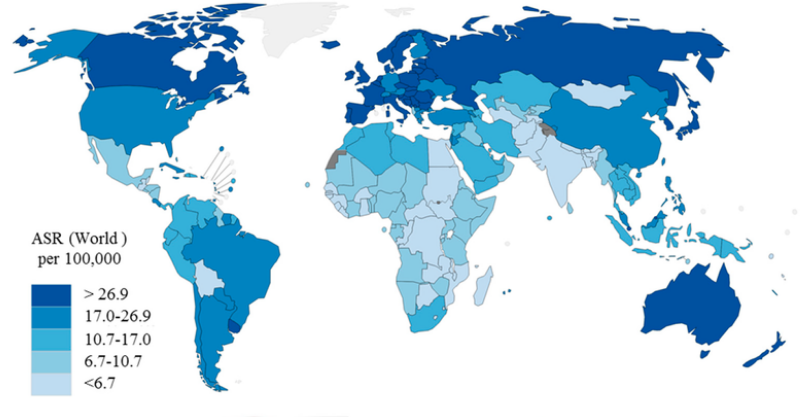
We see from the above map that the highest incidence of colorectal cancer is farthest from the equator. So even with colorectal cancer, the distribution of the cancer incidence is the opposite of parasitic disease distribution.
Parasites are more often detected in the stool than from other testing. Here is a list of parasites in stool tested by a leading parasitology laboratory.
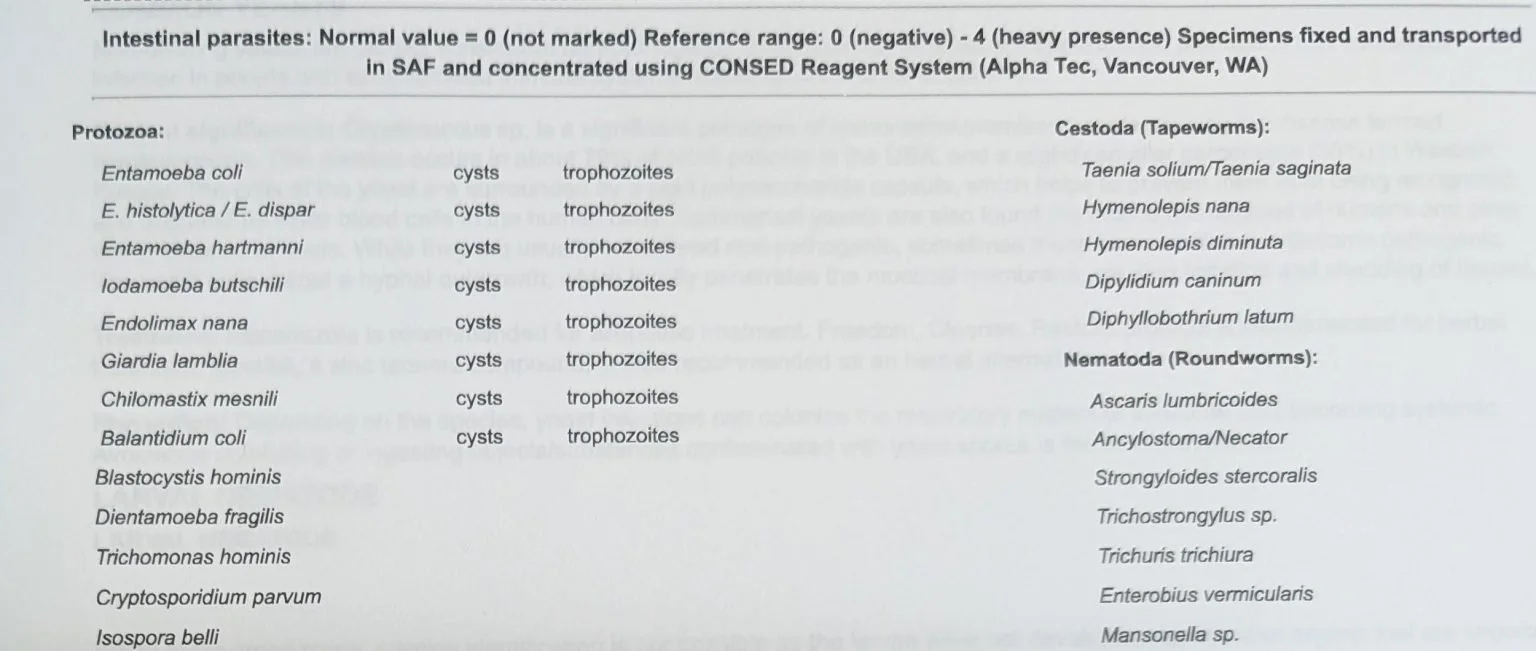
And here is a list of fluke parasites tested in the stool by the same laboratory:
Schistosoma spp., Fasciola / Fasciolopsis, Paragonimus westermani, Clonorchis / Heterophyes / Metagonimus
Patients at our clinic have been very interested in parasites after discussing them with others who are interested in parasites, but very few stool tests of patients at our cancer clinic actually show positive results for parasites. We test especially when we encounter the rare patient who actually shows symptoms typical of parasitic infection. This is not at all common in the United States.
Cancer has different geography than parasites
In the above maps, we see that the tropical regions of Africa have some of the highest parasitic disease incidence and the lowest cancer incidence. Whereas parasitic disease incidence is generally higher near the equator, cancer incidence is generally higher away from the equator.
Cancer has different history than parasites
In the United States, helminthic parasitic infections declined during the first two decades of this century. [8] The black curve represents the total helminthic discharges found, with the major subtypes in the color curves.
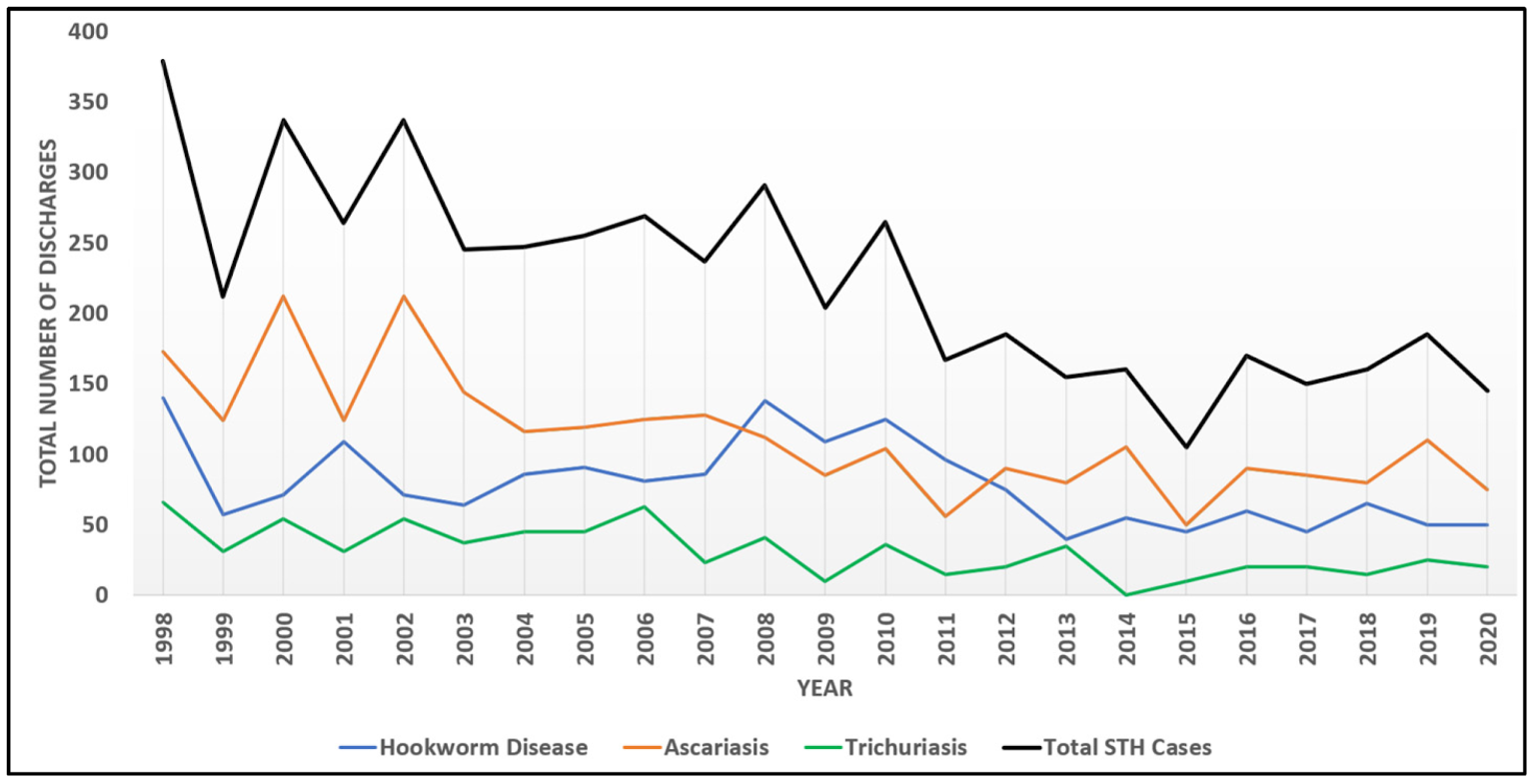
It should be noted that in the above graph, only 5,124 cases of helminthic infection of humans had been reported in the United States in the entire period of 1998 to 2020. During those years the number of helminthic infections in people in the U.S. declined 380 / 170 = 55%.
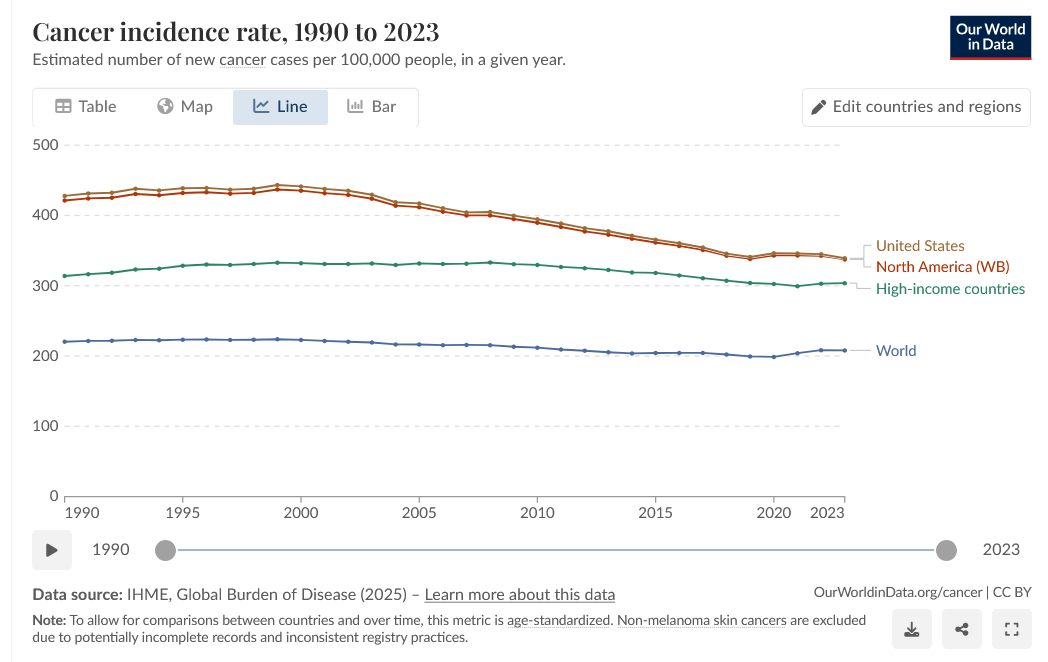
Cancer also continued to decline during the same years, but at less than half that rate, 438 / 346 = 21%. [9]
Cancer affects far more people than parasites in the United States
We saw above that only 5,124 cases of helminthic parasites were reported in the United States in a 23-year period. In that same period, 43,100,000 new cancer cases were reported in that period. [10] [11]
Therefore, new cancer diagnoses outnumbered new parasitic helminth diagnoses by over 8,400 times from 1998 through 2020.
This enormously disproportionate ratio alone precludes parasites from being causative of the vast majority of cancers. In other words, parasites don’t cause cancer.
What if the opposite is the case? Can parasites protect against cancer?
It would probably seem to conventional wisdom to be a leap to assume that parasites could be protective against cancer. However, certain common parasites, Toxoplasma gondii, Plasmodium species and Trypanosoma cruzi have shown inverse correlation with cancer.
Toxoplasma gondii
Human exposure to the parasite Toxoplasma gondii is from domestic cat feces. But cat owners have no higher incidence of cancer than the rest of the population.
It was found that antibodies against Toxoplasma gondii also attached to cancer cells. This is potentially a useful marker for a future therapeutic that targets both the parasite and the cancer. [12] Zheng and Lu show in the following diagram how several immune-activating pathways initiated by a Toxoplasma gondii infection oppose cancer. [13]
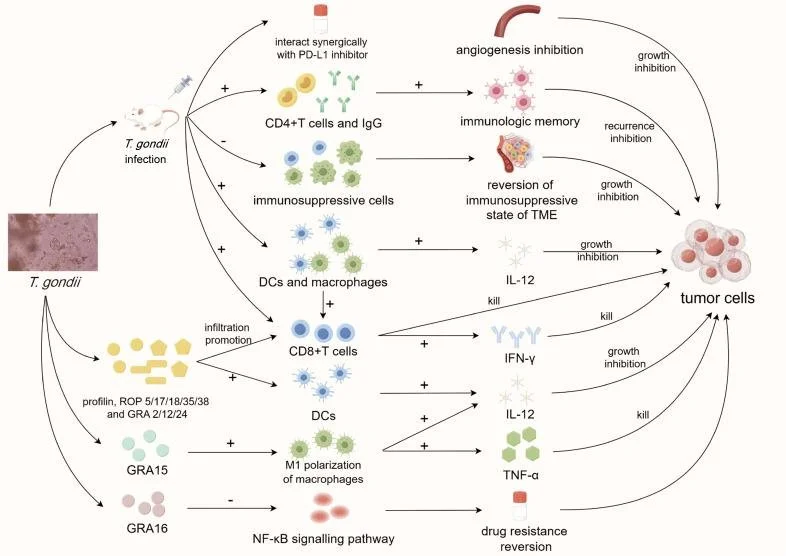
This is not new information. It was observed a half century ago that when mice with brain tumors were infected with Toxoplasma gondii, there was more cancer cell death in the brain tumors than in the mice without the infection. [14]
Because this has been known for a long time, researchers injected Toxoplasma gondii organisms into tumors in mice, which significantly inhibited the growth of the cancer. [15] Even Toxoplasma antigen alone, without the whole organism, was enough to inhibit tumor growth in mice. [16]
Plasmodium species and malaria
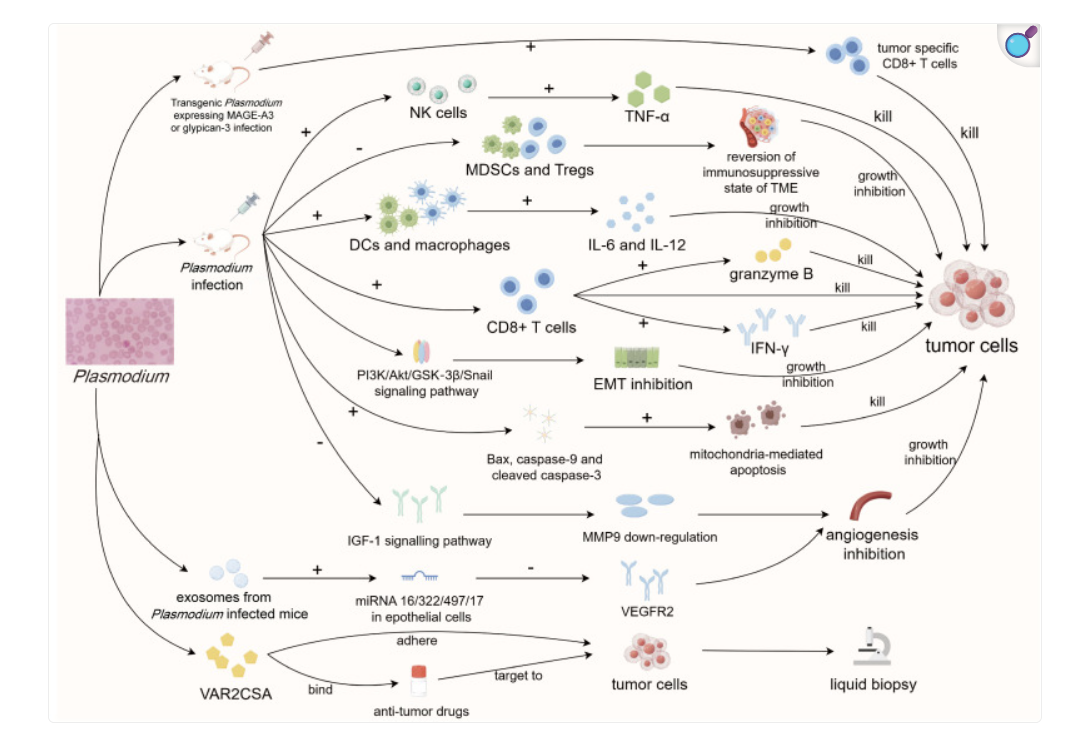
Plasmodium species are known to cause malaria, which is a deadly scourge that has devastated populations for centuries. However, the immune system is stimulated by a Plasmodium infection in ways that fight cancer, as Zheng and Lu show below. [17] This activity was confirmed in experiments by Tragher and McGhee. [18]
Trypanosoma cruzi
Chagas disease is caused by the protozoa Trypanosoma cruzi. In 1946, Soviet scientists explored the relationship between Trypanosoma and cancer, and found that the former invaded the latter, [19] and there they compete with each other for growth factors and immune evasion tactics. [20]
It is probably not worth the risk to deliberately infect cancer patients with pathogenic parasites to try to inhibit or eliminate cancer. That is not a practice that has met with favor in our time, and we certainly do not do this at Nature Works Best Medical Clinic.
If cancer is not a parasitic disease, why does ivermectin work against both?
One of most powerful known roles of ivermectin, the strongest mechanism of action is as a zinc ionophore. This means that it carries zinc into cells. Its mechanism for doing this is that two ivermectin molecules encircle positive cations including zinc, surrounded by negatively charged oxygen molecules, the O’s encircled in red in the following diagram. [21]
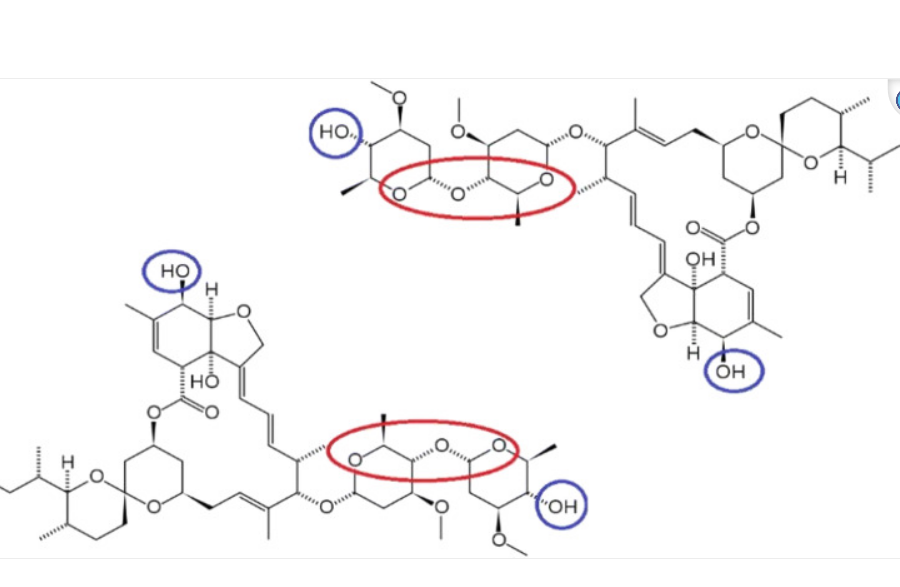
This is a chaperone mechanism into the cells. The value of this as a tool against cancer is that zinc has dozens of known anti-cancer molecular mechanisms. So normal cells do well with this effect. But cancer cells, viruses and parasites are all harmed by this action.
Ivermectin’s action against parasites is to allow too much chlorine to enter the parasite, which results in paralysis and death of the parasite. [22] This is also one of its effects on cancer cells, which leads to death of cancer cells, [23] although it is observed to not have that effect on normal human cells.
Conclusion
At various times during the course of our clinic’s history, an urban legend has made the rounds of public opinion. The most recent urban legend seems to be: ‘Cancer must be an externally caused infection, so let’s blame parasites.’
This article has provided evidence from the published medical literature that cancer and parasites predominantly affect different parts of the world, and have taken different historical paths, and are therefore unrelated.
The assumption that cancer arises from parasitic infection is based on ignorance of geography, history, demographics and microbiology. Unfortunately, due to that ignorance, many people are currently trying the latest fad in at home cancer remedies – a dog anti-parasitic drug, a dewormer known as fenbendazole, or by its street name, “fenben.”
Fenbendazole is hepatotoxic, unstandardized because it is a veterinary drug rather than a human drug, and is therefore never recommended for anyone at all by our clinic. This clinic has specifically warned people against the fenben fad for the last several years of its popularity. Unfortunately, of those who did not heed our warning about this, patients who left our clinic were later found to have injured their livers.
Cancer is a disease that grows in the body following toxic influences, whether pesticides, vaccines, the SV-40 contaminant of many vaccines, or other common toxic substances. It is essential for us to help the patient to eliminate the metabolites of those substances, and to help the body prevent the growth of new cancer, while using selectively cancer-killing nutrients to help the patient eliminate cancer.
-
C Schluth, C Standley, et al. Mapping the human helminthiases: a systematic review of geospatial tools in medical parasitology. medRxiv (Preprint] Aug 8 2022. https://www.medrxiv.org/content/10.1101/2020.10.30.20223529v2.full
M Badri, Molfatifar, et al. Global prevalence of intestinal protozoan contamination in vegetables and fruits: A systematic review and meta-analysis. March 2022. Food Control. 133: B. https://www.sciencedirect.com/science/article/abs/pii/S0956713521007945
S Keskes, Y Mekonen.. A systematic review on neglected important protozoan zoonoses. Jan 2015. https://www.researchgate.net/publication/275207236_A_Systematic_Review_on_Neglected_Important_Protozoan_Zoonoses
P Sabeti. Natural selection: Uncovering mechanisms of evolutionary adaptation to infectious disease. Nature Education. 1 (1): 13. https://www.nature.com/scitable/topicpage/natural-selection-<br>uncovering-mechanisms-of-evolutionary-adaptation-34539/
International Agency for Research on Cancer: Cancer incidence, mortality and prevalence worldwide in Lyon, 2008. IARC. https://gco.iarc.fr/en
M Santra, S Matthews, et al. Development of a core collection of Triticum and Aegilops species for
improvement of wheat for activity against chronic diseases. Feb 2013. Agriculture and Food Sec.
https://www.researchgate.net/publication/257884786_Development_of_a_core_collection_of_Triticum_an
d_Aegilops_species_for_improvement_of_wheat_for_activity_against_chronic_diseasesE Ferlizza, R Solmi, et al. The roadmap of colorectal cancer screening. Mar 2021. Cancers. 13 (5).
https://www.researchgate.net/publication/350679855_The_Roadmap_of_Colorectal_Cancer_ScreeningC Cross, B Carrier, et al. Descriptive epidemiology of soil-transmitted helminthic infections in the United States: Using big data to characterize patients and analyze parasitic disease trends. Oct 28 2024. Pathogens. https://www.mdpi.com/2076-0817/13/12/1091
Our World in Data. Cancer incidence rate, 1990 to 2023. 2025. https://ourworldindata.org/grapher/cancer-incidence?tab=line&country=USA~OWID_WRL~OWID_HIC~WB_NA&time=1990..2023
Centers for Disease Control. United States Cancer Statistics. Jun 2025. CDC. https://www.cdc.gov/united-states-cancer-statistics/publications/uscs-highlights.html
Gemini AI. [Multiple sources compiled from the American Cancer Society and National Instituties of Health, from query: What is the incidence of cancer in the U.S. from 1998 through 2023?]
F Mohamadi, M Shakibapour, et al. Anti-Toxoplasma gondii antibodies attach to mouse cancer cell lines but not normal mouse lympocutes. Jan 17 2019. Biomed Rep. 10 (3). 183-188. https://pmc.ncbi.nlm.nih.gov/articles/PMC6403471/
Z Zheng, X Lu, et al. A novel enemy of cancer: Recent investigations inro protozoan anti-tumor properties. Jan 2024. Front Cell Infect Microbiol. 13 (1325144). https://pmc.ncbi.nlm.nih.gov/articles/PMC10808745/
F Conley, J Remington. Nonspecific inhibition of tumor growth in the central nervous system; observations of intracerebral ependymoblastoma in mice with chronic Toxoplasma infection. Sep 1977. J Natl Cancer Inst. 59 (3). 963-73. https://pubmed.ncbi.nlm.nih.gov/894752/
Y Suzuki, A Kobayashi. Antitumor effect of intralesional injection with formalin-fixed Toxoplasma gondii organisms on Lewis lung carcinoma in Toxoplasma-infected mice. Jan 1985. Cancer Lett. 25 (3). 247-254. https://pubmed.ncbi.nlm.nih.gov/3971344/
H Darani, H Shirzad, et al. Effects of Toxoplasma gondii and Toxocara canis antigens on WEHI-164 fibrosarcoma growth in a mouse model. May 27 2009. Korean J Parsitol. 47 (2). 175-177. https://pmc.ncbi.nlm.nih.gov/articles/PMC2688801/
Z Zheng, X Lu, et al. Ibid.
W Trager, R McGhee. Inhibition of chicken tumor I by plasma from chickens infected with an avian malaria parasite. Jun 1953. Proc Soc Exp biol Med. 83 (2). 349-352. https://pubmed.ncbi.nlm.nih.gov/13064267/
N Klyueva, G Roskin. Cancerolytic substance of Schizotrypanum cruzi. Dec 1946. 4 (2). 127-129. https://pubmed.ncbi.nlm.nih.gov/20277488/
A Ouaissi, M Ouaissi. Molecular basis on Trypanosoma cruzi and Leishmania interaction iwth their host(s) : exploitation of immune and defense mechanisms by the parasite leading to persistence and chronicity, features reminischent of immune system evasion strategies in cancer diseases. Mar-Apr 2005. Arch Immunol Ther Exp. 53 (2). 102-114. https://pubmed.ncbi.nlm.nih.gov/15928579/
E Rizzo. Ivermectin, antiviral properties and COVID-19: a possible new mechanism of action. May Naunyn Schmiedebergs Arch Pharmacol. 393 (7). 1153-1156.
https://pmc.ncbi.nlm.nih.gov/articles/PMC7251046/#CR16T Geary. Ivermectin 20 years on: maturation of a wonder drug. Nov 2005. Trends Parasitol. 21 (11).
530 532. https://www.cell.com/trends/parasitology/abstract/S1471-4922(05)00228-XM Juarez, A Scholnick-Cabrera, et al. The multitargeted drug ivermectin : from an antiparasitic agent
to a repositioned cancer drug. Feb 2018. Am J Cancer Res. 8 (2). 217-331.
https://pmc.ncbi.nlm.nih.gov/articles/PMC5835698/
