
Rosemary - Herbal Monograph Series
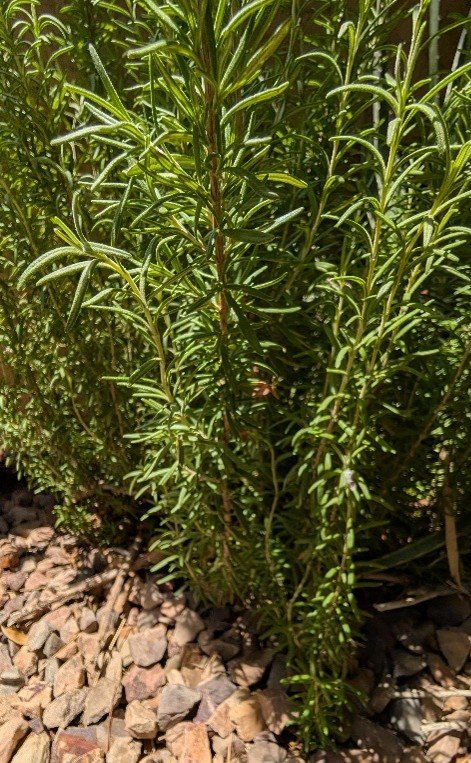
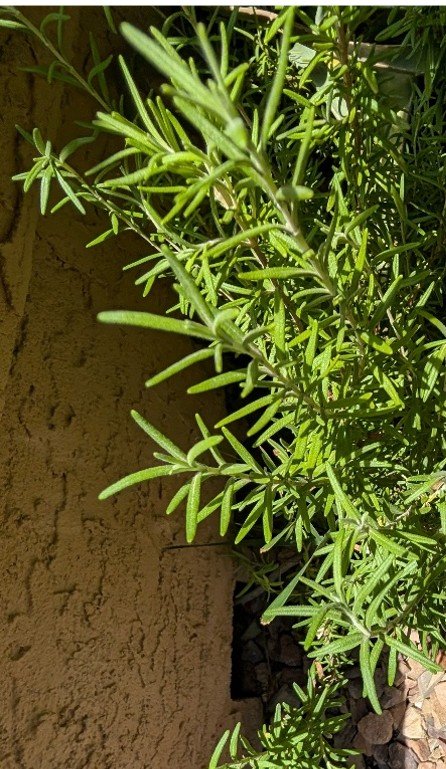
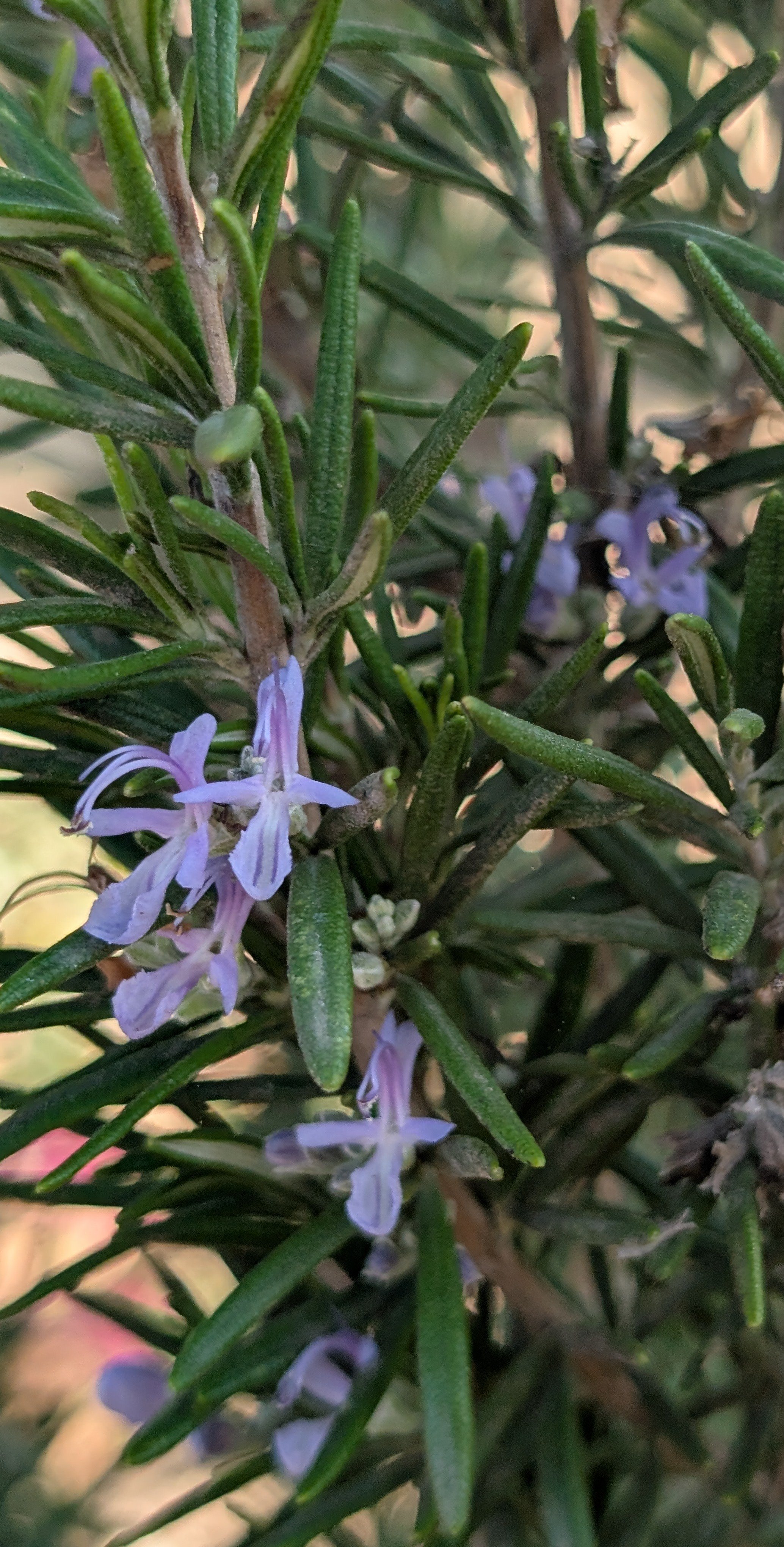
Rosemary – Rosmarinus officinalis aka Salvia rosmarinus blossoms and leaves
Uses
One of the top 4 plants for memory, learning and cognition, along with Ginkgo biloba, Panax quinquefolius and Bacopa monnieri
Top plant for stimulating scalp circulation and hair follicles
Together with DMSO, top topical treatment for Herpes zoster (shingles)
Top cultivated culinary herb throughout the world
Carminative
For memory, learning and cognition
A meta-analysis of 45 studies examining the cognitive performance of rodents, comparing a total of 248 normal control animals versus 280 animals that consumed rosemary found a 19% increase in performance, considered stastistically significant (P<0.00001).[1]
Rosemary powder dosed near the level of culinary use, at 750 mg, showed improved speed of memory from placebo in older adults with average age of 75 years.[2]
For circulation generally and scalp circulation particularly
Rosemary is also known to stimulate circulation in the skin and on the scalp. The 1926 United States Dispensatory describes the oil of Rosemary as a rubefacient (from rube – red, facere – to make or to make happen). This is the bringing of bloodflow to the skin surface, after topical use of the oil or the leaves. When applied to the scalp, hair follicles receive increased bloodflow in the capillaries that feed them.
Shingles treatment
Herpes zoster, commonly known as shingles, is a common and extremely painful skin condition. It is far more common in this century, as vaccine zealotry has led to more and more children being vaccinated for chicken pox, (which is the same virus), which directly caused increased outbreaks of shingles skin lesions in children and adults.[3][4][5] As with other vaccines, the chicken pox vaccine and the shingles vaccine both have negative efficacy and therefore cause more disease.
Herpes zoster virus remains dormant in affected individuals at the dorsal nerve root of the spine. Low immune function or an acute stressor can activate the virus to spread along the skin path, known as a dermatome, in a particular band-like pattern across the corresponding area of skin. Lesions are usually intensely painful, described as burning, and conventional medicine offers no solution.
At the Nature Works Best Medical Clinic, we have used a time-tested naturopathic remedy for shingles that works well to eliminate shingles pain within 24 to 48 hours. A mix of Rosemary oil and di-methyl sulfoxide (DMSO) in equal parts is applied to the affected skin up to five times per day. Our clinic learned this from naturopathic physician Shidfar Rouhani, ND.
Carminative
Rosemary is also used as a carminative for flatulent dyspepsia.
Pharmacology and Mechanisms of Action
Acetylcholine is one of the most important neurotransmitters. It enables memory, attention and voluntary muscle use. It is used in both motor and autonomic functions.
Acetylcholinesterase is a naturally occurring enzyme in the human brain that breaks down acetylcholine. To some extent this function is necessary to fine-tune the neural signaling by acetylcholine, as stimulation, but not overstimulation in the ongoing carrying out and coordination of cognition, movement and sympathetic / parasympathetic functions.[6] The more that enzyme breaks down acetylcholine, the more risk of Alzheimer’s Disease and other neurodegenerative disorders.[7]
Rosemary inhibits this enzyme acetylcholinesterase, which allows more acetylcholine to linger at the neural synapses. [8] This is the very mechanism that the pharmaceutical industry has pursued for decades in the drugs it produces to treat Alzheimer’s Disease and other dementia symptoms.[9] Those drugs are not without toxic effects, particularly if the destructive hydrolysis effect on acetylcholine is long-lasting.[10]
Yet Rosemary is so effective for this purpose that it was found to inhibit acetylcholinesterase to an enormous 86% in only a 1.0 mg/ml concentration.[11] Even with this high effect, the herb Rosemary is Generally Recognized As Safe (GRAS) by the FDA under FDA CFR § 182.10 for a natural seasoning and flavoring.[12]
The ultimate effect of inhibiting acetylcholinesterase is to keep acetylcholine from splitting apart, which raises the amount of acetylcholine in the synaptic cleft, which results in prolonged signaling, to stimulate neighboring cells. Both animal studies and human studies have shown that this in turn has the consequent effect of memory formation, including long-term memory formation, as well as cognition.[13][14][15][16]
Rosemary has rubefacient effect on the skin, with circulatory stimulation and hair follicle perfusion when applied to the scalp. This is due to a vasodilating effect to capillary microcirculation on topical application. The U.S. Dispensatory of 1926 directs that oil of Rosemary be prepared as “distilled from the fresh flowering tops of Rosmarinus officinalis.”[17]
A 2015 randomized trial compared Rosemary oil versus the drug minoxidil applied for a 6-month period, and there was no statistical difference found in hair growth between the two substances over that time, with both groups showing significant hair count increase.
Participants using Rosemary oil reported significantly less scalp itching, no initial hair loss, and on discontinuation the Rosemary group did not have rebound hair shedding, while the minoxidil group did have shedding of hair on discontinuation.[18]
A combination of rosemary oil and lavender oil, as well as a combination of rosemary oil and castor oil were compared to coconut oil in a double-blind randomized, placebo-controlled trial of topical application for hair growth. The cohorts receiving the two rosemary combinations outperformed the coconut oil group in hair growth rate, thickness, density, length, root strength and other factors. The researchers attributed these findings to stimulation of follicular activity and extension of the anagen phase, which is the growth phase in the 3.5 year life of a single hair.[19]
It also seems that Rosemary and other hair stimulating herbs may enhance production of keratin,[20] which is the protein that makes up the cortex or middle layer of a hair. This process in turn strengthens hair strands, which results in thicker, denser hair.
There are multiple mechanisms of Rosemary against excess gas entrapment in the lower GI tract, known as flatulent dyspepsia. Gastrointestinal motility was reduced due to anti-muscarinic and potassium channel opening effects.[21] The result is a decrease in spasmodic activity and a relaxing of smooth muscles in the intestines.[22]
Side Effects and Contraindications
Pharmaceutical acetylcholinesterase inhibitors with irreversible effects such as organophosphate molecules and other pharmaceuticals can have side effects of muscle tremors or hypertonia or dyspnea, which are highly toxic.[23]
Rosemary, on the other hand, is likely the most widely used acetylcholinesterase inhibitor in common use for its flavoring, and has a history so safe that the FDA recognizes it as a food seasoning that is included in the FDA category of Generally Recognizes As Safe.[24]
Pure Rosemary essential oil may be irritating to the skin, due to its potent rubefacient effect. It may be diluted as 5 drops of Rosemary essential oil to one or two teaspoons of a carrier oil, such as castor oil, olive oil or coconut oil. As always, guidance by a knowledgeable medical professional, such as a naturopathic physician, with awareness of the individual’s specific skin condition, is recommended.
Native Origin and Range
Rosemary has the distinction of being claimed by both the Mint family and the Sage family of herbs. Indeed, there are aspects of both to make a compelling argument either way. Genetic and molecular research in 2017 showed alignment of Rosemary with the Salvia genus, (the sage family), which gave rise to the recent name change to Salvia rosmarinus.
Rosemary is native to Mediterranean regions, particularly the coastal areas of southern Europe. The southern coast of the Mediterranean is also rich with the importance of Rosemary. It is said that during the Holy Family’s journey to Egypt, escaping King Herod’s soldiers, Mary draped her blue shawl over a white flowered Rosemary bush, and the blossoms have remained that shade of purplish blue shown in the photo above ever since, and that plant has had that name ever since, for being “Mary’s rose.”
Dioscorides was an ancient Greek physician, pharmacologist and botanist, writing in the first century AD. He described Rosemary in his Materia Medica as used for the removal of fatigue.[25]
Rosemary plays a minor role in Shakespeare’s Hamlet, when the character Ophelia says, “There’s Rosemary; that’s for remembrance.” This places awareness of Rosemary’s memory enhancement over four centuries ago.
Now this hardy and fragrant plant grows throughout much of the world, so widespread that it is considered to be the most widely cultivated of the culinary herbs.[26]
-
S Hussain, A Syeda, et al. Cognition enhancing effect of rosemary (Rosmarinus officinalis) in lab animal studies: a systematic review and meta-analysis. Feb 9 2022. Braz J Med Biol Res. 55: e11593. https://pmc.ncbi.nlm.nih.gov/articles/PMC8851910/
G Johnson. Exploratory studies on the potential health benefits of spices and herbs. May 26 2026. Nutr Rev. 84 (Suppl 1). 140-151. https://pmc.ncbi.nlm.nih.gov/articles/PMC13201879/
A Jardine, S Conaty, et al. Herpes zoster in Australia: evidence of increase in incidence in adults attributable to varicella immunization? Aug 23 2010. Cambridge Univ Press. 139 (5). https://www.cambridge.org/core/journals/epidemiology-and-infection/article/herpes-zoster-in-australia-evidence-of-increase-in-incidence-in-adults-attributable-to-varicella-immunization/F8AF256E203AA0D10E88CCB1D66B2F33
P Wu, H Wu, et al. Varicella vaccination alters the chronological trends of herpes zoster and varicella. Oct 30 2013. PLoS One. 8 (10). e77709. https://journals.plos.org/plosone/article?id=10.1371/journal.pone.0077709
W Yih, D Brooks, et al. The incidence of varicella and herpes zoster in Massachusetts as measured by the Behavioral Risk Factor Surveillance System (BRFSS) during a period of increasing varicella vaccine coverage, 1998-2003. Jun 16 2005. BMC Public Health. 5. 68. https://pmc.ncbi.nlm.nih.gov/articles/PMC1177968/
L Hung, K Sanbonmatsu, et al. Acetylcholinesterase: Structure, dynamics and interactions with organophosphorus compounds. Sep 19 2025. Protein Sci. 34 (10). e70297. https://pmc.ncbi.nlm.nih.gov/articles/PMC12447245/#pro70297-sec-0001
I Schepetkin, Z Nurmaganbetov, et al. Inhibition of acetylcholinesterase by novel lupinine derivatives. Apr 11 2023. Molecules. 28 (8). 3357. https://pmc.ncbi.nlm.nih.gov/articles/PMC10146204/
I Orhan, S Aslan, et al. Inhibitory effect of Turkish Rosmarinus officinalis L. on acetylcholinesterase and butyrylcholinesterase enzymes. May 15 2008. Food Chem. 108 (2). 663-668. https://pubmed.ncbi.nlm.nih.gov/26059146/
G Chatellier, L Lacomblez. Tacrine (tetrahydroaminoacridine; THA) and lecithin in senile dementia of the Alzheimer type: a multicentre trial Groupe Français d’etude de la tetrahydroaminoacridine. Feb 24 1990. BMJ. 300 (6723). 495-499. https://pmc.ncbi.nlm.nih.gov/articles/PMC1662308/
V Aroniadou-Anderjaska, T Figueiredo, et al. Mechanisms of organophosphate toxicity and the role of acetylcholinesterase inhibition. Oct 18 2023. Toxics. 11 (10). 866. https://pmc.ncbi.nlm.nih.gov/articles/PMC10611379/
I Orhan, S Aslan, et al. Inhibitory effect of Turkish Rosmarinus officinalis L. on acetylcholinesterase and butylcholinesterase enzymes. May 15 2008. Food Chem. 108 (2). 663-668. https://pubmed.ncbi.nlm.nih.gov/26059146/
FDA. Code of Federal Regulations. Title 21, Chapter 1, Subchapter B, Part 182, Subpart A. § 182.10. Spices and other natural seasonings and flavorings. https://www.ecfr.gov/current/title-21/chapter-I/subchapter-B/part-182/subpart-A/section-182.10
Y Aprizal, M Yusof, et al. Fermented Moringa oleifera leavs and Ganoderma lucidum mixtures ameliorate cognitive deficits in scopolamine-induced dementia rats by enhancing brain antioxidant and cholinergic functions. Jan 21 2026. Pharm. Biol. 64 (1). 234-255. https://pmc.ncbi.nlm.nih.gov/articles/PMC12829421/
P Behl, J Edwards, et al. Treatment effects in multiple cognitive domains in Alzheimer’s disease: a two-year cohort study. Aug 18 2014. Alzheimers Res Ther. 6 (4). 48. https://pmc.ncbi.nlm.nih.gov/articles/PMC4255390/
Neha, R Sodhi, et al. Animal models of dementia and cognitive dysfunction. Jul 30 2014. Life Sci. 109 (2). 73-86. https://pubmed.ncbi.nlm.nih.gov/25066372/
M Ozarowski, P Mikolajczak, et al. Rosmarinus officinalis L. leaf extract improves memory impairment and affects acetylcholinesterase and butyrylcholinesterase activities in rat brain. Dec 2013. Fitoterapia. 91. 261-271. https://pubmed.ncbi.nlm.nih.gov/24080468/
H Wood, C LaWall, et al. The Dispensatory of the United States of America, 21 st ed. [book]. 1926. J.B. Lippincott, Philadelphia. pp. 782-783, 1454,
Y Panahi, M Taghizadeh, et al. Rosemary oil vs minoxidil 2% for the treatment of androgenic alopecia: a randomized comparative trial. Jan-Feb 2015. Skinmed. 13 (1). 15-21. https://pubmed.ncbi.nlm.nih.gov/25842469/
M Patel, N Tuli, et al. Rosmagain TM as a natural therapeutic for hair regrowth and scalp health: A double-blind, randomized, three-armed, placebo-controlled clinical trial. Jun 13 2025. Cureus. 17 (6). e85906. https://pmc.ncbi.nlm.nih.gov/articles/PMC12256010/
P Kesika, B Sivamaruthi, et al. Role and mechanisms of phytochemicals in hair growth and health. Jan 30 2023. Pharmaceuticals (Basel). 16 (2). 206. https://pmc.ncbi.nlm.nih.gov/articles/PMC9963650/
S Naqvi, N Rehman, et al. Unraveling the multi-faceted role of Rosmarinus officinalis L. (rosemary) and diosmetin in managing gut motility. Oct 5 2024. J Ethnopharmacol. 332. 118395. https://pubmed.ncbi.nlm.nih.gov/38801915/
M al-Sereiti, K Abu-Amer, et al. Pharmacology of rosemary (Rosmarinus officinalis Linn.) and its therapeutic potentials. Feb 1999. Indian J Exp Biol. 37 (2). 124-130. https://pubmed.ncbi.nlm.nih.gov/10641130/
V Aroniadou-Anderjaska, J Apland, et al. Acetylcholinesterase inhibitors (nerve agents) as weapons of mass destruction: history, mechanisms of action, and medical countermeasures. 2020. Hébert School of Medicine. https://www.sciencedirect.com/science/article/abs/pii/S002839082030366X
FDA. Code of Federal Regulations. Title 21, Chapter 1, Subchapter B, Part 182, Subpart A. § 182.10. Spices and other natural seasonings and flavorings. https://www.ecfr.gov/current/title-21/chapter-I/subchapter-B/part-182/subpart-A/section-182.10
P Dioscorides. De Materia Medica [book]. 50 AD. p. 467. Reprinted at the Library of Congress. 3-89 Libanotis. https://www.loc.gov/item/2021666851/ Also at Internet Archive: https://archive.org/details/Dioscorides_Materia_Medica/mode/2up
S Hussain, A Syeda, et al. Cognition enhancing effect of rosemary (Rosmarinus officinalis) in lab animal studies: a systematic review and meta-analysis. Feb 9 2022. Braz J Med Biol Res. 55: e11593. https://pmc.ncbi.nlm.nih.gov/articles/PMC8851910/
