
Prickly Pear - Herbal Monograph Series
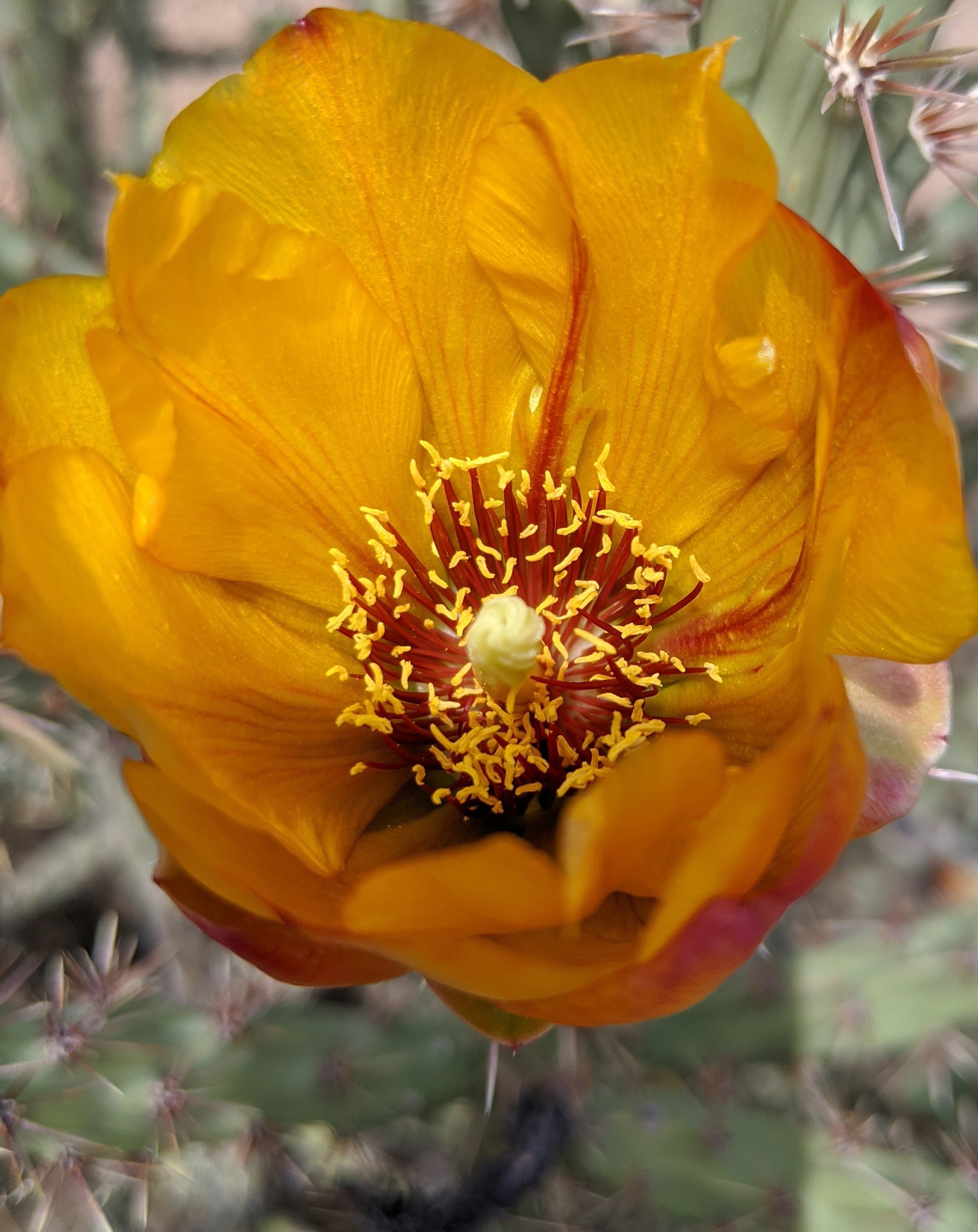
Prickly Pear Cactus, in bloom in the spring
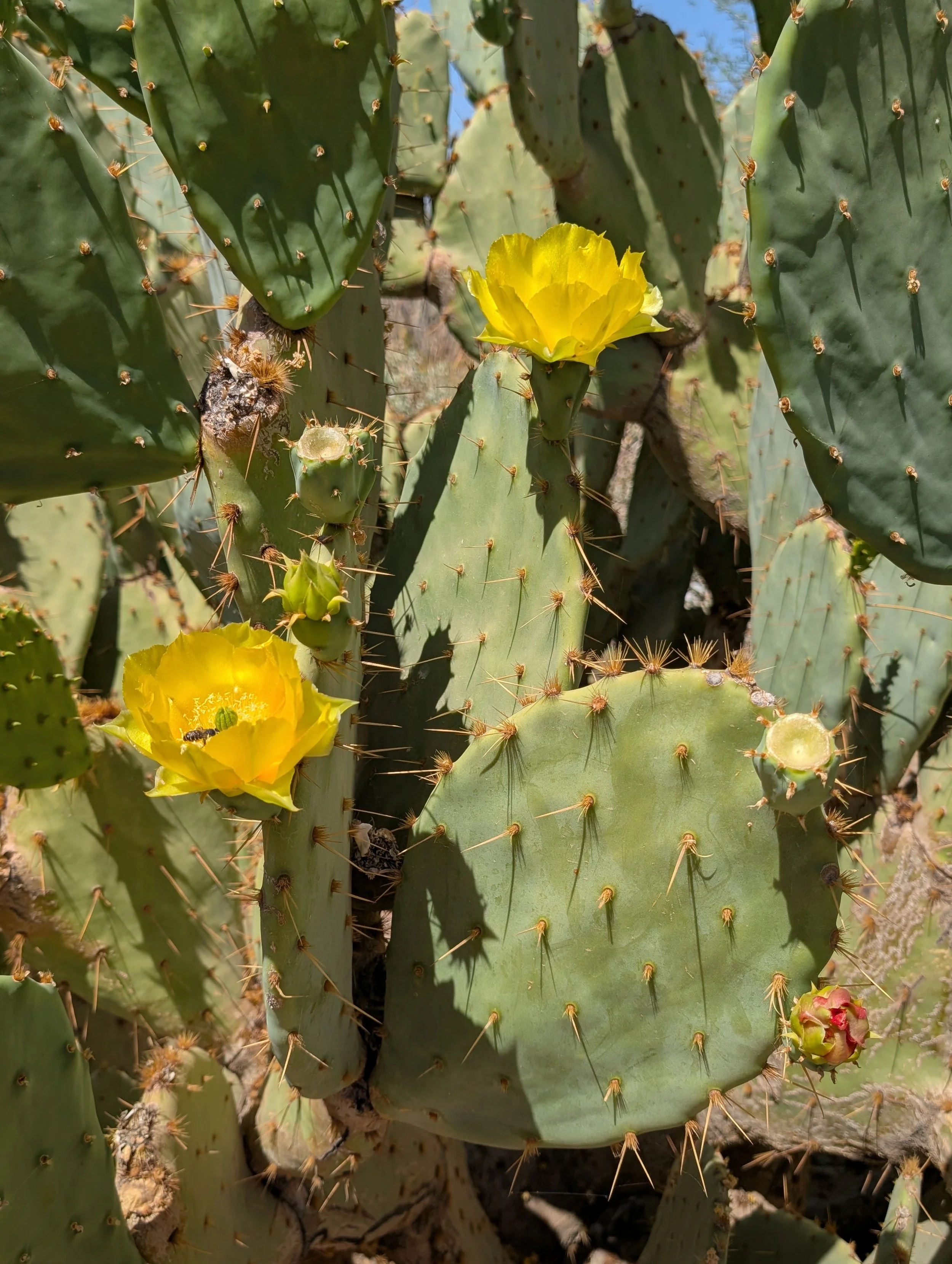
Opuntia species, pads (also called leaves or cladodes)
Uses
Top food source for blood sugar regulation;
1st choice among vegetables for blood sugar modulation
Food source for reduction of body fat, eaten for millennia throughout the southwestern deserts of the United States and Mexico;
Top 5 for reduction of the pain and stiffness of rheumatic conditions;
As a poultice, vulnerary and anti-inflammatory poultice for inflamed skin injuries, warts, venomous bites and stings.
Indigenous people of the southwest had prickly pear as such an abundant part of the diet that artifacts of the Anasazi, whose peak civilization was 100 AD to 1300 AD, show more use of prickly pear than other types of vegetables such as squash.[1] In our time, “products in grocery or health food stores may include fresh de-spined pads, canned sliced “nopalitos” and/or pickled pads, bottled fruit juice, fruit nectar concentrates, spreads, sauces and dried flower teas and tinctures.”[2]
“The way I like to prepare this is to cut off the nopal fruit with gloves on your hands to protect from the spines. It is handled similar to a kiwi fruit. You slit the side of the skin and peel it off. Once the skin is off, then you can eat it just as it is, or I enjoy it with lime and a bit of salt.”
For loss of body fat
Significant reduction in body fat, both total and percentage, were found with consumption of Opuntia species.[7]
A local grocery store sold us two prickly pear pads at this writing for 81 cents.
On the other hand, at this writing, a four-week supply of the 2.4 mg weekly semaglutide injection can cost between $349 and $1,349 per month, depending on insurance plan.
Both have been found to reduce body weight, but there is certainly an enormous price difference.
For inflamed skin wounds, blisters, burns, gum infections
Herbalist John Slattery describes the juice of prickly pear, taken internally as “one of our best musculoskeletal remedies for pain and stiffness. It allays arthritic pain as well as pain from injury or overuse.”[10]
Pharmacology and Mechanisms of Action
How prickly pear causes lower blood sugar and weight loss
Prickly pear has been found to lower blood glucose when taken by diabetic patients with a high carbohydrate breakfast, by decreasing a key peptide, glucose-dependent insulinotropic peptide (GIP).[11] This is the most likely cause of decrease of basal plasma glucose levels in both animals[12] and humans. Opuntia also directly stimulates insulin release from the pancreas.[13]
Both the semaglutide drugs[14] and prickly pear[15] lower triglyceride storage in fat tissue. Semaglutide does that by about 30% reduction of triglyceride storage in the liver in humans after six months,[16] but prickly pear achieves that reduction in triglyceride storage by 50 to 60% in fat cells in rats, and in only two months.[17] Both reduce lipogenesis and adipogenesis,[18][19] which are formation of fat and formation of fat tissues respectively.
How prickly pear differs in weight loss effects from the semaglutide-type drugs
Prickly pear offers another advantage over the semaglutide-type drugs in that the latter do not cause excretion of fat in the stool. However, prickly pear does cause it.[20]
Another important effect of prickly pear is that it significantly blocks a key protein, intestinal sodium-glucose cotransporter 1 (SGLT1).[21] This means that prickly pear reduces the absorption of dietary glucose in the body in the first place, so that the ingested glucose gets carried instead down to the large intestine, and out with the stool.
Then the unabsorbed sugar in the lower part of the small intestine stimulates release of glucagon-like peptide (GLP-1), and that in turn delays stomach emptying and suppresses appetite. And this in turn may be the proximate cause of the loss of body fat observed after prickly pear is incorporated into the diet.
This effect may make prickly pear a favorable rival to the GLP-1 receptor agonists for weight loss. That is, whereas prickly pear reduces body fat, the GLP-1 inhibitors have reduced muscle mass. This difference in effect is likely due to the aggressive maintenance dosing of weekly injections of GLP-1 receptor agonists, ie 2.4 mg subcutaneous semaglutide per week, versus the milder effects of dietary prickly pear.
Once a person becomes dissatisfied with their weight and hurries to reduce, their rushed efforts often backfire. That is because the body rebels against rapid and aggressive weight loss measures. So when you reduce appetite and food intake, you suddenly and drastically stimulate the burning of glycogen and protein in lean muscle tissue, as well as fat, for energy, in addition to slowing metabolism. This problem can be lessened by a carnivore or keto diet, along with strength training and other exercise three times per week.
That is, a years-long lifestyle of incorporating prickly pear leaves in the diet from time to time results in less aggressive GLP-1 changes than a weekly injection or pill of a GLP-1 receptor agonist drug. If exercise is a part of the lifestyle, then the weight loss is slow enough to target body fat more than targeting muscle, because muscle is wasted mostly on aggressive weight loss regimens with severe diets and / or a sedentary lifestyle.
Prickly pear is also different than the GLP-1 receptor agonist drugs, in that prickly pear directly releases GLP-1 in the intestine, whereas the rival drugs merely mimic its action. Both have the same effect of inhibiting glucagon release, delaying gastric emptying and reducing appetite and thus food intake.[22]
Prickly pear is also likely to be safer than the GLP-1 receptor agonists, because the former is ingested by the GI tract, whereas the latter usually involves injecting a peptide, which has a similar effect of vaccines in introducing a foreign peptide by way of injection, which conflicts with human immune response to newly introduced potential antigens. That is, whereas the human immune system functions optimally when new antigens arrive by way of the mucous membranes of the airways, or by the GI tract, a new peptide does not arrive well when the body’s first encounter with it is by way of the blood. Unwanted antibodies are formed, which create new antigenic problems.
Side Effects and Contraindications
None known, when eaten as a vegetable.
Beware of both large and small spines on the outside of pads and fruits. Exposure to these spines is especially of concern to agricultural workers at harvest. Handle with gloves or a plastic bag. Traditionally, the pads are rubbed between two large smooth stones to remove spines before peeling and cubing the pads, to add to a salad.
Whereas the semaglutide drugs are known to cause constipation as well as nausea, abdominal pain, gas and vomiting, the prickly pear pads, when eaten as a vegetable, are not known for any of those effects.
Native Origin and Range
Prickly pear is native to the warmer climates of the Americas, with the most abundance and diversity in the Sonoran desert of the southwest United States and Mexico. It is in the Cactaceae (cactus) family.
From their native habitat, Opuntia species are drought tolerant. Therefore, they are a low resource intensive plant-based treatment for two of the most persistent health problems for people of developed countries in our time – hyperglycemia and unwanted body fat.
-
E Yarnell, K Abascal, et al. Clinical Botanical Medicine [book]. Mary Ann Liebert Inc. Publishers. P. 293.
F Brinker. Prickly pear as food and medicine. 2009. J Diet Suppl. https://www.tandfonline.com/doi/full/10.3109/19390210903280280
C Gouws, E Georgousopoulou, et al. Effects of the consumption of prickly pear cacti (Opuntia spp.) and its products on blood glucose levels and insulin: A systematic review. May 15 2019. Medicinea (Kaunas). 55 (5). 138. https://pmc.ncbi.nlm.nih.gov/articles/PMC6572313/
A Frati-Munari, J Fernandez-Harp, et al. Effects of nopal (Opuntia spp) on serum lipids, glycemia and body weight. Apr-Jun 1983. Archivos de investigación médica. [article in Spanish]. 14 (2) 117-125. PMID: 6314922 https://www.bionity.com/en/encyclopedia/Opuntia.html
M Godard, B Ewing, et al. Acute blood glucose lowering effects and long-term safety of OpunDia supplementation in pre-diabetic males and females. Aug 9 2010. J Ethnopharm. 130 (3). 631-634. https://www.sciencedirect.com/science/article/abs/pii/S0378874110003673
A Frati, B Gordillo, et al. Influence of nopal intake upon fasting glycemia in type II diabetics and healthy subjects. Jan-Mar 1991. Arch Invest Med (Mex). 22 (1). 51-56. https://pubmed.ncbi.nlm.nih.gov/1668138/
I Onakpoya, J O’Sullivan et al. The effect of cactus pear Opuntia ficus-indica) on body weight and cardiovascular risk factors: A systemic review and meta-analysis of randomized clinical trials. May 2015. Nutrition. 31 (5). 640-646. https://www.sciencedirect.com/science/article/abs/pii/S0899900714005152
M Moore. Medicinal Plants of the Desert and Canyon West. [book] 1989. Museum of New Mexico Press. p. 90.
E Yarnell, K Abascal, et al. Clinical Botanical Medicine [book]. Mary Ann Liebert Inc. Publishers. p. 293.
J Slattery. Southwest Medicinal Plants [book]. 2020. Timber Press, Inc. p. 289.
P López-Romero, E Pichardo-Ontiveros, et al. The effect of nopal (Opuntia ficus indica) on postprandial blood glucose, incretins, and antioxidant activity in Mexican patients with type 2 diabetes after consumption of two different composition breakfasts. Nov 2014. J Acad Nutr Diet. 114 (11) 1811-1818. https://pubmed.ncbi.nlm.nih.gov/25132122/
V Butterweck, L Semlin, et al. Comparative evaluation of two different Opuntia ficus-indica extracts for blood sugar lowering effects in rats. Mar 2011. Phytother Res. 25 (3). 370-375. https://pubmed.ncbi.nlm.nih.gov/20687136/
L Deldicque, K Van Proeyen, et al. Additive insulinogenic action of Opuntia ficus-indica cladode and fruit skin extract and leucine after exercise in healthy males. Oct 21 2013. J Int Soc Sports Nutr. 10 (45). https://pmc.ncbi.nlm.nih.gov/articles/PMC3853711/
T Abel, E Csajbókné. Semaglutide-mediated remodeling of adipose tissue in Type 2 diabetes: Molecular mechanisms beyond glycemic control. Int J Mol Sci. Jan 24 2026. 27 (3). 1186. https://pmc.ncbi.nlm.nih.gov/articles/PMC12898281/
C Héliès-Toussaint, E Fouché, et al. Opuntia cladode powders inhibit adipogenesis in 3 T3-F442A adipocytes and a high-fat-diet rat model by modifying metabolic parametes and favouring faecal rat excretion. BMC Complement Med Ther. Feb 5 2020. 20. 33. https://pmc.ncbi.nlm.nih.gov/articles/PMC7076822/#Sec10
J Lake, D Kitch, et al. Low-dose semaglutide cuts weight, triglycerides and glucose in HIV MASLD group. Mar 2024. Conf on Retroviruses and Opportunistic Infections. Denver, Colorado. https://www.natap.org/2024/CROI/croi_76.htm
C Héliès-Toussaint, Ibid.
B Gaborit. Effect of semaglutide on epicardial adipogenesis and hiPSC-Atrial cardiomyocytes – New hope in targeting epicardial adipose tissue. Sep 22 2025. JACC. 10 (9). https://www.jacc.org/doi/10.1016/j.jacbts.2025.101349
C Héliès-Toussaint, Ibid.
C Héliès-Toussaint, Ibid.
M Bouhrim, H Ouassou, et al. Opunti diillenii (Ker Gawl.) Haw., seeds oil antidiabetic potential using in vivo, in vitrao, in situ and ex vivo approaches to reveal its underlying mechanism of action. Mar 17 2021. Molecules. 26 (6). 1677. https://pmc.ncbi.nlm.nih.gov/articles/PMC8002680/
Z Zheng, Y Zong, et al. Glucagon-like peptide-1 receptor : mechanisms and advances in therapy. Sep 18 2024. Nature. 9 (234). https://www.nature.com/articles/s41392-024-01931-z
