
Gymnema - Herbal Monograph Series
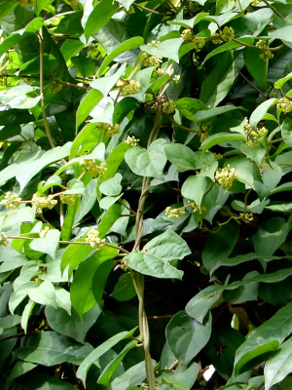
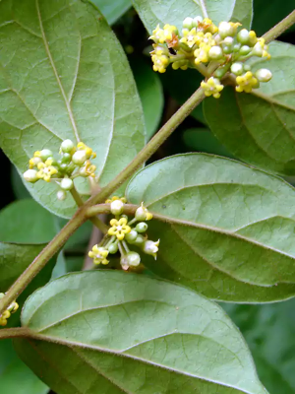
Gymnema sylvestre leaves
Uses
Top plant for repair of diabetic pancreas.
1st choice among botanical medicines for treatment of underlying causes of both Type 1 and Type 2 diabetes, while continuing insulin (or current Rx) for as long as needed until complete healing.
For pancreatic repair
Type I diabetes is thought to have no cure. It is commonly treated for the duration of life with long-acting and short-acting insulin. Whereas Type 2 diabetes is frequently cured with diet and exercise, there is no commonly acknowledged reversal of Type I diabetes. That is, it is widely believed in the West that if the beta cells in the pancreas, the ones that produce insulin, are damaged to the point of being unable to produce adequate insulin to metabolize the sugar in the diet, then they will never be able to do so again.
At least, that is the belief among the pharmaceutical industry, as well as both conventional doctors and laypeople in the West.
However, an herb with a long history of use to treat diabetes from Ayurvedic medicine was shown to regenerate pancreatic beta cells. That is Gymnema sylvestre, the subject of the current monograph. The Pharmacology section below explains how this happens.
Actually, donor spleen cells and donor beta cells have also been found by Harvard Assoc. Professor Denise Faustman in 2003 to regenerate pancreatic beta cells, and cured first 78% and then 90% of the lab mice with Type I diabetes.[1] Later efforts to replicate her work found a 32% cure rate in the Type I diabetic mice. The latter team found that the transplanted cells stimulated the mouse’s remaining surviving pancreatic beta cells to recover, become functional again and proliferate to the point where they could establish and maintain normal blood sugar for the 120 days of the study.
Pancreatic beta islet cell transplant surgery has been offered by Johns Hopkins Clinic to patients who have had their entire pancreas removed; those beta cells are transplanted into the patient’s liver. Penn Medicine, one of the earliest to transplant islet cells to Type I diabetics, as well as University of Chicago offer transplants of islet cells.
As naturopathic physicians trained in botanical medicine, we focus in this herbal monograph, Pharmacology section, on the very helpful effects of the botanical medicine Gymnema silvestre in this area.
For blood sugar regulation
Gymnema sylvestre has been shown, as one of about a dozen common plants, to lower blood sugar; we say that they have hypoglycemic effect.[4] Lowering of blood glucose was significant in diabetic patients.[5]
This is very important for both Type I and Type 2 diabetics, because chronic and sustained hyperglycemia stimulates formation of advanced glycation end products (AGEs), which is basically sugar attached to proteins, which become sugar alcohols. Both are shown to contribute to long-term pathology of the nerves, blood vessels, eyes, pancreas and kidneys, and to generally contribute to aging.
Even in insulin-dependent diabetics, a dose of 400 mg day of Gymnema sylvestre extract was adequate to gradually replace, over 18 to 20 months, some or most or all of the exogenous insulin dosing.[6]
Fortunately, Gymnema sylvestre did not lower blood glucose in normoglycemic individuals. So it is a plant that seems to take effect when needed.[7] We had also seen, in our last herbal monograph in this series, this benign effect in Prickly Pear cactus, only lowering blood sugar in those who needed that intervention.[8]
Deferring diabetes in prediabetic patients
If Gymnema sylvestre trains the beta cells of the pancreas to regulate blood sugar and insulin so that normoglycemia can be achieved and maintained in pre-diabetic people, then by how much could contemporary populations avoid an ultimate diagnosis of full-blown diabetes? A 4-year lifestyle intervention study was able to delay Type 2 diabetes incidence by 58% comparent to metformin (31%).[9]
Pharmacology and Mechanisms of Action
Streptozotocin (STZ) is a toxic chemical used in labs to destroy the beta cells in animals’ pancreas that produce insulin. This results in Type I diabetes. In a 1990 study, rats that were given STZ, and then acquired Type I diabetes, were then given oral extracts of Gymnema. Their serum insulin rose to normal levels, and their fasting blood glucose returned to normal between 20 and 60 days, depending on concentration of the herb. Both higher and lower concentrations of Gymnema doubled both the islet cell number and beta cell number. (Whereas islet cells are the cluster of various hormone-producing cells in the pancreas, the beta cells inside the islet cluster produce insulin specifically.) The authors concluded that the increased endogenous serum insulin levels could only have normalized as a result of repair and / or regeneration of pancreatic function.[10] Other research teams have also drawn this conclusion.[11][12]
Other researchers found that Gymnema sylvestre extract improved beta cells’ and islet cells’ permeability and release of insulin.[13] However, much more research, as cited above, has confirmed that Gymnema sylvestre caused pancreatic beta cells to increase their production of insulin. This is the central dilemma of both Type I diabetes and insulin-dependent Type 2 diabetes.
Even low concentrations of a Gymnema sylvestre extract were shown to stimulate insulin secretion in human pancreatic islet cells, without any cell damage observed.[14][15] 400 mg per day of the Gymnema sylvestre leaf extract has achieved this effect. And this data was confirmed by lowered fasting blood glucose and lower need for exogenous insulin, even in patients with insulin-dependent diabetes.[16][17]
The main active constituent of Gymnema sylvestre is thought to be dihydroxy gymnemic triacetate.[18] This compound alone has been shown to revitalize and regenerate the remaining beta cells in diabetic-damaged pancreases,[19] including increasing the number of pancreatic beta cells.[20]
Humans with Type I diabetes have shown decreased levels of major histocompatibility complex (MHC) class 1 proteins.[21] This is likely due to exposure to a previous antigenic substance that created an autoimmune condition of “failed self tolerance.” The Dr. Faustman cited above reversed this with MHC class I presentation of self peptides.[22]
Several dozen plant species have been shown to have blood sugar regulating effect, with Gymnema sylvestre as the most prominent among them.[23][24]
Side Effects and Contraindications
If diabetic patients take high doses of Gymnema together with an unreduced dose of exogenous insulin, there is a theoretical risk of hypoglycemia, as well as observed side effects of diarrhea and headaches.
Naturopathic physicians have botanical medicine incorporated as six courses in our medical curriculum, along with all of the standard MD curriculum. Therefore, we recommend that you work with a local naturopathic physician on a careful dosing schedule of Gymnema along with your current prescriptions, so that a careful taper may be recommended by an experienced physician. We DO NOT recommend experimenting with these combinations at home.
Native Origin and Range
Gymnema sylvestre is a member of the Apocynaceae family, also claimed by the Asclepiadaceae family. It grows throughout the world’s tropical and subtropical regions. It is native to and widely distributed in India, Southeast Asia and Africa. Gymnema sylvestre has been used in Ayurvedic medicine for over 2,000 years.
-
S Kodama, W Kühtreiber, et al. Islet regeneration during the reversal of autoimmune diabetes in NOD mice. Nov 14 2003. Science. 302 (5648). https://www.science.org/doi/10.1126/science.1088949
U Chicago Medicine. Efforts to replicate controversial diabetes therapy bring partial success. Mar 23 2006. U Chicago Medicine. https://www.uchicagomedicine.org/forefront/news/efforts-to-replicate-controversial-diabetes-therapy-bring-partial-success
D Yin, J Tao, et al. Recovery of islet beta-cell function in Streptozocin-induced diabetic mice: An indirect role for the spleen. Dec 1 2006. Diabetes. 55 (12). https://diabetesjournals.org/diabetes/article-abstract/55/12/3256/13224/Recovery-of-Islet-Cell-Function-in-Streptozotocin
D Patel, S Prasad, et al. An overview on antidiabetic medicinal plants having insulin mimetic property. Apr 2012. Asian Pac J Trop Biomed. 2 (4). 320-330. https://pmc.ncbi.nlm.nih.gov/articles/PMC3609288/
T Kaczmar. Herbal support for diabetes management. 1998. Clin. Nutr Insights. 6 (8). https://www.acudoc.com/Diabetes.PDF
E Shanmugasundaram, K Gopinath, et al. Possible regeneration of the islets of Langerhans in streptozotocin-diabetic rats given Gymnema sylvestre leaf extracts. Oct 1990. J Ethnopharmacology. 30 (3). 265-279. https://www.sciencedirect.com/science/article/abs/pii/0378874190901064
K Baskaran, B Ahamath, et al. Antidiabetic effect of a leaf extract from Gymnema sylvestre in non-insulin-dependent diabetes mellitus paients. Oct 1990. J Ehtnopharmacol. 30 (3). 295-300. https://pubmed.ncbi.nlm.nih.gov/2259217
C Huber. Prickly pear: Herbal monograph series. Jun 30 2026. Nature Works Best Cancer Clinic. https://natureworksbest.com/articles/prickly-pear-herbal-monograph
Diabetes Prevention Program research Group. Reduction in the incidence of Type 2 diabetes with lifestyle intervention or metformin. Feb 7, 2002.. N Eng J Med. 346 (6). 393-403. https://www.nejm.org/doi/full/10.1056/NEJMoa012512
E Shanmugasundaram. Ibid.
A Singab, F Youssef, et al. Medicinal plants with potential antidiabetic activity and their assessment. 2014. Medicinal and Aromatic Plants. 3 (1). https://www.longdom.org/open-access/medicinal-plants-with-potential-antidiabetic-activity-and-their-assessment-27994
D Patel, S Prasad, et al. An overview on antidiabetic medicinal plants having insulin mimetic property. Apr 2012. Asian Pac J Trop Biomed. 2 (4). 320-330. https://pmc.ncbi.nlm.nih.gov/articles/PMC3609288/
S Persaud, H Al-Majed, et al. Gymnema sylvestre stimulates insulin release in vitro by increased membrane permeability. Nov. 1999. J Endocrinol. 163 (2). 207-212. https://pubmed.ncbi.nlm.nih.gov/10556769/
B Liu, H Asare-Anane, et al. Characterisation of the insulinotropic activity of an aqueous extract of Gymnema sylvestre in mouse beta-cells and human islets of Langeernas. 2009. Cell Physiol Biochem. 23 (1-3). 125-132 https://pubmed.ncbi.nlm.nih.gov/19255507/
D Patel, S Prasad, et al. An overview on antidiabetic medicinal plants having insulin mimetic property. Apr 2012. Asian Pac J Trop Biomed. 2 (4). 320-330. https://pmc.ncbi.nlm.nih.gov/articles/PMC3609288/
K Baskaran, B Ahamath, et al. Antidiabetic effect of a leaf extract from Gymnema sylvestre in non-insulin-dependent diabetes mellitus paients. Oct 1990. J Ehtnopharmacol. 30 (3). 295-300. https://pubmed.ncbi.nlm.nih.gov/2259217
J Grover, S Yadav, et al. Medicinal plants of India with anti-diabetic potential. Jun 2002. J Ethnopharmacology. 81 (1). 81-100. https://www.sciencedirect.com/science/article/abs/pii/S0378874102000594
M Rao, Msreenivasulu, et al. 2010. Herbal medicines for diabetes mellitus: A review. 2010. Int J Pharm Tech Res. 2 (3). 1883-1892. https://www.semanticscholar.org/paper/Herbal-medicines-for-diabetes-mellitus%3A-a-review.-Rao-Sreenivasulu/c2ff092df078cf4fbe60bada5a77b89cc740f50
D Patel, S Prasad, et al. An overview on antidiabetic medicinal plants having insulin mimetic property. Apr 2012. Asian Pac J Trop Biomed. 2 (4). 320-330. https://pmc.ncbi.nlm.nih.gov/articles/PMC3609288/
A Saxena, N Vikram. Rose of selected Indian plants in management of type 2 diabetes: A review. Apr 2004. J Altern Complement Med. 10 (2). 369-378. https://pubmed.ncbi.nlm.nih.gov/15165418/
D Faustman, X Li, et al. Linkage of faulty major histocompatibility complex class I to autoimmune diabetes. Dec 20 1991. Science. 254 (5039). 1756-1761. https://pubmed.ncbi.nlm.nih.gov/1763324/
D Faustman. MHC Class I and autoimmune diabetes. 1993. Biomedicine & Pharmacotherapy. 47 (1). 3-10. www.sciencedirect.com/science/article/abs/pii/075333229390030O
D Patel, S Prasad, et al. An overview on antidiabetic medicinal plants having insulin mimetic property. Apr 2012. Asian Pac J Trop Biomed. 2 (4). 320-330. https://pmc.ncbi.nlm.nih.gov/articles/PMC3609288/
P Patel, P Harde, et al. Antidiabetic herbal drugs : A review. 2012. Pharmacophore. 3 (1). 18-29. https://www.scribd.com/document/812265258/Diabetes-Mellitus-Review
