Vitamin B2 (Riboflavin) & B3 (Niacin) and Cancer
WHAT ULTIMATELY PREVENTS CANCER? THE ROLE OF VITAMINS B2 and B3
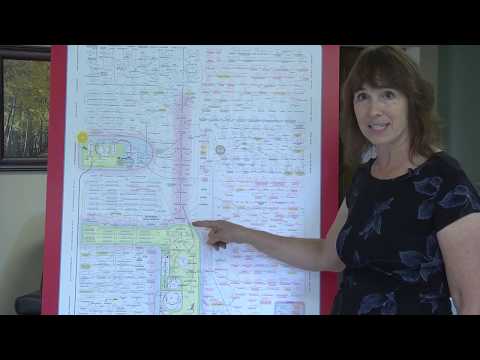
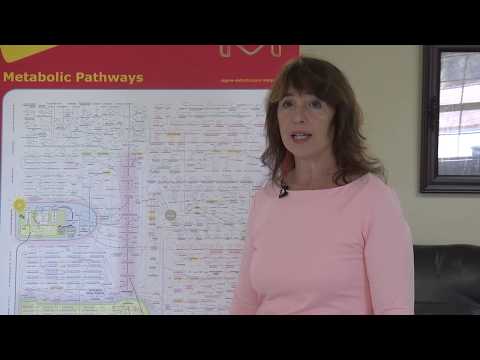
Hello, it’s April 18, 2018, and this is Doctor Colleen Huber. I am a Naturopathic Medical Doctor in Tempe, Arizona, and I want to talk to you about what makes cancer act differently than normal tissues and organs. Let’s get to the origin of this! But first, what is a naturopathic medical doctor? you might be wondering! Well, naturopathic physicians attend a DIFFERENT 4-year medical school than medical doctors or other physicians. Our 4-year medical curriculum contains approximately twice as many classroom hours and twice as many courses as conventional medical schools. You might wonder, why is that, if each kind of doctor goes to school for 4 years? It is because we are in the classroom through almost all of those 4 years, whereas conventional medical students are in the classroom about 2 years, and out working with patients the other 2 years. So they see many more patients than we naturopaths do during their training. We naturopaths see at least 700 patients before graduation, as required. They see, on the other hand, several thousand people before graduation. You can see a curriculum comparison at this website [2] where you can see links to various medical schools where they actually show their curricula, and the number of hours spent in the classroom. That’s Naturopathic Standards.org. In naturopathic medical school, one main activity of all those classroom hours is digging into nutrition through 5 or 6 successive courses, AFTER the biochemistry courses! Nutrition is actually APPLIED, ADVANCED biochemistry. Let’s start with biochemistry and see what that is all about. So zooming into the Metabolic Pathways chart here, I want to call your attention today to 2 different pathways. Cancer goes in this direction . . . And normal healthy processes go in this direction . . . . So if a person has a tumor, inside that tumor, there is a lot of this motion. However, outside of that tumor, in normal tissue, there is mostly this motion. Today, I want to show you what causes cancer in the first place. It’s been known since 1931, when Nobel Prize biochemist Otto Warburg wrote in “The Metabolism of Tumors” – he wrote: “ . . . There are a great many remote causes of cancer . . . , but there is only one common cause into which all other causes of cancer merge, the irreversible injuring of respiration.” Let’s look now at what Dr. Warburg was talking about. He wasn’t talking about this kind of respiration. [deep breath] He was talking about . . . Let’s zoom our attention in please. He was talking about this respiration; this respiration provides ENERGY to a cell. [3] This is what our normal cells do in order to function. It is a really beautiful process called oxidative phosphorylation – or you could think of it as yin and yang, or simultaneous destruction and construction. The food we eat, no matter what kind of food, goes through a lot of processes and ends up here, at Acetyl CoA. Now don’t worry too much about that molecule, except that it is the Grand Central Station of your body. That is, all food trains pass through this station, whether carbohydrates or fats and proteins – all become this molecule, Acetyl CoA. Then inside the mitochondria here – well don’t worry too much about that either, except that it is the POWER PLANT of the cell – here inside the mitochondria all of our food – all of the whole natural food that we eat- is broken down in a process called oxidation. That can be seen as the destruction of food. Now oxidation is loss of electrons. So in the breakdown of food, electrons are lost or liberated from the molecules they were attached to. But that’s okay, because . . . Here is the electron transport chain, where those electrons are now used in construction. A moment ago we had destruction of food, and now we have construction of energy. Let’s look at this view of the electron transport chain. Electrons are hot commodities. Everybody wants them. Our bodies use them as currency in building energy and doing many tasks. So those electrons are used to phosphorylate a lower unit of energy to a higher unit of energy. That’s called phosphorylation. It is a process of building energy stores.