This article was inspired by a question from a patient last week. She read somewhere that zinc can help you make more melatonin. I told her I wasn’t sure of the specifics and that I would look it up. I’m excited to share here what I shared with her.
Melatonin is not simply a “sleep hormone” you can top off with a pill the way you top off a gas tank. It is the chemical expression of darkness, produced through a tightly regulated sequence of steps. When any part of that sequence is missing nutrients or is flooded with light at the wrong time, the whole system can misfire, sometimes producing the exact opposite of the calm, restorative sleep people expect.
The Melatonin Pathway, Step by Step
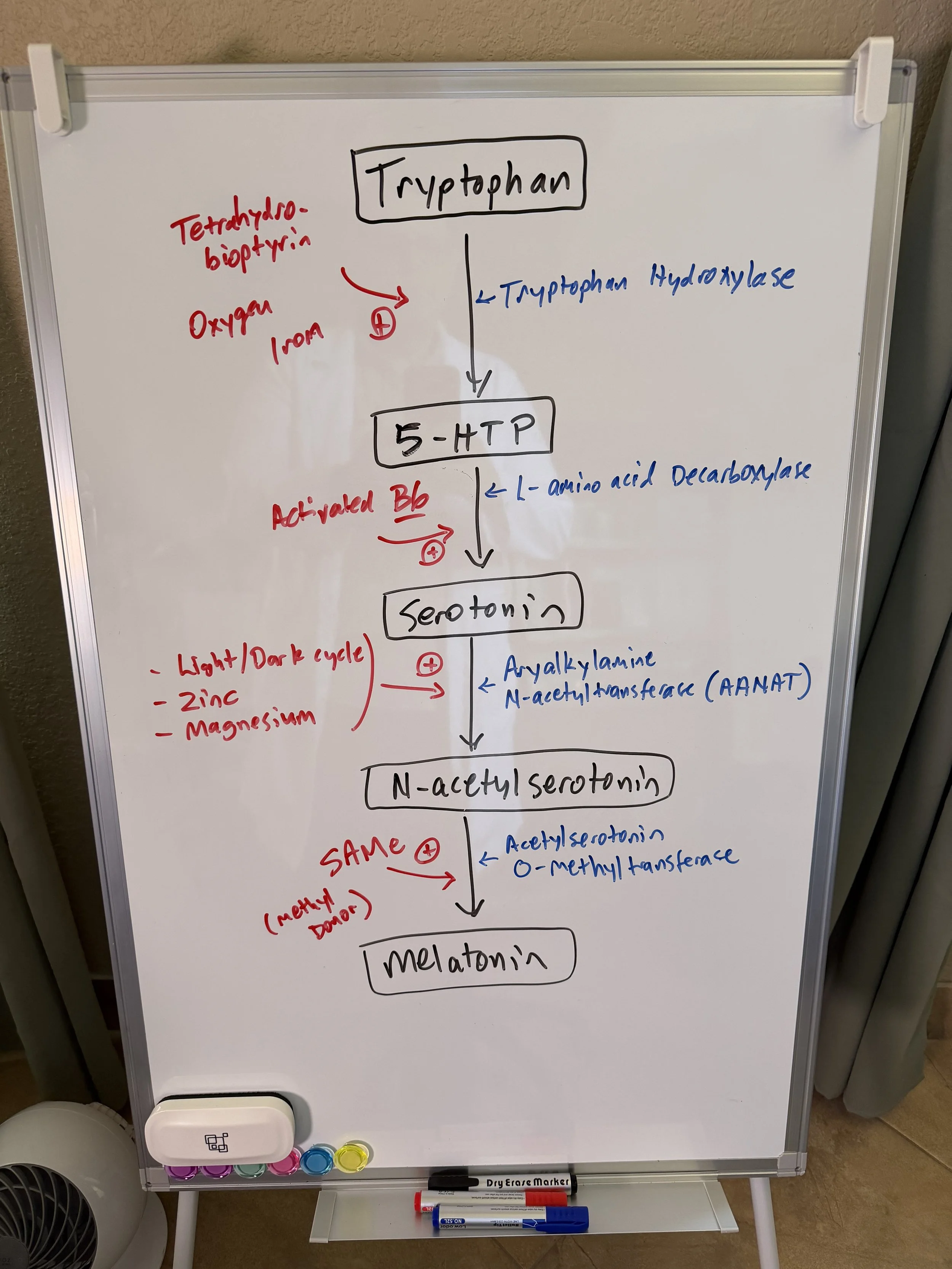
Your body starts with the amino acid tryptophan (from protein-rich foods) and converts it into melatonin through four main enzymatic steps:
Tryptophan is hydroxylated to 5-hydroxytryptophan (5-HTP).
5-HTP is decarboxylated into serotonin. This step requires vitamin B6 (as pyridoxal-5-phosphate).
Serotonin is acetylated into N-acetylserotonin by the enzyme arylalkylamine N-acetyltransferase (AANAT).
N-acetylserotonin is methylated into melatonin by acetylserotonin O-methyltransferase (ASMT), a step that depends on the methyl donor S-adenosylmethionine (SAM).
The third step, the one catalyzed by AANAT, is the classic rate-limiting step under normal conditions. AANAT activity stays low during daylight hours. Shortly after darkness falls, norepinephrine signals from the sympathetic nervous system surge, AANAT activity rises dramatically, and melatonin production ramps up. Light, even relatively dim light reaching the eyes at night, rapidly suppresses AANAT activity (sometimes within minutes). This is why consistent light/dark cycles are not optional lifestyle advice; they are biochemical requirements for the rate-limiting enzyme itself.
Zinc and magnesium appear to also support AANAT function, helping the conversion of serotonin into N-acetylserotonin. Without adequate levels of these minerals, even perfect darkness may not fully unlock melatonin production.
Why Exogenous Melatonin Can Produce the Opposite Effect
Many people take a melatonin supplement and feel more wired, anxious, or wide-awake instead of sleepy. Several overlapping reasons can explain this paradoxical response:
- Nutrient shortfalls in the pathway. If B6 is low, serotonin production itself is impaired. If zinc or magnesium is low, AANAT cannot efficiently convert what serotonin is present. Adding finished melatonin into a system that is missing the upstream cofactors can create an imbalance rather than a smooth hand-off to sleep.
- Methylation status. The final step requires methylation from SAM. Common genetic variations or mutations such as MTHFR polymorphisms can reduce the efficiency of producing methylfolate and therefore SAM. While this most directly affects endogenous (aka “your own”) melatonin production, it also influences broader neurotransmitter balance and can heighten baseline anxiety or hyperarousal, making the brain more reactive when a melatonin capsule arrives.
- Dose and timing mismatch. Physiological nighttime levels are far lower than the 3–10 mg doses commonly sold at the health food store. Higher doses can linger into the next morning or interact unpredictably with cortisol rhythms and serotonin receptors. Taking melatonin while still exposed to bright light (or blue light from screens) further confuses the system that is trying to interpret “darkness.” In other words, if you’re taking melatonin and then scrolling Facebook for an hour in bed, your brain and body are getting mixed signals. The melatonin is telling the body it’s time for bed, and the artificial light of your phone screen is telling the body it’s time to party.
- Underlying hyperarousal. If magnesium is low, GABA signaling is weaker and NMDA excitability is higher. The nervous system is already primed for anxiety; melatonin’s subtle effects may not be enough to override that state and can sometimes feel activating instead.
In short, the pill is only one piece. The pathway, the cofactors, and the light environment must all be aligned.
Food Sources That Support the Pathway
As naturopathic physicians, we’re always trying to promote dietary changes that will expose you to the nutrients you need. You do not need exotic superfoods. Everyday whole foods supply the key nutrients:
Magnesium
Pumpkin seeds (pepitas), chia seeds, almonds, cashews, spinach and other leafy greens, black beans, avocado, and dark chocolate (70%+ cacao).
Zinc
Oysters (by far the richest source), beef, pumpkin seeds, cashews, chickpeas, poultry, and hemp seeds.
Vitamin B6
Chickpeas, wild-caught tuna or salmon, bananas, potatoes (with skin), poultry, beef liver, avocado, and pistachios.
A practical evening pattern might include a handful of pumpkin seeds and a square of dark chocolate, a serving of chickpeas or wild fish earlier in the day, and plenty of cooked leafy greens. These foods do more than “add nutrients”; they supply the exact cofactors the melatonin pathway uses.
Putting It Together
The rate-limiting enzyme AANAT will not fully activate unless darkness is protected. Artificial light at night is the modern equivalent of those security lights shining on the night-blooming flower. Combined with common shortfalls in magnesium, zinc, and B6, it is no surprise that simply swallowing a melatonin tablet sometimes produces the opposite of the intended effect.
Support the pathway from the ground up: protect true darkness in the evening hours, eat foods rich in the required cofactors, and treat exogenous melatonin as a temporary bridge rather than a permanent replacement. When the biochemical machinery is well-nourished and the light environment matches the body’s ancient design, melatonin production tends to follow more naturally, and the need for high-dose supplements often diminishes.
The body already knows how to make melatonin. Our job is to stop interrupting the process and start supplying what the enzymes actually need.