
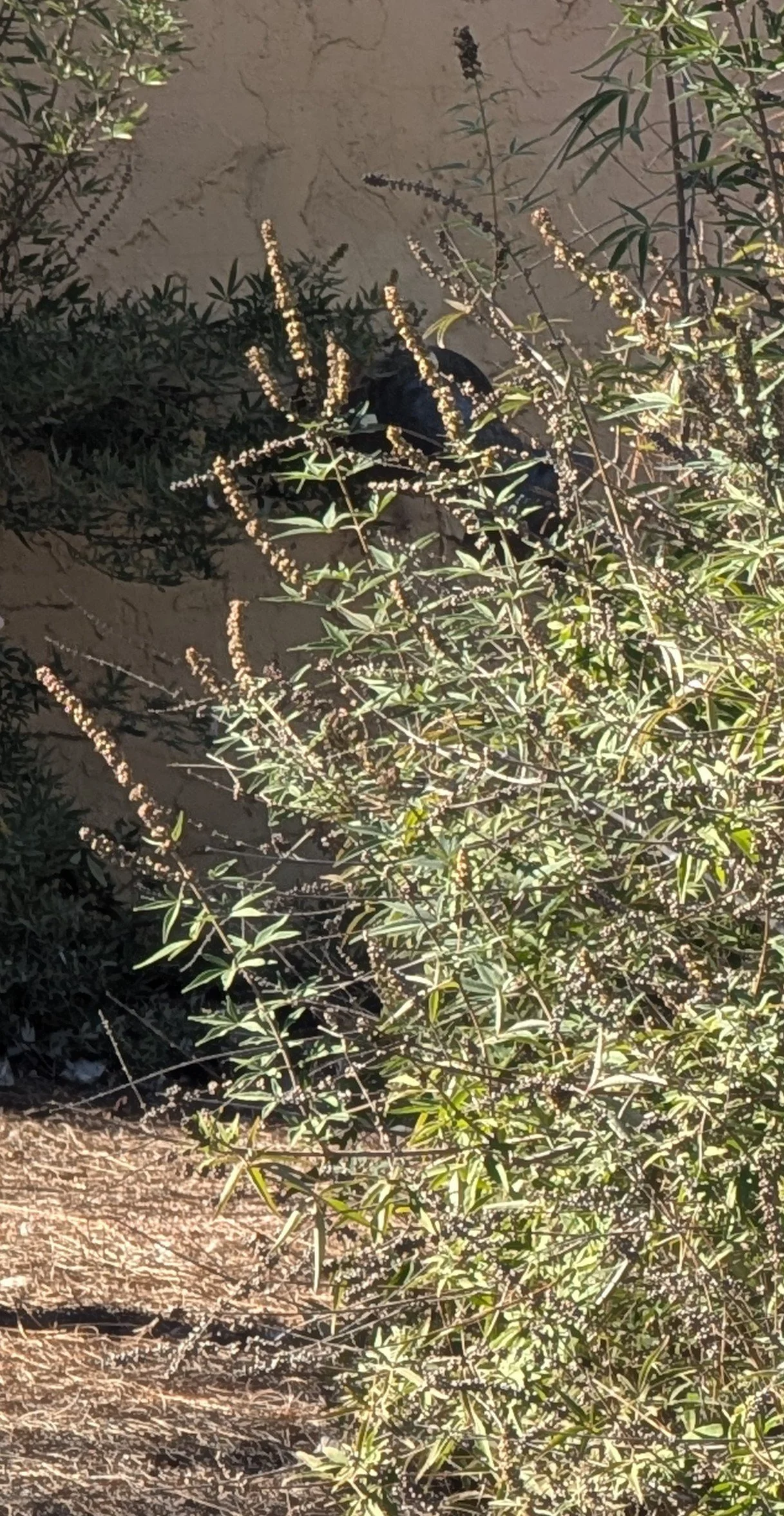
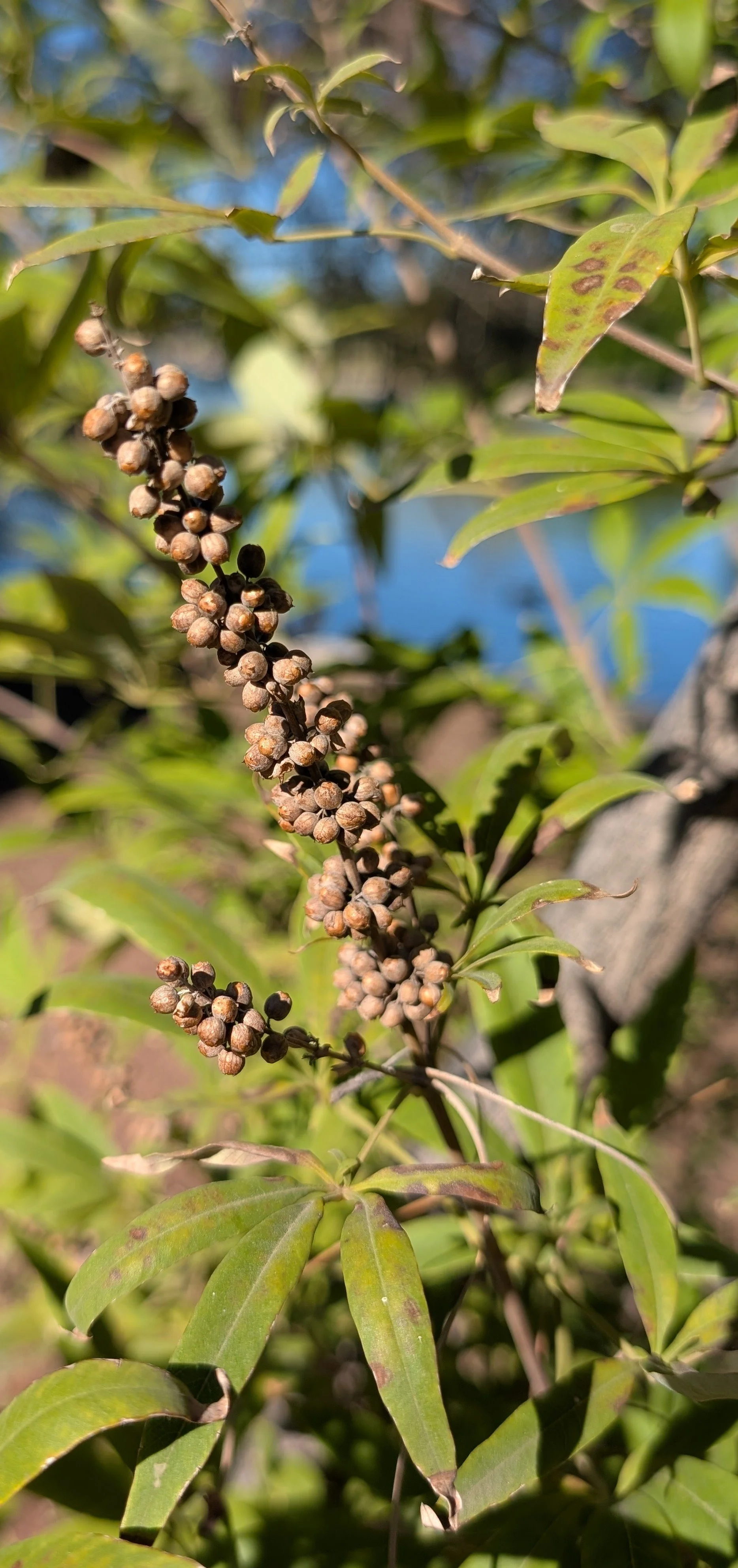
Vitex agnus-castus, fruits
Uses
The top herb for female fertility, fecundity, gestation and prevention of
miscarriage
For premenstrual syndrome (PMS)
For polycystic ovarian syndrome (PCOS)
Helpful against acne in females
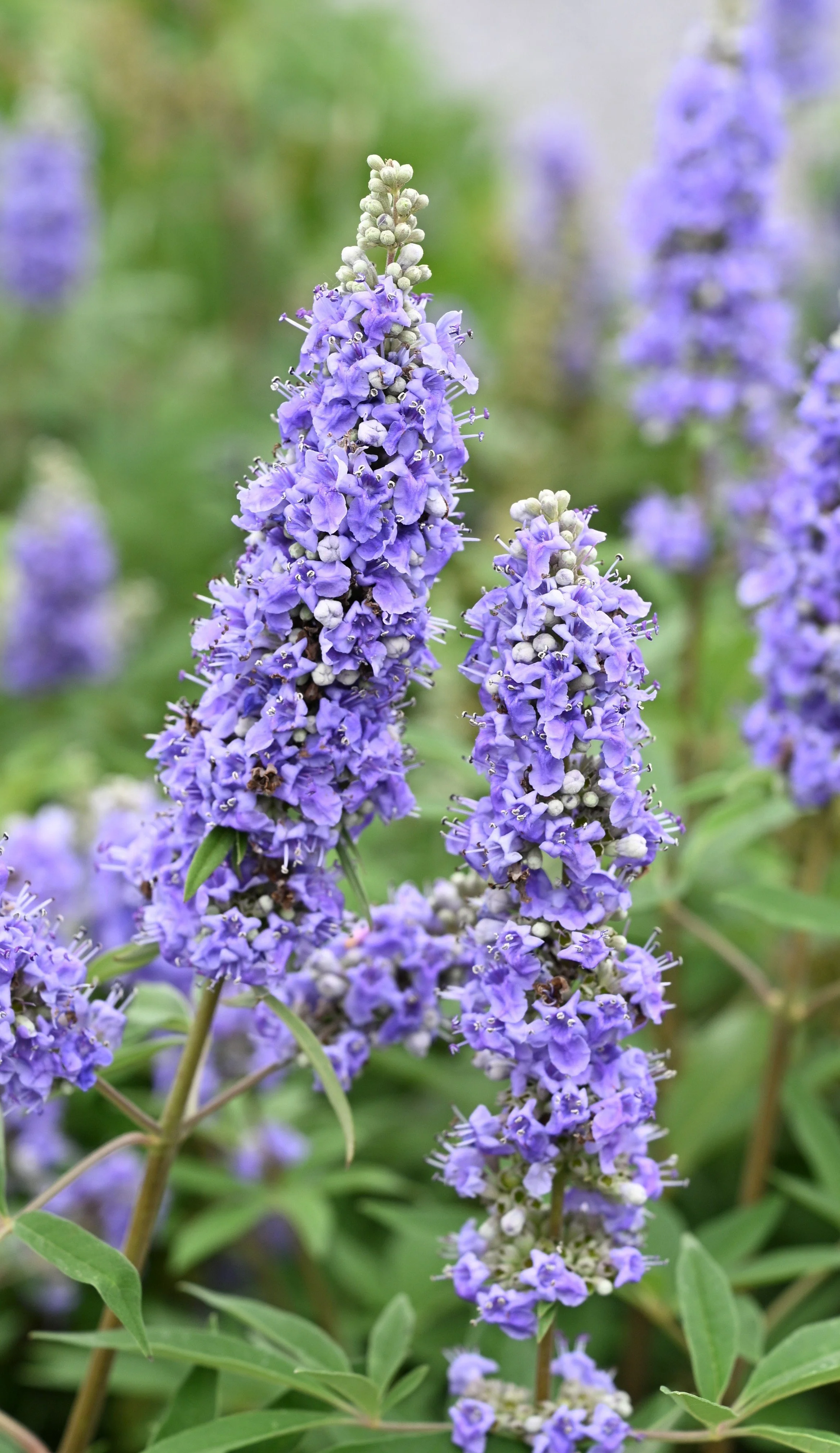
This common bush, sometimes pruned to tree size, has striking and tall purple flowers. Two millennia ago, Greek physician Dioscorides wrote of it as a tree-size shrub that grows “near and in watery fields and in rough and uneven places.”¹
For fertility, gestation and prevention of miscarriage
2,000 years ago, the Greek physician Dioscorides wrote that agnus in the Latin name comes from “unfruitful or barren.”² Castus means chaste. Vitex agnus-castus is the one herb known and appreciated over multiple continents for its restoration of female fertility and fecundity. Our clinic has found this to be particularly true for women over age 35, who may or may not have previously miscarried, and whose serum progesterone levels measured during the luteal phase are low or low-normal, with an eye also on other endocrine labs. Vitex has resulted in the full-term pregnancy and childbirth for each patient whom we counseled from before and during pregnancy.
“Premature ovarian aging” has been measured by follicles falling below a threshold value, or by fewer than four retrieved oocytes on ovulation induction for in vitro fertilization.³ In a controlled clinical trial, women receiving Chaste berry for four months had “significantly higher” pregnancy rates than the control group, as measured by a serum positive β-HCG test. The authors concluded that Chaste berry extract “as a fertility promoting plant appears to be a safe and effective herb in medicinal applications in women with premature ovarian aging…”⁴
In a study of rats, after they were poisoned with pesticides to the point of fertility impairment, 28 days of Chaste berry dosing was associated with restored reproductive hormones as well as normal ovarian follicular development and uterine architecture.⁵
For premenstrual syndrome (PMS)
Premenstrual syndrome is a set of physical and emotional symptoms and signs during the week preceding the onset of menstruation. Between 30% and 80% of women in their reproductive years report some of the symptoms.⁶ ⁷ These can include mastalgia, food cravings and water retention, among other generalized malaise, including irritability and emotional changes specific to that portion of the menstrual cycle.
Chaste berry was found to be well-tolerated, safe and effective in treating pre-menstrual syndrome. More than 50% improvement in symptoms was shown over control groups in multiple studies.⁸ ⁹ In a randomized controlled trial, 40 milligrams of Chaste berry was used in the treatment group, in which a 61% improvement in PMS symptoms was observed, while a 50% placebo effect was found.¹⁰
In a meta-analysis, seven of eight trials of extract of Chaste berry found it to be superior to placebo for PMS.¹¹ In another study, improvements with Chaste berry over the control group were found regarding PMS symptoms of headache, nervousness, restlessness, depression, breast pain and swelling.¹²
For water retention among other symptoms, a Chinese study found that 16 of 17 PMS symptoms resolved with 4.3 to 4.8 mg / day of the dried Chaste tree extract.¹³
For polycystic ovarian syndrome (PCOS)
Polycystic ovarian syndrome (PCOS) affects about one in 15 premenopausal women worldwide. PCOS has three recognized diagnostic criteria, called the Rotterdam criteria, which include the following: 1) Multiple cysts are seen in one or both ovaries on ultrasound; 2) intermittent or long-term lack of ovulation; and 3) hyperandrogenism, including hormones that might be normal levels in males, but are seen to create health problems in women. These are discussed in more detail below. The PCOS patient may show some secondary testosterone characteristics, such as facial and bodily hair and jawline acne, as well as menstrual disorders such as amenorrhea or oligomenorrhea. Another problem that often accompanies PCOS is abdominal fat accumulation, which is associated with high blood insulin levels. Cardiovascular disease, cancer, obesity and infertility may also be associated with PCOS. Both hereditary and environmental factors, such as processed foods in the diet and advanced glycation end products, can play a role.¹⁴
Dioscorides wrote about Chaste berry that “a decoction of the herb and seed is good as a hip bath for disorders and inflammation around the womb.”¹⁵ Below, in the Pharmacology section, is a discussion of the interplay of hormones and inflammatory cytokines involved in both PCOS and PMS, and how Chaste berry has an effect on each of those, and its role in ovarian repair.
For pest control
Two millennia ago, Dioscorides wrote of the leaves, “either smoked and inhaled or scattered around drive away venomous creatures, and applied as a poultice they help those stung by such beasts.”¹⁶
Pharmacology and Mechanisms of Action
Chaste berry has flavonoids, including apigenin, glycosides and essential oils. It is a hormone modulator. Primarily, it is dopaminergic, due to its diterpenes which promote dopamine release from the hypothalamus, and which bind to dopamine-2 (DA-2) receptors in the anterior pituitary gland. The increase of dopamine accounts for the downstream effects on reproductive hormones. First, dopamine suppresses prolactin release from the pituitary.¹⁷ That effect in turn lowers follicle stimulating hormone (FSH), estrogen and testosterone. As a result of that, endogenous progesterone is increased, which has been an enormous benefit to female fertility. All of the above-mentioned hormones have been known to affect female fertility, and Chaste berry has been observed to have effects on all of them.¹⁸ Of these, to carry a baby to term, progesterone is the most important.
Progesterone may be remembered as pro-gestation. Whereas an abundance of estrogen promotes uterine bleeding, progesterone has the opposite effect – of keeping the contents of the uterus intact and contained. At certain times, those contents may include a new human life.
The linoleic acid in combination with other phytochemicals in Chaste berries bind to estrogen receptors, which has the effect of mildly displacing the strongest estrogen, namely estradiol, from those receptors by competitive binding.¹⁹ This is atypical for isolated linoleic acid acting alone. There is a somewhat competitive relationship between the opposing influences of estrogen and progesterone, and these move in a roughly cyclical and sinusoidal way along monthly wavelengths. It seems that the role of Chaste berry is to somewhat mildly enhance the progesterone dominant luteal phase of the cycle, while mildly diminishing the estrogen dominant follicular phase of the cycle.
(When it comes to hormones, there are always complex ripple effects. The appearance of mildly three times in the above paragraph reflects the very light touch needed in mild dosing of this enormously impactful herb.)
Regarding infertility, the most common cause in women over the age of 35 is that elevated prolactin inhibits corpus luteal development, and that in turn reduces secretion of progesterone during the luteal phase of the menstrual cycle.
In one study, a 90-day course of Chaste berry in women with hyperprolactinemia showed a 44% reduction in prolactin from baseline.²⁰ In a different study, a 90-day course of a 20 mg daily dose of Chaste Berry was shown to be able to restore a woman’s secretion of progesterone. At the end of the three months, prolactin was reduced, the previously shortened luteal phases were normalized, and progesterone synthesis during the luteal phase was restored.²¹
The above cited effects have resulted in significantly increased rates of pregnancy and, at this clinic, greatly increased rates of pregnancy carried to term.²²
During pregnancy, this is particularly important, especially during the critical time of progesterone need in the life of the fetus, particularly in the precarious first trimester of pregnancy. This clinic has prescribed 75 to 100 mg daily dose to women when trying to become pregnant, all the way through to week 38 of pregnancy. One must be very careful to work with a physician or herbalist who is experienced in dosing Chaste berry, because while low doses can have the desired effect in fertility and pregnancy, with inhibition of release of FSH and LH, it must also be noted that higher doses can even a null or even opposite effect.²³ It is imperative that we draw blood labs before any of this dosing begins.
In polycystic ovarian syndrome (PCOS), the abnormally high androgen hormones mentioned above cannot always be measured as high serum testosterone but rather may originate from high DHEA-S and androstenedione. These are produced by the adrenal cortex under influence of adrenocorticotropic hormone (ACTH). The result of elevated androgens is an obstacle to the maturation of follicles. This leads to the formation of multiple cysts and high estrogen with low progesterone.
Another involved pathway in PCOS begins in the hypothalamus – pituitary – ovary axis, in which elevated luteinizing hormone (LH) is released, usually disproportionate to follicle stimulating hormone (FSH). This disproportion is stimulated by excess estrogen. That elevated LH stimulates the ovaries to produce excess androgens, which disrupts the timely formation and maturation of follicles.²⁴
The pathophysiology of PCOS is further complicated by insulin resistance and abdominal adiposity, as well as oxidative stress and proinflammatory cytokines impairing oocytes, and resulting in infertility or miscarriage.²⁵
Chronic low-grade inflammation characterizes PCOS. Pro-inflammatory cytokines including TNF-α and IL-6 are elevated, and these impair ovarian function including maturation of follicles and ovulation.²⁶ ²⁷ As unreleased follicles and altered granulosa cells accumulate in the ovaries, anti-Mullerian hormone (AMH) is increased.
A double-blind controlled study of women from 18 to 45 years old with PCOS were given either placebo or chaste berry for twelve weeks. The Chaste berry group had significant reduction of TNF-α and IL-6 and AMH, while the placebo group had a slight (“non-significant”) increase of each of those.²⁸ These changes are significant for repairing mitochondrial function and supporting granulosa cell function, as well as downstream repair of ovarian function.²⁹
The above mechanisms are the same for Chaste berry therapy against acne in females.
Regarding pre-menstrual syndrome (PMS), the suppression of elevated prolactin by Chaste berry is key to resolving mastalgia and other PMS symptoms, as prolactin seems to be the main driving force of those symptoms.³⁰ ³¹ Prolactin causes retention of (and reduces excretion of) water, sodium and potassium,³² which manifests as the edematous impacts of PMS. Women with PMS symptoms had 32% higher serum prolactin levels than women in the control group.³³ While the fluid retention caused by prolactin is certainly useful during breastfeeding, it is not so helpful for the non-lactating woman suffering from premenstrual syndrome.
Side Effects and Contraindications
At this clinic, over two decades of use with women hoping to conceive, there are no reported adverse effects from this very well-tolerated plant. Elsewhere, isolated reports of nausea, headache, gastrointestinal disturbances, menstrual disorders, acne, itch and rash have been recorded. No drug interactions have been noted.³⁴
The most dangerous consideration with regard to Chaste berry is the ignorance of the obstetric and gynecological professions about this herb. In this clinic’s experience, those doctors, uneducated in botanical medicine, dangerously advised our patients to STOP taking Chaste berry during early pregnancy. That poor advice risked miscarriage. Fortunately, each of our patients checked with us first, and we alerted them to be sure to continue daily dosing of Chaste berry up through week 38 (or earlier, at time of delivery, in case of premature childbirth), in order to avoid the risks of the dangerous advice given to them by the non-botanically trained doctors.
Chaste berry dosing must stay at low-dose and consistent up through week 38 of pregnancy. Stopping it early risks miscarriage.
Chaste berry has long been used as an anti-aphrodisiac, lowering libido. Hence the name, which historically was applied to women’s use of it while their husbands were away for long times. For this reason, Chaste tree has also had the name Monk’s pepper, Piper monachorum, for those “who flew to them when they found the spirit to be willing, but the flesh weak.”³⁵ Similarly, 18th century herbalist Elizabeth Blackwell wrote that “Formerly the Seed was much used to allay venereal Heats, & preserve Chastity, but this Age has left that Medicine out of their Dispensatory as useless.”³⁶
Therefore, I am specifically recommending against use of this herb by men at any time, while specifically recommending any woman – especially a woman who has previously suffered miscarriage – consult with a naturopathic physician or herbalist who is knowledgeable and experienced regarding this herb.
Chaste berry may conflict with any dopamine agonist medication or hormone replacement therapy or contraceptives, oral or implanted.
Native Origin and Range
Vitex is a deciduous shrub, often pruned as a tree, in the Verbenaceae family. It is a native of Sicily, and it is now widely naturalized throughout warm temperate and subtropical regions around the world.
-
Dioscorides. De Materia Medica [book]. 1st century AD. p. 137.
Dioscorides, Ibid. p. 138.
D Barad, A Weghofer, et al. Age-specific levels for basal follicle-stimulating hormone assessment of ovarian function. Jun 2007. Obstet Gynecol. 109 (6). 1404-1410. https://pubmed.ncbi.nlm.nih.gov/17540814/
B Rashidi, M Nemati. Effects of Vitex agnus-castus extract on the secretory function of pituitary-gonadal axis and pregnancy rate in patients with premature ovarian aging (POA). Oct 14 2016.. J Herbal Med. https://doi.org/10.1016/j.hermed.2017.10.003
T Satapathy, D Rathi, et al. Synergistic amelioration of imidacloprid-induced fertility impairment by Vitex agnus-castus and Nigella sativa in female rats: Mechanistic evidence of hormonal and reproductive restoration. Jun 2026. Cell Biochem Biophys. 84 (2). 2995-3009. https://doi.org/10.1007/s12013-026-02047-7
World Health Organization. Mental, behavioral, and developmental disorders. In: Tenth Revision of the International Classification of Disease (ICD-10). 1996. Geneva: World Health Organization. https://cdn.who.int/media/docs/default-source/classification/other-classifications/9241544228_eng.pdf
B Singh, B Berman, et al. Incidence of premenstrual syndrome and remedy usage: a national probability sample study. May 1998. Altern Ther Health Med. 4 (3). 75-79. https://pubmed.ncbi.nlm.nih.gov/9581324/
S Jang, D Kim, et al. Effects and treatment methods of acupuncture and herbal medicine for premenstrual syndrome/premenstrual dysphoric disorder : systematic review. Jan 10 2014. BMC Complement Altern Med. 14 (11). https://pmc.ncbi.nlm.nih.gov/articles/PMC3898234/
C Lauritzen, H Reuter, et al. Treatment of premenstrual tension syndrome with Vitex agnus castus controlled, double-blind study versus pyridoxine. Sep 1997. Phytomedicine. 4 (3). 183-189. 10.1016/S0944-7113(97)80066-9
Z He, R Chen, et al. Treatment for premenstrual syndrome with Vitex agnus castus: A prospective, randomized, multi-center placebo controlled study in China. May 20 2009. Maturitas. 63 (1). 99-103. 10.1016/j.maturitas.2009.01.006
M van Die, H Burger, et al. Vitex agnus-castus extracts for female reproductive disorders: A systematic review of clinical trials. Aug 10 2012. Planta Med. 79. 562-575. https://d1wqtxts1xzle7.cloudfront.net/70351736/Vitex_agnus-castus_Extracts_for_Female_R20210927-31194-rhw939.pdf
L Ma, S Lin, et al. Evaluating therapeutic effect in symptoms of moderate-to-severe premenstrual syndrome with Vitex agnus castus (BNO 1095) in Chinese women. Apr 2010. Aust NZ J Obstet Gynaecol. 50 (2). 189-193. https://pubmed.ncbi.nlm.nih.gov/20522079/
L Ma, Ibid.
S Siddiqui, S Mateen, et al. A brief insight into the etiology, genetics and immunology of polycystic ovarian syndrome (PCOS). Oct 3 2022. J Assist Reprod Genet. 39 (11). 2439-2473. https://pmc.ncbi.nlm.nih.gov/articles/PMC9723082/
Dioscorides. De Materia Medica [book]. 1st century AD. p. 137.
Dioscorides, Ibid. p. 137.
W Wuttke, H Jarry, et al. Chaste tree (Vitex agnus-castus) – pharmacology and clinical indicators. 2003. Phytomedicine 10. 348-357. https://sci-hub.ru/10.1078/094471103322004866
A Sirotkin. Effect, mechanisms of action and application of Vitex agnus-castus for improvement of health and female reproduction. Jan 24 2025. Phytother Res. https://doi.org/10.1002/ptr.8438
J Liu, J Burdette, et al. Isolation of linoleic acid as an estrogenic compound from the fruits of Vitex agnus-castus L.(chaste berry). 2004. Phytomedicine. 11. 18-23. https://doi.org/10.1078/0944-7113-00331
E Kilicdag, E Tarim, et al. Fructus agni casti and bromocriptine for treatment of hyperprolactinemia and mastalgia. Dec 15 2003. Intl J Gyn Obstet. 85. 292-293 https://doi.org/10.1016/j.ijgo.2004.01.001
A Milewicz, E Gejdel, et al. Vitex agnus castus extract in the treatment of luteal phase defects due to latent hyperprolactinemia. Results of a randomized placebo-controlled double blind study [article in German; abstract only in English]. Jul 1993. 43 (7). 752-756. Arzneimittelforschung. 752-756. https://pubmed.ncbi.nlm.nih.gov/8369008/
B Rashidi, M Nemati. Effects of Vitex agnus-castus extract on the secretory function of pituitary-gonadal axis and pregnancy rate in patients with premature ovarian aging (POA). Oct 14 2016.. J Herbal Med. https://doi.org/10.1016/j.hermed.2017.10.003
B Roemheld-Hamm. Chasteberry. Sep 2005. Am Fam Physician. 72 (5). 821-824. https://www.aafp.org/afp/2005/0901/p821
P Su, C Chen, et al. Physiopathology of polycystic ovary syndrome in endocrinology, metabolism and inflammation. Feb 20 2025. J Ovarian Res. 18 (34). https://pmc.ncbi.nlm.nih.gov/articles/PMC11841159/
S Siddiqui, S Mateen, et al. A brief insight into the etiology, genetics and immunology of polycystic ovarian syndrome (PCOS). Oct 3 2022. J Assist Reprod Genet. 39 (11). 2439-2473. https://pmc.ncbi.nlm.nih.gov/articles/PMC9723082/
E Rudnicka, K Suchta, et al. Chronic low grade inflammation in pathogenesis of PCOS. Apr 6 2021. Int J Mol Sci. 22 (7). 3789. https://pmc.ncbi.nlm.nih.gov/articles/PMC8038770/
P Su, C Chen, et al. Physiopathology of polycystic ovary syndrome in endocrinology, metabolism and inflammation. Feb 20 2025. J Ovarian Res. 18 (34). https://pmc.ncbi.nlm.nih.gov/articles/PMC11841159/
A Hatami, H Taheri, et al. The effects of Vitex agnus-castus supplementation on inflammatory markers in women with PCOS: a randomized, double blind, placebo-controlled trial. Apr 24 2026. Res Pharm Sci. 21 (2). 206-214. https://pmc.ncbi.nlm.nih.gov/articles/PMC13186487/
E Vale-Fernandes, D Carrageta, et al. Follicular fluid profiling unveils anti-Müllerian hormone alongside glycolytic and mitochondrial dysfunction as markers of polycystic ovary syndrome. May 15 2025. Mol Cell Endocrinol. 602. 112536. https://pubmed.ncbi.nlm.nih.gov/40185328/
M Dietrich, B Hinney, et al. Latent hyperprolactinemia as a cause of mastodynia and luteal function impairment. 1988. Kyoto, Japan: 5 th Intl Congress Prolactin.
L Puglia, J Lowry, et al. Vitex agnus castus effects on hyperprolactinaemia. Nov 21 2023. Front Endocrinol (Lausanne). 14 : 1269781. https://pmc.ncbi.nlm.nih.gov/articles/PMC10702745/
D Horrobin, I Lloyd, et al. Actions of prolactin on human renal function. Aug 4, 1971. The Lancet. 298 (7720). 352-354. 10.1016/S0140-6736(71)90065-1
U Halbreich, M Ben-David, et al. Serum-prolactin in women with premenstrual syndrome. Sep 25 1976. The Lancet. 654-656. 10.1016/s0140-6736(76)92465
C Danielle, J Coon, et al. Vitex agnus castus: A systematic review of adverse events. 2005. Drug Saf. 28 (4). 319-332. https://pubmed.ncbi.nlm.nih.gov/15783241/
R Thornton. A Family Herbal [book]. 1814. London: B and R Crosby and Co. Stationers. p. 589.
E Blackwell. A Curious Herbal [book]. 1739. Reprint: Abbeville Press Publ. Plate 139.
