
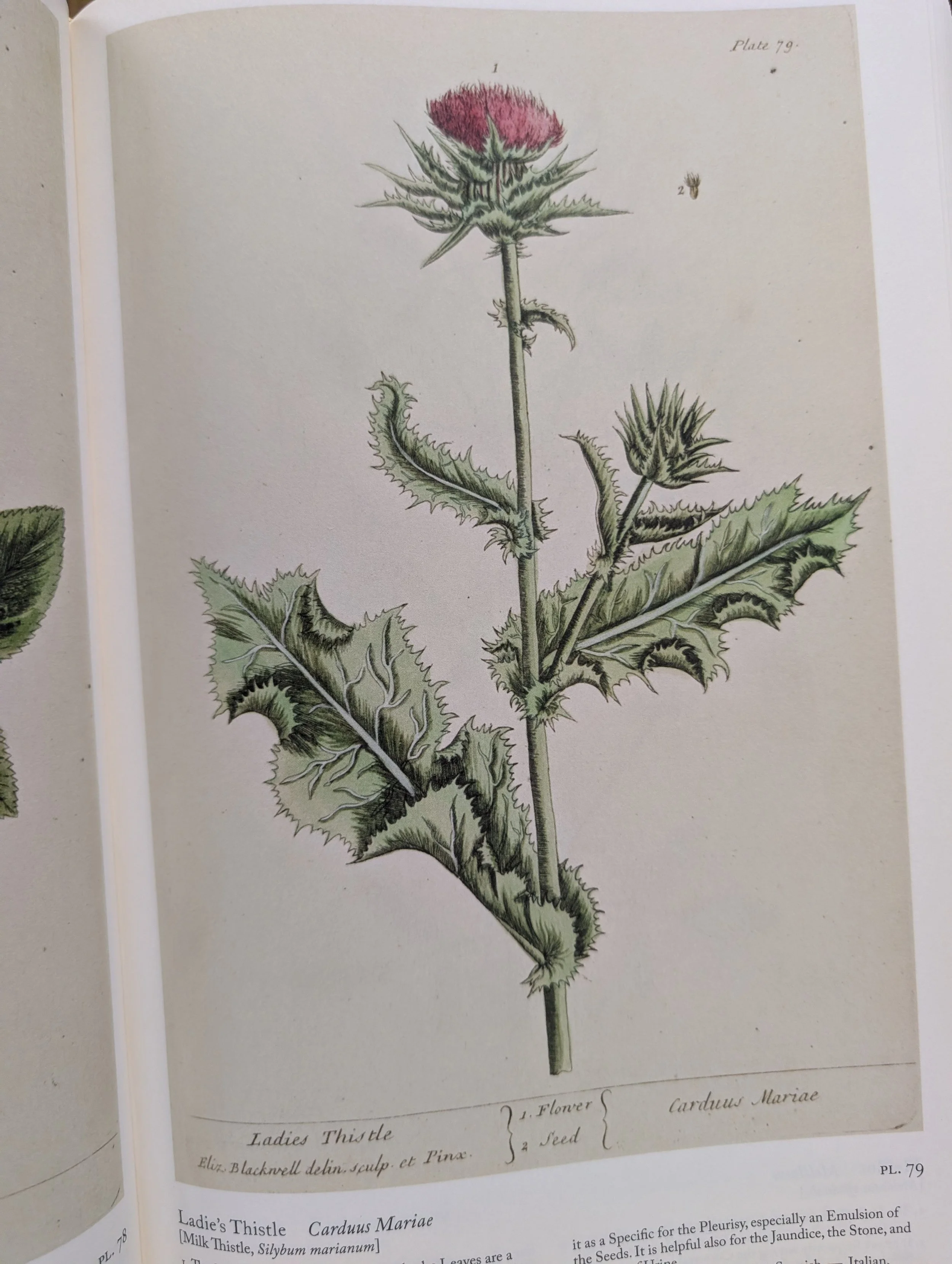
From Elizabeth Blackwell, A Curious Herbal [book]. 1739. Milk thistle images from the Tualatin Soil and Water Conservation Project, https://tualatinswcd.org/species/milk-thistle/
Silybum marianum, commonly known as Milk thistle; seeds
Uses
Considered to be the top herb for repair of liver damage
o For jaundice
o For alcohol damage to the liver
o For pharmaceutical damage to the liver
o Possible antidote to liver damage from seed oils and other peroxidation
o To prevent liver fibrosis
Seed extraction
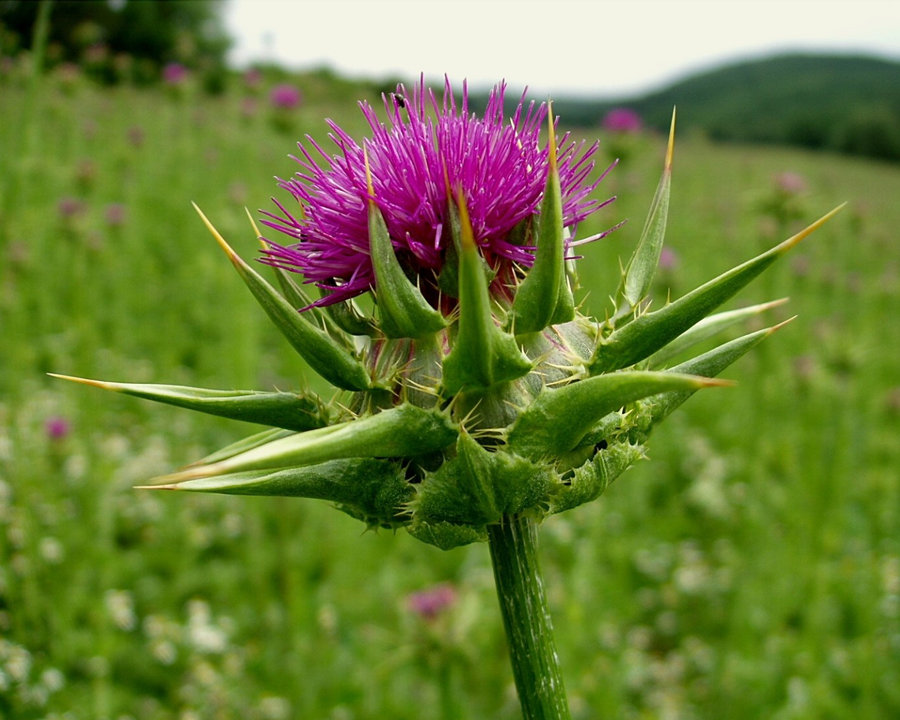
Although Milk thistle seed extract or powder is among the most benign of herbs for internal use, an encounter with the six-foot tall living plant is as frightful as the above photos portray. Herbalist Michael Moore describes the plant as “dangerous looking,” and the thistle flowers “are ringed, like a bulldog with a spiked collar, by thick, terribly sharp, spiny bracts…”¹ One year my family ventured to harvest seeds from Milk thistle that we had grown from seed. For that, we each had long sleeves, thick hardware store leather gloves, and each of us had a pair of tweezers in each hand to endure the painstaking ordeal of plucking out one stubborn seed at a time. Moore adds that for harvesting the seeds, “there is no easy way.”
My advice for dealing with thorned plants, from this one to roses to prickly pear to blackberries, is to move very slowly and to use long sleeves and gloves whenever needed. Fast motions on the other hand seem to greatly risk a nasty forearm gash, sometimes from rebound whipsaw – and watch the eyes! - and sometimes just from the wrong unfortunate parallel slice, like the much-dreaded papercuts. Moving very slowly, you will find yourself more comfortably handling parts of these plants while standing at closer proximity than if you use fast or careless movements. Layers of protective clothing also help a lot.
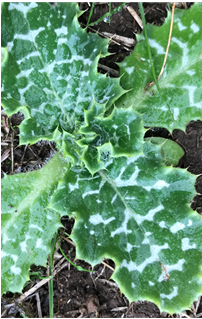
The unusual white mottling on the leaves shown on the photo above is another striking feature of Milk thistle.
The seeds are crushed and a tea is made from the powder. A tincture or glycerite extract may also be prepared. Some of the compounds in Milk thistle are not as bioavailable as may be hoped for. Combination of one of the main compounds, silybin, with the common oral supplement phosphatidylcholine (PS), aka lecithin made it ten times more bioavailable than alone,² and there was similar improved absorption together with other phospholipids.³
For repair of liver damage generally
What is different about milk thistle than many other herbs that we write about is that it is not always used to treat a specific condition, but also to improve the metabolic processes and bile flow in the liver and biliary tract. The liver is tasked with the detoxification of unhelpful substances that we either deliberately expose ourselves to, such as “an intemperance with Spirits,” as they said centuries ago, or the toxins that we inadvertently and inevitably stumble upon. In an industrialized world, the liver is much more challenged in these tasks than what our distant ancestors faced. Still, our distant ancestors had their own challenges with snake bites, mushroom poisoning, other environmental toxins and alcohol. Theophrastus of Greece in the 4th century B.C. mentioned this herb as “Pternix” … “a thorny plant with milky sap” that was used for “bile disorders,” and it has been mentioned by herbalists throughout most of the following centuries. ⁴ ⁵
For better or worse, we inherited the liver of our distant ancestors, not the 21st century model. So when detoxification becomes overwhelming for an inundated liver, Milk thistle is our best choice of any known plant to release stagnation and to enhance bile flow. Bile must be thin and flowing, in order to rinse toxins, and metabolites of toxins, away from the liver and down through the intestines and out with the stool.
Milk thistle is a choleretic herb, which means that it stimulates the liver to produce bile, and it is a cholagogue herb, which means that it stimulates the release and flow of bile from the liver and the gallbladder. Milk thistle is the most widely used form of natural medicine in the U.S. to treat liver disease.⁶ We explore these functions further below in the Pharmacology section of this article.
Fibrosis is a condition of mechanical changes in the liver where once-functional hepatocytes are replaced with non-functional fibrotic tissue. Milk thistle has been shown to have preventive effect against fibrosis.⁷ ⁸ ⁹
Milk thistle also stimulates liver cell regeneration. It should be noted that very little of the human body can actually regenerate tissue, only the liver and adrenals. Milk thistle specifically activates RNA polymerase I in the cell nucleus to accomplish that regeneration.¹⁰
It should be noted that once certain thresholds of damage to the liver have been crossed, it is unrealistic to hope for total reversal, even by such a helpful plant as Milk thistle. However, I think everyone can expect some degree of improvement in liver health and function. Each of the functions discussed herein of Milk thistle for the betterment of the liver should best be used preventively, and if necessary, therapeutically.
For repair of liver damage from alcohol use
Alcoholic liver disease has a mortality rate of 20% to 50% at five years.¹¹ Cirrhosis is a kind of creeping fibrosis, generally considered to be a terminal disease of liver damage, worse if combined with alcoholic hepatitis. Worldwide, cirrhosis is the 11th most common cause of mortality.¹² In a double-blind, randomized trial, both alcoholic and non-alcoholic cirrhosis patients were given 140 mg of silymarin, 3 times per day for two years, or placebo. Silymarin is the most studied active compound in Milk thistle. The four-year survival rate for the Silymarin group was 58% +/- 9%, and it was 39% +/-9% in the placebo group. Survival was therefore 49% higher on average in the silymarin-treated group than in the placebo group.¹³
For patients who have had cholecystectomy
In only one 140 mg dose of silymarin, which is the most-studied active component of Milk thistle, cholecystectomy patients (those whose gallbladders had been surgically removed) were able to achieve a level of protection against liver toxins that has been achieved in animal experiments of silymarin supplementation.¹⁴
Other uses
Greek physician Dioscorides wrote in the 1st century AD of Milk thistle being used as a remedy for poisoning, and the aerial parts of the Milk thistle plant as a vegetable, and the root as an emetic medicine: “Silybum is a broad acantha [thorny plant] with leaves like white chamaeleon [marbled or mottled appearance]… boiled with oil and salt. The juice of the root (as much as a teaspoonful taken as a drink with honey and water) encourages vomiting.” ¹⁵
British herbalist Elizabeth Blackwell, in the 1730’s, wrote of the use of the seeds for pleurisy and “It is helpful also for the Jaundice, the Stone and stoppage of Urine.” ¹⁶
Pharmacology
So then, what exactly do we need a well-functioning liver to do? The liver carries out over 500 known observed functions, including vastly diverse enzyme reactions. Generally, metabolic waste and debris that arrive to the liver from the blood is cleaned up there from toxins, alcohol and drugs, ammonia and microbes, allowing the cleansed blood to return to its optimal function. The liver accomplishes this clean-up in two phases, Phase I and Phase II pathways for processing foreign substances.
Phase I modification and Phase II detoxification
Phase I modification mostly uses enzymes in the Cytochrome P450 category to begin to break down a foreign substance. But because this is only the initial breakdown, and humans have very few generations of biochemical familiarity with xenobiotic toxins, our Phase I system often creates a more toxic intermediate by oxidizing, reducing or hydrolyzing parts of the foreign molecule. Oops. What can we say? These newfangled synthetic chemicals are very new to our species; so please be patient, or better yet, keep a prudent distance from toxins.
So then we really need Phase II detoxification, which makes much use of glutathione or glucuronic acid or a sulfate to the Phase I intermediate product. By attaching the polar, water-soluble glucuronic acid to the drug or toxin that is being metabolized – a process called glucuronidation, this in turn renders the exogenous molecule highly water soluble, so that it can be safely excreted by either the kidneys in the urine, or via bile into the stool, exiting the body. In this way, the originally ingested toxin is deactivated, and is thus made less harmful, and a pathway out of the body is established by the water-solubility.
A great advantage of Milk thistle is that it stimulates us to make more of both of these rescue molecules, glutathione¹⁷ and glucuronic acid.¹⁸
And Milk thistle helps the liver to process major and minor metabolites of toxins through both Phase I and Phase II metabolism. (We would be lucky if it only helped with Phase II, but it helps with both!)
Glutathione is the body’s most powerful antioxidant, which scavenges the free radicals that harm human cell membranes. Milk thistle significantly upregulates production of cysteine, which is part of the rate-limiting step in glutathione production, as well as increasing glutathione.¹⁹ This is often assisted by oral supplementation of N-Acetyl Cysteine (NAC), commonly available to US consumers (except at places and times in the early COVID years, although it was found to be helpful against COVID symptoms, which may someday stimulate as much political as biochemical investigation.)
Milk thistle also activates Nrf2 at the start of a pathway that turns on genes that stimulate the body’s production of glutathione.
Milk thistle’s powerful arsenal of antioxidants includes flavonolignans, flavonoids, including quercetin, and polyphenolic molecules.²⁰ Milk thistle is such an excellent antioxidant and scavenger of free radicals such as reactive oxygen species,²¹ and a wide variety of liver toxins generally, that it in effect does much of glutathione’s job, thus preserving the body’s valuable glutathione supply and increasing glutathione levels in the blood.²² Milk thistle also regulates the oxidant / antioxidant proportion in response to oxidative stress from exogenous toxins.²³
Silymarin, the best known constituent of Milk thistle
The most studied active constituent in Milk thistle is silymarin, a complex of flavonolignans that includes silibinin and other phenolic molecules, which have generally strong antioxidant effects and also decreased lipid peroxidation by 70% in vitro.²⁴ Let’s examine both of these.
Silymarin has shown antioxidant effect by generating proteins that shield cell membranes from the damaging effects of free radicals, by stimulating superoxide dismutase (SOD) activity at the cell membranes of hepatocytes,²⁵ as well as of both red and white blood cells, which fortifies cell membranes against the uptake of toxins.²⁶ So here we see Milk thistle’s protective shield effect over human cells against penetration by toxins.
Milk thistle is thought to protect cell membranes through SOD as well as by suppressing malondialdehyde (MDA). In a controlled human trial, 600 mg per day of silymarin supplementation for a year resulted in significantly lower MDA (p<0.01) in the treated group. The same study found a significant reduction in insulin resistance and in fasting insulin levels.²⁷ That study used silymarin alone. Another study also found silybin’s improvement in insulin metabolism, while adding vitamin E and phospholipids.²⁸
Milk thistle versus seed oils and lipid peroxidation
Seed oils, such as canola, corn and soy oils are high in linoleic acid, which is an omega-6 polyunsaturated fatty acid (PUFA). That “poly-“ prefix means that in several places on the PUFA molecule, there is a single-bond sandwiched between two double-bonds, called a methylene bridge, and that is where the hydrogen bond is especially weak, due to the heavy electron pull from the double bonds on either side, and when exposed to free radicals or heat, a hydrogen atom is lost. As a result the fragile PUFA molecule flips to the trans configuration easily, which is a molecule that does not interact well at all with human cell membranes.
Also, now that that vulnerable hydrogen atom was hanging by a thread, so to speak, and it gets ripped away, the chain reaction of lipid peroxidation begins. In this process, the double bonds rearrange and draw in oxygen, to create a reactive intermediate, called a peroxyl radical plus another damaged PUFA. That in turn attacks another PUFA, creating a lipid hydroperoxide, and this chain reaction continues through hundreds of iterations, wrecking and disintegrating the PUFA molecules. The broken pieces left in the wake are toxic and highly reactive aldehyde molecules, such as the MDA discussed above. This is how lipid peroxidation of seed oils is damaging to the liver.
The goal of the most recent four herbal monographs in this series, Cloves, Creosote, Mugwort and now Milk thistle, are to illustrate the damage created by lipid peroxidation and to reverse as much damage as possible with these herbs, especially with the champion of that task, namely Milk thistle.
Silymarin was found to protect both liver mitochondria and microsomes in rat livers from lipid peroxidation regardless of the chemical agents used to cause the peroxidation. The antiperoxidative effect of Milk thistle directly against free radical species was found to be tenfold higher than α-tocopherol, which is a synthetic form of vitamin E, which is another antioxidant.²⁹
In a controlled study of mice, where liver damage had been induced, the group treated with a Milk thistle compound, silymarin, had less liver damage, less liver cell death and significantly lower lipid peroxidation in the liver cells. Each of the liver enzymes ALT, AST and GGT as well as bilirubin were significantly normalized compared with the control group.³⁰ Another study also found significant reductions of the same enzymes, as well as improved appearance of liver tissue on ultrasound scanning.³¹ Another study also found that human subjects also had reductions in GGT following silymarin treatment.³²
We have written earlier in this series of herbal monographs on-alcoholic fatty liver disease (NAFLD), which is a disease that begins with fat accumulation in the liver, which may be detected on ultrasound imaging.³³ This is measured in part by blood flow velocity in the hepatic and portal veins.³⁴ NAFLD generally progresses from that condition to fibrosis and even cirrhosis and end-stage liver failure. There are no drugs that treat NAFLD, because it is indeed a drug-induced problem. Tylenol (acetaminophen or paracetamol) is so widely recognized to cause liver damage that this author was taught that in conventional medical school pharmacology courses. The rescue nutrient for that is N Acetyl Cysteine (NAC, discussed above), which is a precursor of the rate-limiting step in glutathione production. This clinic has successfully treated liver diseases with high dose vitamin C, NAC and other nutrients intravenously and orally. NAFLD is often correlated with obesity and with type II diabetes.
Challenges of alcoholism
Alcohol-related liver disease has similar mechanisms as NAFLD. Alcohol also damages the mitochondrial membrane permeability and electric potential. This disrupts oxidative phosphorylation, which is one of the most important tasks of the mitochondria toward its production of ATP.³⁵ That process in turn lowers the mitochondria’s ability to regenerate SOD and glutathione. So alcohol promotes a spiraling feedback loop of dysfunction.
Milk thistle, and particularly its most studied constituent, silymarin has significantly reversed this process by scavenging free radicals and by boosting both glutathione and SOD.³⁶
A mouse study following acute EtOH administration increased fat content, necrosis, lipid peroxidation and ALT activity and TNF production in the liver, while decreasing liver stores of glutathione.³⁷ In humans, chronic alcohol consumption increases reactive oxygen species, leading to oxidative stress.³⁸ That process in turn causes lipid peroxidation at cell membranes, as well as the oxidation of DNA and proteins. And that results in injury to hepatocytes.³⁹ Milk thistle derived silymarin then reduced the inflammatory processes associated with the above changes, while lowering C-peptide levels over 12 months.⁴⁰
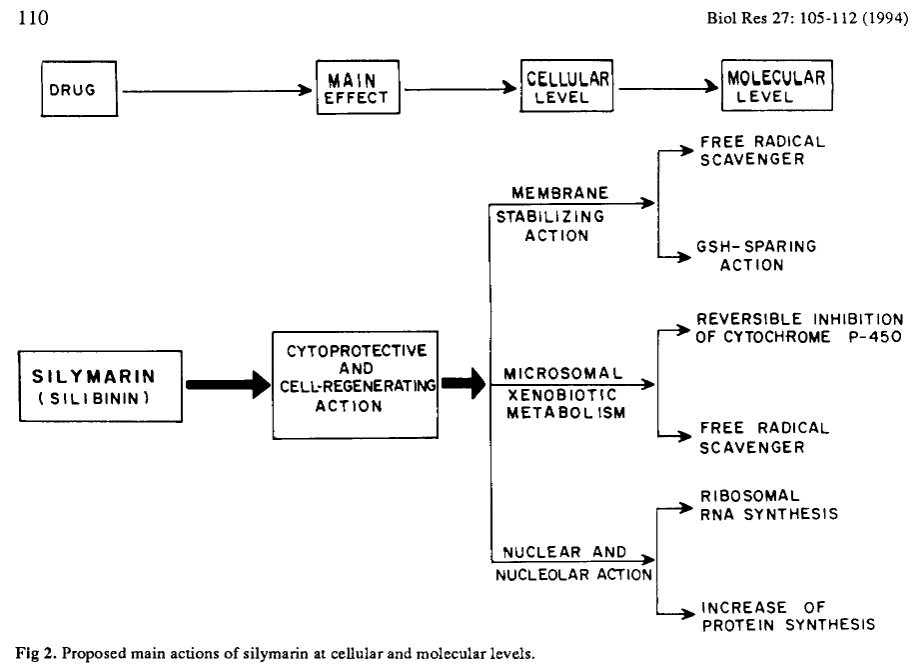
As mentioned earlier, prevention is a lot easier than repair of damage. Nevertheless, Milk thistle has been helpful in repair of hepatocyte damage and even liver regeneration following toxic injury by alcohol, drugs or other toxins. This is mainly accomplished by RNA synthesis and stabilization of DNA. Valenzuela and Garrido illustrate the cell-regenerating actions of silymarin in the following graphic: ⁴¹ (The reader should note that GSH is glutathione.)
Side Effects and Contraindications
Milk thistle is among the most benign herbs. There are no known side effects, contraindications or drug interactions.⁴² It may even be taken safely during pregnancy, as it is indicated for pruritis (itching) during pregnancy.
Native Origin and Range
Milk thistle is in the Asteraceae family. It is found in abandoned fields and roadsides, and along irrigation ditches near California and southern Arizona farmlands. It grows throughout the world’s temperate zones.
-
M Moore. Medicinal Plants of the Desert and Canyon West [book]. 1989. Museum of New Mexico Press. pp. 76-77.
P Morazzoni, M Magistretti, et al. Comparative bioavailability of Silipide, a new flavanolignan complex, in rats. Feb 25 1991. Eur J Drug Metab Pharmacokin. 17 (1). 39-44. https://doi.org/10.1007/bf03189986
X Yanyu, S Yunmei, et al. The preparation of silybin-phospholipid complex and the study on its pharmacokinetics in rats. 2006. Int J Pharmaceutics. 307. 77-82. https://doi.org/10.1016/j.ijpharm.2005.10.001
Cactus Botanics. The history of milk thistle in liver and detox practices. Sep 27 2005. https://www.cactusbotanics.com/faq/7922.html
V Kren. D Walterová. Silybin and silymarin – New effects and applications. Jun 24 2005. Biomed Papers. 149 (1). 29-41. https://www.semanticscholar.org/reader/d29dccd370906d8e46fc347399dd6541cd1e94ad
I Bergheim, C McClain, et al. Treatment of alcoholic liver disease. 2005. Dig Dis. 23 (3-4). 275-284. https://pmc.ncbi.nlm.nih.gov/articles/PMC2636549/
A Valenzuela, A Garrido. Biochemical bases of the pharmacological action of the flavonoid silymarin and of its structural isomer silibinin. 1994. Biol Res. 27 (2). 105-112. https://www.biologiachile.cl/biological_research/VOL27_1994/N2/A_VALENZUELA_&_A_GARRIDO.pdf
A Gillessen, H Schmidt. Silymarin as supportive treatment in liver diseases: A narrative review. Feb 17 2020. Adv ther. 37 (4). 1279-1301. https://pmc.ncbi.nlm.nih.gov/articles/PMC7140758/
P Muriel, M Mourelle. Prevention by silymarin of membrane alterations in acute CCl4 liver damage. Aug 1990. J Appl Toxicol. 10 (4). 275-279. https://analyticalsciencejournals.onlinelibrary.wiley.com/doi/epdf/10.1002/jat.2550100408
G Karimi, M Vahabzadeh, et al. Silymarin, a promising pharmacological agent for treatment of diseases. Jul-Aug 2011. Iran J Basic Med Sci. 14 (4). 308-317. https://pmc.ncbi.nlm.nih.gov/articles/PMC3586829/
I Bergheim, C McClain, et al. Treatment of alcoholic liver disease. 2005. Dig Dis. 23 (3-4). 275-284. https://pmc.ncbi.nlm.nih.gov/articles/PMC2636549/
S Asrani, H Devarbhavi, et al. Burden of liver diseases in the world. Jan 2019. J Hepatol. 70 (1). 151-171. https://www.journal-of-hepatology.eu/article/S0168-8278(18)32388-2/abstract
P Ferenci, B Dragosics, et al. Randomized controlled trial of silymarin treatment in patients with cirrhosis of the liver. Jul 1989. J Hepatol. 9 (1). 105-113. https://www.journal-of-hepatology.eu/article/0168-8278(89)90083-4/abstract
P Flory, J Krug, et al. Untersuchungen zur elimination von Silymarin bei cholezystektomierten. Patienten. [tr to Eng] 1980. Planta Med. 38 (3). 227-237. https://www.thieme-connect.com/products/ejournals/abstract/10.1055/s-2008-1074867
P Dioscorides. De Materia Medica [book]. 1st century AD. Publ. Ibidis. 715.
E Blackwell. A Curious Herbal [book]. 1739. Reprint : Abbeville Press Publ. Plate 79.
F Cacciapuoti, A Scognamiglio, et al. Silymarin in non alcoholic fatty liver disease. Mar 27 2013. World J Hepatol. 5 (3). 109-113. https://pmc.ncbi.nlm.nih.gov/articles/PMC3612568/
S Javed, K Kohli, et al. Reassessing bioavailability of Silymarin. 2011. Alt Med Rev. 16 (3). https://d1wqtxts1xzle7.cloudfront.net/106148519/CardoMarianoSilimarina-AltMedRev2011-libre.pdf
D Kwon, Y Jung, et al. Alterations in sulfur amino acid metabolism treated with silymarin: A novel mechanism of action involved in enhancement of the antioxidant defense in liver. Mar 14 2013. Planta Med. 79. 997-1002. https://doi.org/10.1055/s-0032-1328704
S Javed, K Kohli, et al. Reassessing bioavailability of Silymarin. 2011. Alt Med Rev. 16 (3). https://d1wqtxts1xzle7.cloudfront.net/106148519/CardoMarianoSilimarina-AltMedRev2011-libre.pdf
A Valenzuela, A Garrido. Biochemical bases of the pharmacological action of the flavonoid silymarin and of its structural isomer silibinin. 1994. Biol Res. 27 (2). 105-112. https://www.biologiachile.cl/biological_research/VOL27_1994/N2/A_VALENZUELA_&_A_GARRIDO.pdf
N Skottová, L Kazdová, et al. Phenolics-rich extracts from Silybum marianum and Prunella vulgaris reduce a high-sucrose diet induced oxidative stress in hereditary hypertriglyceridemic rats. Aug 2004. Pharmacol Res. 50 (2). https://www.sciencedirect.com/science/article/abs/pii/S1043661803004237
K Pradeep, C Mohan, et al. Silymarin modulates the oxidant-antioxidant imbalance during diethylnitrosamine induced oxidative stress in rats. Dec 16 2006. Eur J Pharmacol. 560 (2007). 110-116. https://doi.org/10.1016/j.ejphar.2006.12.023
P Lettéron, G Labbe, et al. Mechanism for the protective effects of silymarin against carbon tetrachloride-induced lipid peroxidation and hepatotoxicity in mice. Evidence that silymarin acts both as an inhibitor of metabolic activation and as a chain-breaking antioxidant. Jun 15 1990. Biochem Pharmacol. 39 (12). 2027-2034. https://pubmed.ncbi.nlm.nih.gov/2353942/
M Blumenthal, ed. Herbal Medicine: Expanded Commission E Monographs [book]. 2000. American Botanical Council. p 260.
A Gillessen, H Schmidt. Silymarin as supportive treatment in liver diseases: A narrative review. Feb 17 2020. Adv ther. 37 (4). 1279-1301. https://pmc.ncbi.nlm.nih.gov/articles/PMC7140758/
M Velussi, A Cernigoi, et al. Long-term (23 months) treatment with an anti-oxidant drug (silymarin) is effective on hyperinsulinemia, exogenous insulin need and malondialdehyde levels in cirrhotic diabetic patients. Apr 1997. J Hepatol. 26 (4). 871-879. https://www.journal-of-hepatology.eu/article/S0168-8278(97)80255-3/abstract
A Federico, M Trappoliere, et al. A new silybin-vitamin E-phospholipid complex improves insulin resistance and liver damage in patients with non-alcoholic fatty liver disease: preliminary observations. Jun 2006. Gut. 55 (6). 901-902. https://pmc.ncbi.nlm.nih.gov/articles/PMC1856214/
A Bindoli, L Cavallini et al. Inhibitory action of silymarin of lipid peroxide formation in rat liver mitochondria and microsomes. Dec 15 1977. Biochem Pharmacol. 26 (24). 2405-2409. https://www.sciencedirect.com/science/article/abs/pii/000629527790449X
E Kara, T Coşkun, et al. Effects of silymarin and pentoxifylline on matrix metalloproteinases-1 and -2 expression and apoptosis in experimental hepatic fibrosis. Dec 2008. Curr Ther Res Clin Exp. 69 (6). 488-502. https://pmc.ncbi.nlm.nih.gov/articles/instance/3969983/pdf/main.pdf
F Cacciapuoti, A Scognamiglio, et al. Silymarin in non alcoholic fatty liver disease. Mar 27 2013. World J Hepatol. 5 (3). 109-113. https://pmc.ncbi.nlm.nih.gov/articles/PMC3612568/
D Bunout, S Hirsch, et al. [Controlled study of the effect of silymarin on alcoholic liver disease.] Art. In Spanish. Dec 1992. Rev Med Chil. 120 (12). 1370-1375. https://pubmed.ncbi.nlm.nih.gov/1343377/
F Cacciapuoti, A Scognamiglio, et al. Silymarin in non alcoholic fatty liver disease. Mar 27 2013. World J Hepatol. 5 (3). 109-113. https://pmc.ncbi.nlm.nih.gov/articles/PMC3612568/
S Gaiani, A Avogaro, et al. Nonalcoholic fatty liver disease (NAFLD) in nonobese patients with diabetes: Prevalence and relationships with hemodynamic alterations detected with Doppler sonography. Jan 20 2009. J Ultrasound. 12 (1). 1-5. https://pmc.ncbi.nlm.nih.gov/articles/PMC3553245/
I Kurose, H Higuchi, et al. Oxidative stress on mitochondria and cell membrane of cultured rat hepatocytes and perfused liver exposed to ethanol. 1997. Gastroenterol. 112. 1331-1343. https://www.gastrojournal.org/article/S0016-5085(97)70147-1/pdf
W Zhang, R Hong, et al. Silymarin’s protective effects and possible mechanisms on alcoholic fatty liver for rats. 2013. Biomol ther (Seoul) 21 (4). 264-269. https://www.biomolther.org/journal/view.html?uid=377&vmd=Full
Z Song, I Deaciuc, et al. Silymarin protects against acute ethanol-induced hepatotoxicity in mice. Mar 2006. Alcohol Clin Exp Res. 30 (3). 407-413. https://pmc.ncbi.nlm.nih.gov/articles/PMC4217313/
R Nordmann, C Ribière, et al. Implication of free radical mechanisms in ethanol-induced cellular injury. 1992. Free Radic Biol Med. 12 (3). 219-240. https://pubmed.ncbi.nlm.nih.gov/1563648/
Z Song, I Deaciuc, et al. Silymarin protects against acute ethanol-induced hepatotoxicity in mice. Mar 2006. Alcohol Clin Exp Res. 30 (3). 407-413. https://pmc.ncbi.nlm.nih.gov/articles/PMC4217313/
M Velussi, A Cernigoi, et al. Long-term (12 months) treatment with an anti-oxidant drug (silymarin) is effective on hyperinsulinemia, exogenous insulin need and malondialdehyde levels in cirrhotic diabetic patients. 1997. J Hepatol. 26. 871-879. https://d1wqtxts1xzle7.cloudfront.net/108428283/s0168-827828972980255-320231206-1-jqbgyx-libre.pdf
A Valenzuela, A Garrido. Biochemical bases of the pharmacological action of the flavonoid silymarin and of its structural isomer silibinin. 1994. Biol Res. 27 (2). 110. Fig. 2. https://www.biologiachile.cl/biological_research/VOL27_1994/N2/A_VALENZUELA_&_A_GARRIDO.pdf
M Blumenthal, ed. Herbal Medicine: Expanded Commission E Monographs [book]. 2000. American Botanical Council. pp 260-261.
